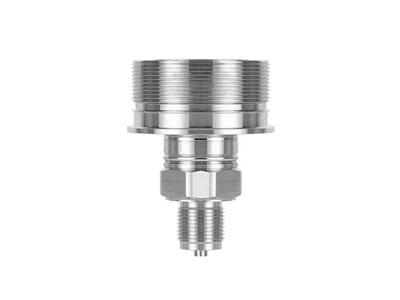
Hey there! As a supplier of differential transmitters, I've seen my fair share of compatibility issues when these nifty devices are paired up with other equipment. Let's dive right into what you might encounter in the real world.
First off, let's talk about electrical compatibility. A differential transmitter is all about sending and receiving electrical signals. Most of the time, they operate on a specific voltage range, like 12 - 32 volts DC. If you hook it up to a device that outputs a different voltage, say a high - voltage power supply, it can spell trouble. The transmitter might get damaged, or it might not function correctly at all.
For instance, if a device is designed to supply only 5 volts and you connect it to a differential transmitter that needs at least 12 volts, the transmitter won't be able to power up properly. On the other hand, if you connect it to a 48 - volt power source, it could fry the internal circuits. This is why it's super important to check the voltage ratings of both the differential transmitter and the device it's going to be connected to.
Another biggie is signal type compatibility. Differential transmitters usually output signals in different formats, such as 4 - 20 mA, 0 - 10 V, or digital signals like Modbus RTU. If the receiving device can only accept 4 - 20 mA signals, and your differential transmitter is set to output 0 - 10 V, it won't work. You'll either need to convert the signal or change the output settings of the transmitter, if possible.
Let's say you have a 2035 Multivariable Transmitter. It's a great piece of kit, but if you connect it to a control system that only understands digital signals and the transmitter is set to output an analog 4 - 20 mA signal, you're going to have issues. You might have to use a signal converter to make the data transfer happen smoothly.
Physical compatibility is also a major concern. The size and mounting options of a differential transmitter need to match the space and setup where it will be installed. Some transmitters are designed to be panel - mounted, while others are meant for pipe - mounting. If you try to install a panel - mount transmitter in a pipe - only setup, you'll run into problems.
Material compatibility is tied in with physical compatibility. The wetted parts of a differential transmitter (the parts that come into contact with the fluid being measured) need to be made of materials that won't react with the fluid. For example, if you're measuring a corrosive chemical, using a transmitter with wetted parts made of normal steel will lead to corrosion over time. This can affect the accuracy of the measurements and even cause the transmitter to fail.
Communication protocol compatibility is a bit more technical but just as important. In modern industrial setups, many devices communicate with each other using specific protocols. If your differential transmitter uses a certain communication protocol, like Profibus DP, and the other device uses Ethernet/IP, you'll have a hard time getting them to talk to each other.
For example, the SMP858 - DST Differential Pressure Transmitter might support a certain set of communication protocols. If you want to integrate it into a system that uses a different protocol, you'll need to figure out how to bridge the gap. This could involve using a protocol converter or updating the firmware of one of the devices.
Frequency response compatibility is crucial when dealing with dynamic systems. A differential transmitter has a certain frequency response, which means it can accurately measure pressure changes up to a specific frequency. If you're using it in a system where the pressure changes very rapidly, and the transmitter's frequency response isn't fast enough, it won't be able to keep up.
Imagine you have a high - speed process where the pressure oscillates at a high frequency. If you use a differential transmitter with a low - frequency response, it will smooth out the readings, giving you inaccurate data. You'll need to choose a transmitter with a frequency response that matches the requirements of your system.
Now, when it comes to calibration compatibility. Different devices may require different calibration procedures. If the calibration of the differential transmitter doesn't match that of the system it's connected to, the measurements will be off. Some devices might use a two - point calibration, while others use a multi - point calibration. You need to ensure that both the transmitter and the connected device are calibrated consistently.
Let's take the DMP305X - TLT Gauge Pressure Transmitter. It has its own calibration requirements. If you hook it up to a system that has a different calibration standard, the data you get from the system might be inaccurate. You'll have to either recalibrate the transmitter to match the system or vice versa.
Thermal compatibility is often overlooked but can be a real issue. Differential transmitters have a specified operating temperature range. If they're installed in an environment where the temperature goes beyond this range, their performance can be affected. The accuracy of the measurements might decrease, or the device might even fail.
For example, if you install a transmitter in a high - temperature industrial oven and it's not rated for that kind of heat, it could overheat and malfunction. You'll need to use a transmitter that can handle the temperature conditions of your application.
In conclusion, there are many compatibility issues that can arise when using a differential transmitter with other devices. Electrical, signal type, physical, communication protocol, frequency response, calibration, and thermal compatibility all need to be carefully considered.

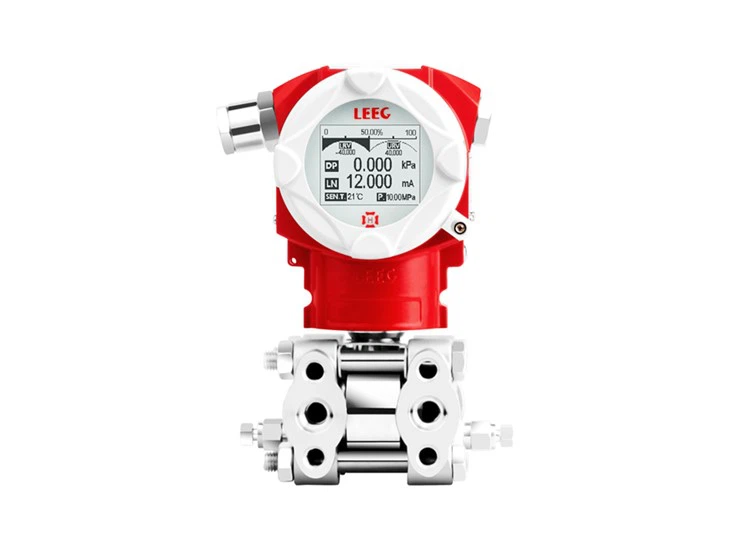
If you're in the market for a differential transmitter and want to avoid these compatibility headaches, we're here to help. Our team of experts can guide you through the selection process, ensuring that the transmitter you choose is a perfect fit for your existing equipment. We can also offer support on installation, calibration, and maintenance. So, if you're interested in making a purchase or have any questions, don't hesitate to reach out. Start a conversation with us and let's find the best solution for your differential measurement needs.
References
- Industrial Instrumentation Handbook: Covers a wide range of instrumentation topics, including transmitters and compatibility issues.
- Manufacturer's Documentation: From various differential transmitter manufacturers, which provide detailed information on product specifications and compatibility guidelines.