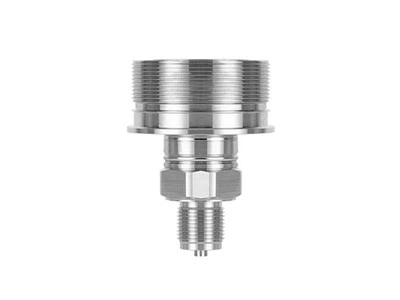
What is the pressure sensor's frequency response? Well, let me break it down for you in a way that's easy to understand. As a pressure sensor supplier, I've dealt with all kinds of questions about how these sensors work, and frequency response is a crucial factor that often gets overlooked.
First off, frequency response refers to how a pressure sensor responds to changes in pressure over a range of frequencies. In simpler terms, it's about how quickly the sensor can detect and react to pressure fluctuations. Just like a microphone needs to be able to pick up different frequencies of sound accurately, a pressure sensor needs to accurately measure pressure changes at various speeds.
When we talk about pressure applications, there are two main types of scenarios: static and dynamic. Static pressure is like the steady pressure in a water tank that's just sitting there, not changing much. In these cases, the frequency response might not be as critical. But in dynamic situations, like measuring the pressure in a combustion engine during operation or the pressure waves in a hydraulic system, the frequency response is super important.
Let's say you're monitoring the pressure in an engine cylinder. The pressure inside changes rapidly as the piston moves up and down, creating high - frequency pressure waves. If your pressure sensor has a poor frequency response, it won't be able to keep up with these rapid changes. It might miss some of the peak pressure values, or it could give you a distorted reading. This can lead to inaccurate data, which is a big no - no in industries where precision is key.
Now, how is the frequency response of a pressure sensor measured? Usually, it's expressed in terms of bandwidth. The bandwidth of a pressure sensor is the range of frequencies over which the sensor can accurately measure pressure. For example, a sensor might have a bandwidth of 0 - 10 kHz, which means it can accurately measure pressure changes that occur at frequencies between 0 and 10,000 times per second.
There are several factors that can affect the frequency response of a pressure sensor. One of the main factors is the mechanical design of the sensor. Sensors with a more rigid structure and less moving mass tend to have a higher frequency response. This is because they can respond more quickly to pressure changes without being slowed down by the inertia of moving parts.
Another factor is the electrical components of the sensor. The signal processing circuitry needs to be able to handle the high - speed changes in the sensor output. If the circuitry is too slow, it will limit the overall frequency response of the sensor.
At our company, we offer a wide range of pressure sensors with different frequency responses to meet the needs of various applications. For instance, the SP26 Pressure Sensor is a great option for applications that require a relatively high - frequency response. It's designed with a compact and robust structure, which allows it to quickly respond to pressure changes.
If you're looking for a sensor for flow measurement, the SP38MH Multivariable Sensor For Flow Measurement is worth considering. It can accurately measure multiple variables, including pressure, and has a good frequency response to handle the dynamic changes in flow - related pressure.


And for those who need a high - precision pressure sensor, the SPH19T Monosilicon Pressure Sensor is an excellent choice. Thanks to its advanced monosilicon technology, it offers a high frequency response and excellent long - term stability.
To sum it up, understanding the frequency response of a pressure sensor is crucial for ensuring accurate and reliable pressure measurements, especially in dynamic applications. Whether you're in the automotive, aerospace, or industrial automation industry, choosing the right pressure sensor with an appropriate frequency response can make a huge difference in the performance of your system.
If you're in the market for a pressure sensor and have questions about frequency response or which sensor is best for your application, don't hesitate to reach out. We're here to help you find the perfect solution for your specific needs. Just start a conversation with us, and let's get you the right pressure sensor.
References
- Principles of Pressure Sensor Technology, Johnson & Sons Publishers
- Handbook of Instrumentation in Dynamic Pressure Measurements, Thompson Editorial