Liquid Level Measurement
For liquid and gas level measurement
In industries such as petroleum, chemicals, water treatment, municipal environmental protection, and water conservancy, liquid level measurement is not only a fundamental parameter for process control, but also a key factor in ensuring system safety, improving energy efficiency, and enhancing product quality. Our liquid level measurement products are mainly used for open tanks and other applications, including storage tanks, deep wells, sewage pools, fire water tanks, reservoirs and rivers, circulating water pools, and aquaculture ponds. Liquid level transmitters mainly serve to prevent liquid overflow, detect abnormal liquid levels, optimize material management, improve system automation, reduce manual monitoring requirements, and minimize human errors, thereby increasing the precision and stability of overall production system control. We ensure that every product achieves precise measurement, stable operation, and long service life under harsh working conditions, providing reliable assurance for our customers' continuous monitoring and safe production.
-
![LMP633-NCN Submersible Level Transmitter]() LMP633-NCN Submersible Level TransmitterLMP633 Submersible level transmitter is designed for dealing with the most severe demanding level measurement conditions. It is the optimal choice to satisfy all of high demand level measuring applications.view more
-
![LMP633-NBN Submersible Level Transmitter]() LMP633-NBN Submersible Level TransmitterLMP633 Submersible level transmitter is designed for dealing with the most severe demanding level measurement conditions. It is the optimal choice to satisfy all of high demand level measuring applications.view more
-
![LMP633-NSN-S Submersible Level Transmitter]() LMP633-NSN-S Submersible Level TransmitterLMP633 Submersible level transmitter is designed for dealing with the most severe demanding level measurement conditions. It is the optimal choice to satisfy all of high demand level measuring applications.view more


What Is a Liquid Level Transmitter?
A submersible liquid level transmitter is an industrial instrument that measures liquid level based on the hydrostatic pressure principle. Its core sensing element is either a diffused-silicon pressure sensor or a ceramic capacitive pressure sensor. The probe is directly submerged in the liquid and converts the hydrostatic pressure at the sensing element (P = ρgh) into an output signal, such as 4–20 mA or an RS-485 digital output. This pressure is proportional to the liquid density and liquid level height. After temperature compensation and linearization by the built-in circuit, the liquid level depth can be accurately calculated. Its structure typically consists of a probe made of stainless steel, PP, or PVDF, a vented cable, and a transmitter module. The vented cable introduces atmospheric pressure to the sensor reference end, thereby eliminating the influence of atmospheric pressure variations on measurement. The submersible liquid level transmitter is easy to install and offers high measurement accuracy, making it an indispensable fundamental measurement unit in industrial automation systems.
What Are the Advantages of LEEG Submersible Liquid Level Transmitters?
- ±0.1%F.S. high-precision liquid level measurement, enabling precise process control
- Robust and durable, suitable for industrial environments, resistant to corrosion and high temperatures, and capable of use in harsh environments.
- Simple structure, high reliability, and low maintenance cost
- Flexible integration with multiple output options for easy automation system integration.
- Widely used in the chemical, petroleum, pharmaceutical, and water treatment industries.
- Cone-plug sealing design, designed to resist sludge buildup and clogging
Probe Materials of Submersible Liquid Level Transmitters
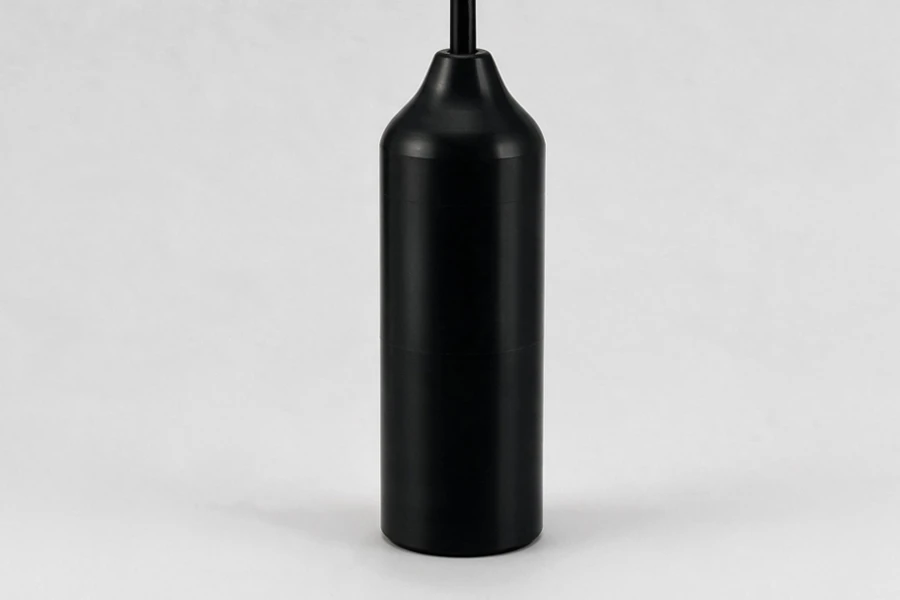
PP Material
Good corrosion resistance and cost-effectiveness, with good tolerance to most inorganic acids, alkalis, and salt solutions. Suitable for medium-corrosion environments such as general acid-base solutions and industrial wastewater treatment. However, it should be noted that its tolerance to strongly oxidizing acids such as concentrated sulfuric acid and nitric acid, as well as some organic solvents, is limited..

PVDF Material
Known for its excellent chemical stability, it can effectively resist the erosion of highly corrosive media such as strong acids and strong alkalis. It is a reliable choice for liquid level monitoring of corrosive liquids in fields such as chemicals and environmental protection. Its temperature resistance is superior to PP material, and it offers high long-term stability. It is widely used in harsh working conditions such as chemical storage tanks, acid-base neutralization pools, and sewage treatment.

SUS316 Stainless Steel
With excellent mechanical strength, corrosion resistance, and high-temperature resistance, the addition of molybdenum enhances its resistance to chloride corrosion. It is an economical and reliable choice for industrial water treatment and general chemical applications. It is suitable for scenarios such as seawater, mild acid-base solutions, and petrochemical process liquids. It is sturdy, durable, and easy to install.
Products Description
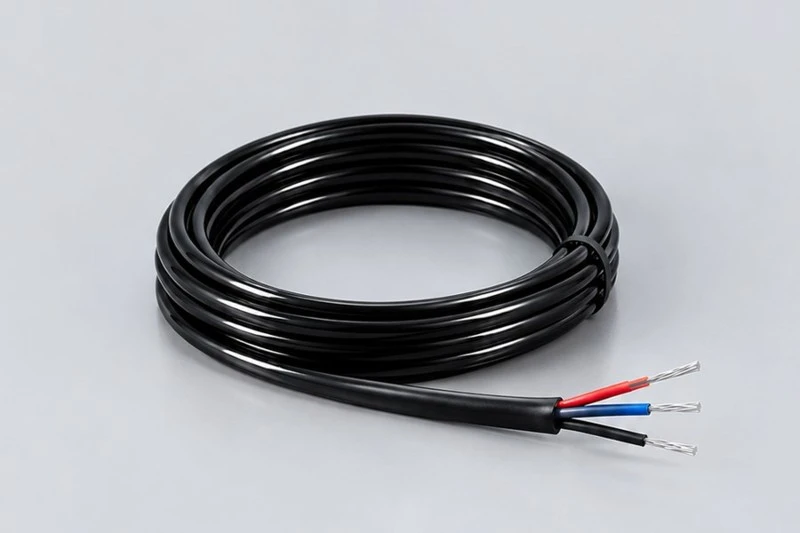
Polyurethane Cable
Excellent wear resistance and tear resistance. It is not easily damaged during long-term use in liquids containing sand and particles. It also offers good oil resistance, hydrolysis resistance, and UV resistance, making it suitable for long-term immersion applications in outdoor and humid environments. This material has outstanding flexibility with a small cable bending radius, making it easy to install and route in confined spaces such as deep wells and water pools. It is the most commonly used economical cable option.
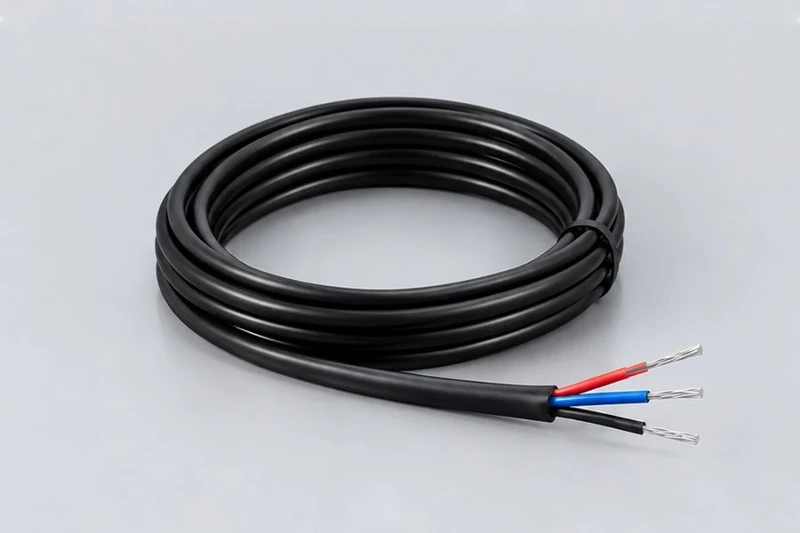
PTFE Cable
It has extremely strong chemical inertness and is virtually immune to erosion by any acid, alkali, salt solution, or organic solvent. It is the preferred cable material for liquid level measurement in highly corrosive media. Meanwhile, PTFE has an extremely low surface energy and excellent hydrophobicity. Water vapor cannot adhere to or penetrate the pipe wall, effectively keeping the interior of the vent tube dry and unobstructed, ensuring long-term stability of pressure transmission. Its wide temperature resistance range makes it suitable for harsh working conditions such as chemical storage tanks and acid-base neutralization pools.
Basic Parameters of Submersible Liquid Level
Transmitters
|
Accuracy |
±0.1%F.S.,±0.2%F.S.,±0.5%F.S. |
|
Medium Temperature |
-10-70°C |
|
Measuring Range |
0.5mH2O-200mH2O |
|
Output Signal |
4-20mA,4~20mA/HART,0.5-4.5VDC,RS485 |
|
Long-Term Stability |
±0.2%SPAN/year |
|
Diaphragm Material |
316L stainless steel, Hastelloy C, ceramic |
|
IP Rating |
IP68 |
Application Fields of Submersible Liquid Level Transmitters
Water Conservancy and Hydrology
- River/reservoir water level monitoring, groundwater well water level monitoring, irrigation channel liquid level monitoring, urban flood warning water level monitoring, etc.
Municipal Water Supply and Treatment
- Water treatment plant clear water tank liquid level monitoring, water supply network pressure/water level monitoring, fire water pool liquid level monitoring, pump station sump liquid level monitoring, etc.
Sewage Treatment
- Sump/regulation pool liquid level monitoring, aeration tank liquid level monitoring, sedimentation tank liquid level monitoring, sludge tank liquid level monitoring, chemical dosing tank liquid level monitoring, etc.
Agricultural Aquaculture
- Aquaculture pond water level monitoring, fish/shrimp pond liquid level monitoring, livestock and poultry drinking water tank liquid level monitoring, irrigation reservoir liquid level monitoring, etc.
Fire Protection and Security
- Fire water tank liquid level monitoring, fire water pool liquid level monitoring, elevated water tank liquid level monitoring, pump room sump pit liquid level monitoring, etc.
Power and Energy
- Cooling tower water pool liquid level monitoring, condensate tank liquid level monitoring, desulfurization tower slurry pool liquid level monitoring, ash slurry pool liquid level monitoring, etc.
Marine and Shipping
- Ballast water tank liquid level monitoring, fresh water tank liquid level monitoring, sewage tank liquid level monitoring, cooling water circulation system liquid level monitoring, etc.
Precautions Before Selecting a Submersible Liquid Level Transmitter
Clarify Measurement Type and Range Parameters
Understand the measurement principle
- The submersible liquid level transmitter is based on the hydrostatic pressure principle. It measures the difference between the static pressure of the liquid at the probe position and atmospheric pressure. It is suitable for open containers or atmospheric pressure water pools connected to the atmosphere.
Range selection
- Select the range based on the actual maximum liquid level height. The normal working value should fall within 30%~70% of the range. The range should be slightly larger than the actual maximum liquid level value to reserve margin for fluctuations. For pressurized containers or working conditions with large liquid level fluctuations, confirm the overload pressure margin (typically 1.5 times the rated pressure).
Installation depth confirmation
- The probe must be fully submerged, with a submersion depth greater than 50mm, to avoid probe exposure during liquid level fluctuations. At the lowest liquid level, the probe should still be submerged. At the highest liquid level, it should not exceed the upper range limit.
Determine the accuracy class
- For general water treatment, class 0.5 can be selected. For high-precision control or metering applications, class 0.2 or better can be selected. Note that high precision typically has a minimum range requirement (e.g., ≥10m).
Confirm whether it is for a closed container
- The submersible liquid level transmitter measures gauge pressure and is only suitable for open containers or containers connected to the atmosphere. Closed pressurized containers are not suitable for direct submersible measurement.
Measured Medium and Wetted Parts Material (Core)
Confirm medium properties
- Whether the liquid is corrosive, viscous, prone to crystallization, contains solid particles, or prone to scaling. Medium density is a key parameter for hydrostatic pressure measurement, and density changes directly affect measurement accuracy.
Probe material selection
01
316L Stainless Steel: Suitable for most industrial applications such as clean water, sewage, oil, mild acid-base solutions, and seawater. Economical and reliable.
02
PP Material: Resistant to general acid-base solutions. Suitable for medium-corrosion environments such as industrial wastewater and electroplating wastewater. Also cost-effective.
03
PVDF/PTFE Material: Virtually resistant to all strong acids, strong alkalis, and organic solvents. Suitable for highly corrosive media such as concentrated sulfuric acid, hydrochloric acid, and liquid caustic soda.
Viscous, crystalline, and slurry-containing media
- The probe may become clogged or scaled. A probe with anti-clogging design or an added filter device should be selected. For extremely viscous media, it is recommended to use non-contact measurement instruments.
Food/pharmaceutical sanitary applications
Select a sanitary probe with a polished wetted surface. The connection method should comply with sanitary standards.
Temperature Conditions (Medium Temperature + Ambient Temperature)
Medium temperature
The medium temperature range of a conventional submersible liquid level transmitter is typically -10°C~70°C.
Ambient temperature
For outdoor, exposed, or severely cold environments, confirm the allowable ambient operating temperature of the transmitter (typically -10°C~70°C).
Temperature compensation range
Confirm the operating temperature compensation range of the instrument. Use beyond the compensation range will cause signal drift.
Output Signal and System Matching
- Standard industrial applications: 4-20mA two-wire, strong anti-interference capability, long transmission distance.
- Digital system: When networking or remote communication is required, select RS485 (Modbus-RTU) digital output.
- Voltage output: 0.5-4.5V is suitable for specific acquisition modules.
- Confirm cable distance: Long-distance signal transmission requires evaluation of signal attenuation. Shielded cable is recommended, with the shield layer reliably grounded.
Explosion Protection, Protection Rating, and Site Environment
Flammable and explosive hazardous areas
- Strictly confirm the explosion protection grade. Intrinsically safe Ex ia or flameproof type must match the site area classification. Ordinary non-explosion-proof types cannot be used in explosion-proof areas.
Protection rating
- The probe is recommended to be IP68 (capable of long-term immersion).
Vibration applications
- For locations with high vibration, confirm the anti-vibration specifications of the transmitter. Wrapping steel wire around the probe for shock absorption can prevent cable breakage.
Electromagnetic interference
- Keep away from high-power motors, transformers, and other strong electromagnetic interference sources to prevent signal abnormalities.
Process Connection, Cable, and Accessory Selection
Installation method
Common methods include submersible type (probe directly submerged in liquid, cable suspended and fixed), threaded installation (M20×1.5, M42×1.5, etc.), and flange installation. Confirm the on-site installation space and fixing conditions.
01
Cable length
The cable length must be greater than or equal to the sum of the measurement depth and the distance from the probe to the junction box. An excessively long cable will affect signal transmission, while a cable that is too short will not reach the measurement position.
02
Cable material
For general water treatment, select polyurethane (PU). For highly corrosive media, select PTFE (polytetrafluoroethylene) sheath. The cable bending radius should be greater than 10cm to avoid excessive bending that could damage the vented cable.
03
Vented cable
The submersible liquid level transmitter must use a dedicated cable with a vent tube to introduce atmospheric pressure to the sensor reference end. Blockage or damage to the vent tube will cause measurement inaccuracy. Pay attention to protection during installation.
04
Probe height from the bottom
Sludge and oil residue tend to accumulate at the bottom of tanks or pools. It is recommended to keep the probe at a certain height from the bottom to prevent debris from clogging the probe.
05
Installation Position and Maintenance (Special Dedicated Points)
- Keep away from disturbance zones: The installation point should be away from pumps, valves, agitators, and other equipment prone to turbulence and bubbles. If unavoidable, a stilling tube or buffer device should be added.
- Foam and suspended solids on the liquid surface: When there is a large amount of foam, suspended solids, or sediment on the liquid surface, a probe with anti-clogging design should be selected, or a filter screen should be added.
- Probe installation angle: Install vertically or at an incline (inclination angle not exceeding 30°). Avoid horizontal placement, which can cause sediment to accumulate on the sensing surface.
- Regular cleaning and calibration: Long-term immersion of the probe will cause impurities and biofilm to attach, affecting pressure transmission. Regular cleaning is recommended. The calibration cycle is generally every 3~6 months or once a year.
- Zero point verification: Before installation, verify the zero point output (4mA) in a no-liquid state, and verify the full-scale output (20mA) at full scale to ensure measurement accuracy.
Shanghai LEEG Instruments Co., Ltd. is one of the most professional level manufacturers and suppliers in China, featured by good service and competitive price. Please rest assured to buy high quality level made in China here from our factory. Contact us for more details.