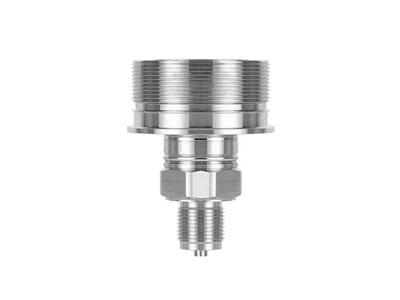
If you've ever worked in industrial settings like oil & gas pipelines, chemical processing plants, or agricultural irrigation networks, you know outdoor transmitters don't just need to work-they need to survive. Sun glare, extreme temperatures, dust, moisture, even accidental knocks from tools or equipment can turn a reliable transmitter into a paperweight in a matter of weeks. As a supplier of transmitter accessories, I get tons of questions from field techs, plant managers, and maintenance leads: "What do I actually need to keep my outdoor transmitters running?" The short answer is, yeah, there are tons of accessories made specifically for outdoor use-you just have to know which ones matter, not just which ones sound fancy.
Let's start with the most common pain point: reading your transmitter's display when you're out in the field. I've heard so many stories of techs squinting at a tiny, dim screen while standing in direct midday sun, trying to read a pressure or temperature reading for a routine check. That's where a good field display instrument comes in-something built for outdoor conditions, not the nice, climate-controlled lab it was originally designed for.
A lot of cheap "outdoor-rated" displays on Amazon or random industrial sites are just regular displays slapped in a thin plastic case with a vague IP65 rating. But the ones we supply, like the LCD11 Field Display Instrument, are actually engineered for what field crews go through. It has a high-brightness transflective LCD that switches from daylight mode (super crisp, no glare) to low-light mode at dusk, so you can read it at 2 a.m. valve checks too. It's sealed against dust and rain (IP67, if you're keeping score), has a -40°F to 185°F temperature range, and is even vibration-resistant enough to hold up to being bounced around in a toolbox. Link here: LCD11 Field Display Instrument.
What makes it different from a regular display? It connects directly to most common transmitters-pressure, temperature, level, whatever you're using-so you don't have to rewire your whole system to add it. Some techs use it as a quick backup too: if the transmitter's internal display breaks, you can pull this one out and get a reading in 2 minutes, no call to the engineering team needed. That's the kind of accessory that saves you downtime, not just covers you for a week.
Next up: manifolds. Wait, manifolds? Yeah, I know, some people think they're just for inside control rooms, but outdoor manifolds deal with way harsher conditions. Outdoor transmitters often mount in hard-to-reach places-10 feet up a pipe, or in a muddy, weed-choked valve pit-so you need a manifold that's easy to work with, no hidden leaks, no parts that rust up after a month in humid climates. We make a few different ones for different jobs, so you don't have to force a one-size-fits-all.
Let's break them down by use case. First, if you're working with small-bore lines, maybe in a chemical batch plant or a small agricultural irrigation system, the FZ20 Manifold is perfect. It's a 2-valve block manifold made of 316 stainless steel, so it resists corrosion from chemicals, saltwater (if you're in coastal areas), or fertilizer runoff. It has a compact design, so it doesn't stick out like a sore thumb in tight outdoor mounting spots-great for places where you can't swing a wrench very easily. Plus, it has a blowout-proof plug on the vent port, so if you're bleeding pressure, you don't have to worry about loose parts flying around when you're up on a ladder. Link here: FZ20 Manifold.
If you're dealing with higher pressure lines-like oil & gas gathering lines, or large process plants-you need something more heavy-duty. The FZ30 Manifold is rated for up to 6000 PSI, so it can handle the pressure fluctuations that come with outdoor use. It's still compact, but it has a reinforced body to prevent cracking when you're tightening bolts in cold weather (cold metal gets brittle, y'all-we've had too many stories of people snapping cheap manifolds when it's 20°F out). It also has a easy-grip handle on the valves, so even if your hands are cold or gloved, you can turn them without fumbling around. Link here: FZ30 Manifold.
And for the big stuff-like 8-inch pipelines or refinery primary processes-there's the FZ50 Manifold. It's a 5-valve design, so you can isolate the transmitter, vent the line, and calibrate without having to shut down the whole line. That's a huge win for outdoor work, because shutting down a pipeline to fix a transmitter can cost thousands per minute. This one is built for long-term outdoor use too: it has a powder-coated finish that resists UV rays, so it doesn't fade or chip after a year of being in direct sun, and it's tested to resist salt spray for coastal installations. Link here: FZ50 Manifold.
Now, let's talk about transmitters themselves, because even the best accessory won't fix a transmitter that's not made for outdoor use. Wait, the question is about transmitter accessories, but a lot of people forget that a transmitter paired with the right accessory works way better. For example, an analog temperature transmitter-most are for indoor use, but outdoor ones need to handle extreme temps and environmental damage. The THA33 Analog Temperature Transmitter is built for exactly that. It has a IP68-rated housing, so you can submerge it up to 1 meter (great if you're checking irrigation water levels or river temperatures) and it works from -40°F to 212°F, so it doesn't shut down when the summer sun hits 110°F or a winter night drops to 10°F. It also has a built-in surge protector, which is non-negotiable for outdoor use-lightning strikes on nearby pipes, or even power lines, can fry a transmitter in 0.1 seconds. The surge protector on this one absorbs that spike, so your transmitter keeps running, no lost data. Even though this is a transmitter, it's a perfect accessory to pair with outdoor setups, and we sell it as a package deal with manifolds and displays for field crews. Link here: THA33 Analog Temperature Transmitter.
Wait, what about other accessories people don't think about? Enclosure heaters, right? If you're in super cold climates, condensation builds up inside transmitter enclosures, which leads to rust on circuit boards and short circuits. We sell low-profile heater elements that mount inside the enclosure, just hot enough to keep the temp above dew point-no need to crank up heat and waste power. Then there's weather boots-rubber, UV-resistant boots that fit over transmitter connections, keeping rain and dust out of the wiring ports. Way cheaper than replacing a transmitter because moisture got into the wires. Also, mounting brackets with vibration dampers: outdoor machinery, like pumps or compressors, vibrate all day, which loosens transmitter connections over time. Dampers absorb that vibration, so you don't have to tighten bolts every month.
I should also mention something we learned last year: a lot of techs skip accessories to save money, but that's a false economy. We had a customer who was using a $15 plastic manifold on a coastal pipeline, and after 3 months, it corroded through, leading to a 2-hour shutdown. The cost of that shutdown was over $10,000-way more than the cost of a $200 stainless steel FZ20 Manifold. Outdoor accessories are an investment, not a expense.
Another common question: are these accessories hard to install? No, none of them require a team of electricians. Most of them are drop-in replacements for old parts, or take 15 minutes to mount with a drill and a wrench. We even send a free install guide with every order, plus our support team is available to help if you run into issues at 7 a.m. on a Monday when you're out in the field.
What about different industries? Let's make sure this is relevant no matter what you're working in. Oil & gas: you'll want corrosion-resistant manifolds, surge protection, displays that work in bright sun. Agriculture: dust-resistant enclosures, waterproof connections, displays that are easy to read when you're standing in a field with no shade. Water & wastewater: submersible-rated displays, temperature transmitters that work in cold water, manifolds that handle high pressure from water lines. Chemical processing: manifolds that resist harsh chemicals, heaters to prevent condensation from corrosive fumes. All of these accessories are tailored to those use cases, no one-size-fits-all garbage.
At the end of the day, outdoor transmitters only work as well as their accessories. You can have the most expensive, top-of-the-line transmitter in the world, but if it doesn't have a display you can read, a manifold that doesn't leak, and protection from the elements, it's going to fail when you need it most. That's why we focus on making accessories that are actually built for the conditions you face, not just labeled "outdoor ready" to jack up the price.


If you're outfitting a new outdoor transmitter setup, or replacing old accessories that are failing, we can help you pick exactly what you need-no pressure, no upsell on stuff you don't. Just reach out to our team to discuss your requirements. We'll send you specs, compatibility checks, and even a custom quote if you're ordering in bulk. Don't wait for a shutdown to realize you need better outdoor transmitter accessories-let's make sure your gear works as hard as you do.
References:
- International Electrotechnical Commission (IEC) Standard 60529: Degrees of Protection Provided by Enclosures (IP Code)
- National Association of Corrosion Engineers (NACE) Standard SP0177: Control of External Corrosion on Underground or Submerged Metallic Piping Systems
- OSHA Industrial Equipment Standards for Outdoor Field Operations, 2022 Edition
- Transmitter Accessory Performance Test Report, Industrial Electronics Association, 2023