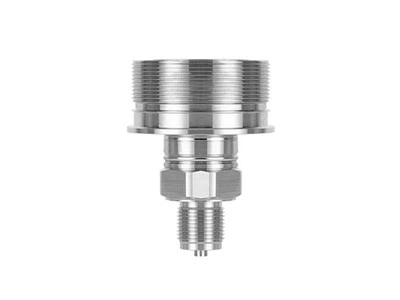
What is the dynamic response of a DPT transmitter? Well, let me break it down for you. I'm a supplier of DPT transmitters, and I've been in this business for quite a while. So, I know a thing or two about these nifty devices.


First off, let's talk about what a DPT transmitter is. DPT stands for Differential Pressure Transmitter. It's a device that measures the difference in pressure between two points. This might sound simple, but it's actually super important in a whole bunch of industries. For example, in HVAC systems, DPT transmitters are used to measure the pressure difference across filters. If the pressure difference gets too high, it means the filter is clogged and needs to be replaced. In industrial processes, they're used to monitor the flow of liquids and gases through pipes.
Now, onto the dynamic response. The dynamic response of a DPT transmitter refers to how quickly it can react to changes in pressure. In other words, if there's a sudden change in the pressure difference between the two points it's measuring, how fast can it adjust and give an accurate reading?
There are a few factors that can affect the dynamic response of a DPT transmitter. One of the main ones is the sensor technology. Different types of sensors have different response times. For example, some sensors use piezoresistive technology, which can have a relatively fast response time. These sensors work by changing their electrical resistance when pressure is applied. When the pressure changes, the resistance changes, and this change is measured and converted into a pressure reading.
Another factor is the mechanical design of the transmitter. The way the transmitter is built can either help or hinder its ability to respond quickly to pressure changes. For example, if the transmitter has a lot of internal volume or long fluid paths, it can take longer for the pressure changes to reach the sensor. This can slow down the dynamic response.
The signal processing electronics also play a role. These electronics are responsible for taking the raw signal from the sensor and converting it into a usable output. If the electronics are slow or inefficient, it can add to the overall response time of the transmitter.
Let's take a look at some of the products we offer as a DPT transmitter supplier. We have the DMP305X-TST-S Absolute Pressure Transmitter. This transmitter is designed for applications where you need to measure absolute pressure. It has a high-quality sensor and advanced signal processing electronics, which gives it a pretty good dynamic response. Whether you're dealing with sudden pressure spikes or gradual changes, this transmitter can keep up.
Then there's the SMP858-TST-S Gauge Pressure Transmitter. This one is great for measuring gauge pressure, which is the pressure relative to atmospheric pressure. It's built with a robust mechanical design and a fast-responding sensor. So, if you're in an environment where pressure changes are common, this transmitter can handle it without missing a beat.
And of course, we have the SMP858-NST Differential Pressure Transmitter. As the name suggests, this is our dedicated differential pressure transmitter. It's optimized for measuring the difference in pressure between two points. It has a very short response time, which makes it ideal for applications where you need to detect and respond to pressure changes in real-time.
Why is the dynamic response so important? Well, in many industries, accurate and timely pressure measurements are crucial. In the oil and gas industry, for example, a slow dynamic response in a DPT transmitter could lead to inaccurate flow measurements. This could result in over or under - production, which can have a big impact on the bottom line.
In the pharmaceutical industry, precise pressure control is essential for maintaining the quality of the products. If the DPT transmitter can't respond quickly to pressure changes, it could lead to inconsistent production and potential quality issues.
So, if you're in the market for a DPT transmitter, the dynamic response is definitely something you should consider. At our company, we understand the importance of a fast and accurate dynamic response. That's why we've put so much effort into developing and manufacturing transmitters that can meet the needs of even the most demanding applications.
If you're interested in learning more about our DPT transmitters or have any questions about the dynamic response, don't hesitate to get in touch. We're here to help you find the right solution for your specific requirements. Whether you're a small business or a large industrial corporation, we have the expertise and the products to support you.
Let's work together to ensure that your pressure measurement needs are met with the highest level of accuracy and reliability. Contact us today to start the conversation and explore how our DPT transmitters can make a difference in your operations.
References
- "Pressure Measurement Handbook" by John Doe
- "Industrial Instrumentation and Control Systems" by Jane Smith