Pressure measurement
For Measuring the Pressure of Gases and Liquids
In industries such as oil & gas, chemical, power, food, and machinery, chemicals, power, food, and machinery, pressure measurement is not only a fundamental parameter for process control, but also a key factor in ensuring system safety, improving energy efficiency, and enhancing product quality. Our pressure measurement products cover sanitary, industrial, and compact pressure transmitters, as well as pressure switches and pressure sensors. They are indispensable in storage tanks, pipelines, and process control applications. Through continuous optimization of product design and manufacturing processes, we ensure that standardized electrical signal output stable operation, and long service life under demanding working conditions, providing reliable assurance for our customers' continuous monitoring and safe production.
-
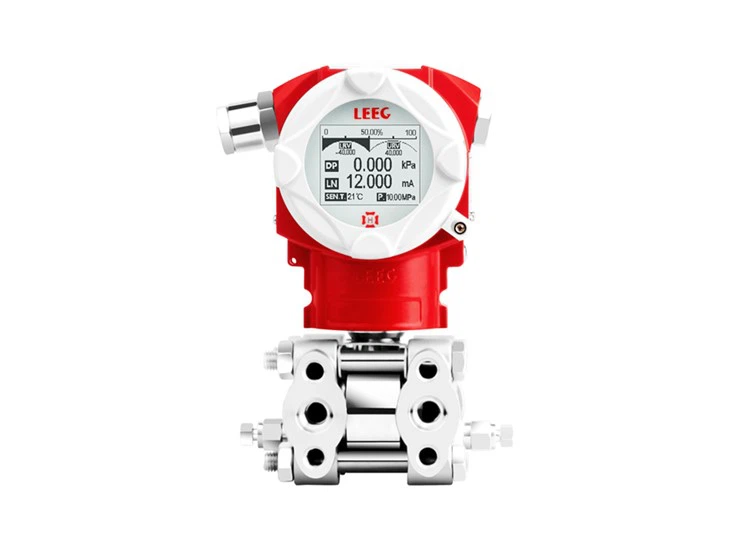
![DMP305X-DST Differential Pressure Transmitter]() DMP305X-DST Differential Pressure TransmitterDMP305X-DST differential pressure transmitter with monosilicon sensor is typically used in process or environmental applications for continuous measurement of pressure differences in liquids, vapors and gases. With reliable ex-proof...view more
-
![2035 Multivariable Transmitter]() 2035 Multivariable TransmitterThe second-generation LEEG2035 multi-variable transmitter is with a more advanced technical solution. Monosilicon sensor, standard configuration with Hastelloy C diaphragm material, wide media compatibility, and meets strict...view more
-
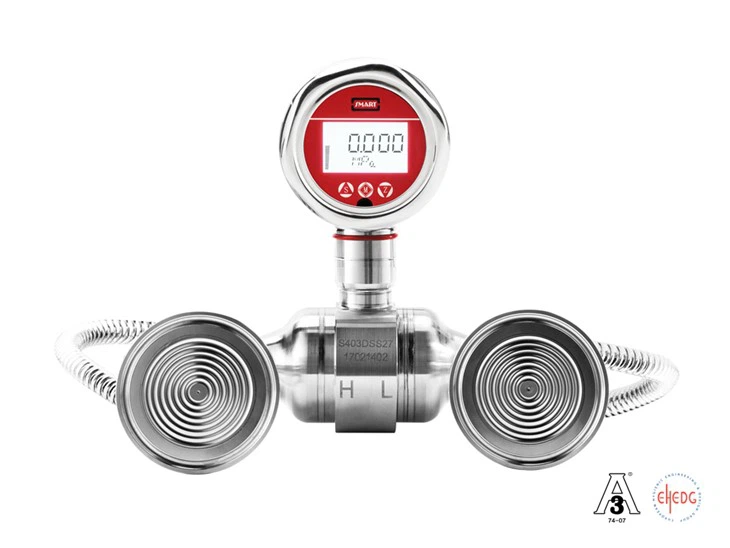
![SMP858-NSF Differential Pressure Transmitter]() SMP858-NSF Differential Pressure TransmitterSMP858-NSF monosilicon pressure transmitter is the best hygienic pressure transmitter meticulously designed by LEEG Instrument, with the world’s most advanced silicon pressure sensor technology and patent encapsulation process....view more
-
![SP38H Pressure Sensor]() SP38H Pressure SensorThe core sensor is high precision monosilicon technology with SP38H, it can be built-in static pressure and temperature compensation, which maximum improves the static pressure and temperature performance of the sensor. With high...view more
-
![SMP858-TSF-S Gauge Pressure Transmitter]() SMP858-TSF-S Gauge Pressure TransmitterHygienic pressure transmitter, designed for food and pharmaceutical industry, is suitable for CIP/SIP cleaning and sterilization. Smart compact design, the wetted parts is made of high quality stainless steel 316L and integral welding,...view more
-
![SP26 Pressure Sensor]() SP26 Pressure SensorThe SP26 Monosilicon pressure sensor uses a highly stable silicon chip packaged in a 316L stainless steel substrate, the applied pressure is transmitted to the silicon chip through the stainless steel diaphragm and the internally sealed...view more
-
![SMP858-TST-S Gauge Pressure Transmitter]() SMP858-TST-S Gauge Pressure TransmitterSMP858-TST pressure transmitter is a high performance pressure transmitter with international leading technology meticulously designed by LEEG. The sensor locates on the top of the metal body and stay away from the medium interface to...view more
-
![DMP305X-TST-S Absolute Pressure Transmitter]() DMP305X-TST-S Absolute Pressure TransmitterSMP858-TST pressure transmitter is a high performance pressure transmitter with international leading technology meticulously designed by LEEG. The sensor locates on the top of the metal body and stay away from the medium interface to...view more
-
![MDM7000DP Smart Differential Pressure Transmitter]() MDM7000DP Smart Differential Pressure TransmitterThe MDM7000DP Smart Differential Pressure Transmitter is an advanced and reliable solution for process industries. With its advanced monocrystalline silicon piezoresistance technology and high-strength housing, this transmitter offers...view more
-
![MDM7000-DGP/DAP Traditional Mounted Gauge/Absolute Pressure Transmitter]() MDM7000-DGP/DAP Traditional Mounted Gauge/Absolute Pressu...The MDM7000-DGP/DAP Intelligent Differential Pressure Mounted Gauge / Absolute Pressure Transmitter is designed to meet the high demands of the process industry. The monocrystalline silicon piezoresistive technology ensures stable...view more
-
![MDM7000-GP/AP Smart Gauge/Absolute Pressure Transmitter]() MDM7000-GP/AP Smart Gauge/Absolute Pressure TransmitterMDM7000-GP/AP Smart Gauge/Absolute Pressure Transmitter has high precision and excellent long-term stability. The advanced monocrystalline piezoresistive technology enables the MDM7000-GP/AP to achieve an accuracy of 0.075%FS. The...view more
-
![MDM7000-GP-T Flange Gauge/Absolute Pressure Transmitter]() MDM7000-GP-T Flange Gauge/Absolute Pressure TransmitterMDM7000-GP-T/AP-T intelligent pressure absolute/gauge pressure transmitter is a highly accurate product to measure the level/surface, density, and flow of liquids, gases, mixtures, etc. The product is explosion-proof certified for safe...view more


What is a pressure transmitter?
A pressure transmitter is an industrial measuring instrument that converts a pressure signal into a standardized electrical output signal. Its core principle is that the sensing element, based on technologies such as piezoresistive, capacitive, or piezoelectric sensing, detects the pressure of a gas or liquid and generates a small electrical signal, which is then processed by built-in amplification and conditioning circuits to output standard signals such as 4-20mA, 0-10V, or HART/RS485 for acquisition and control by PLCs, DCSs, or display instruments. From a technical perspective, it integrates pressure sensing, signal conversion, and remote transmission functions into one unit, featuring high accuracy, a high turndown ratio, and good temperature compensation capability. It can achieve continuous and stable pressure monitoring under demanding conditions such as high temperature, high pressure, corrosion, and vibration, making it an indispensable basic measurement unit in industrial automation systems.
What are the advantages of LEEG pressure transmitters?
- Widely used in general industry and process industry
- Multiple certifications such as CE, ATEX, CSA, IECEx, CCS, 3-A, and NEPSI
- Suitable for various industrial media, including liquids, gases, and steam, as well as liquid-level measurement applications.
- LED display, digital output, easy integration and compatibility
- Accurate pressure measurement for reliable and safe process control
- Independently developed and controlled core sensing technology, supporting extensive sensor customization
Housing materials of industrial pressure transmitters
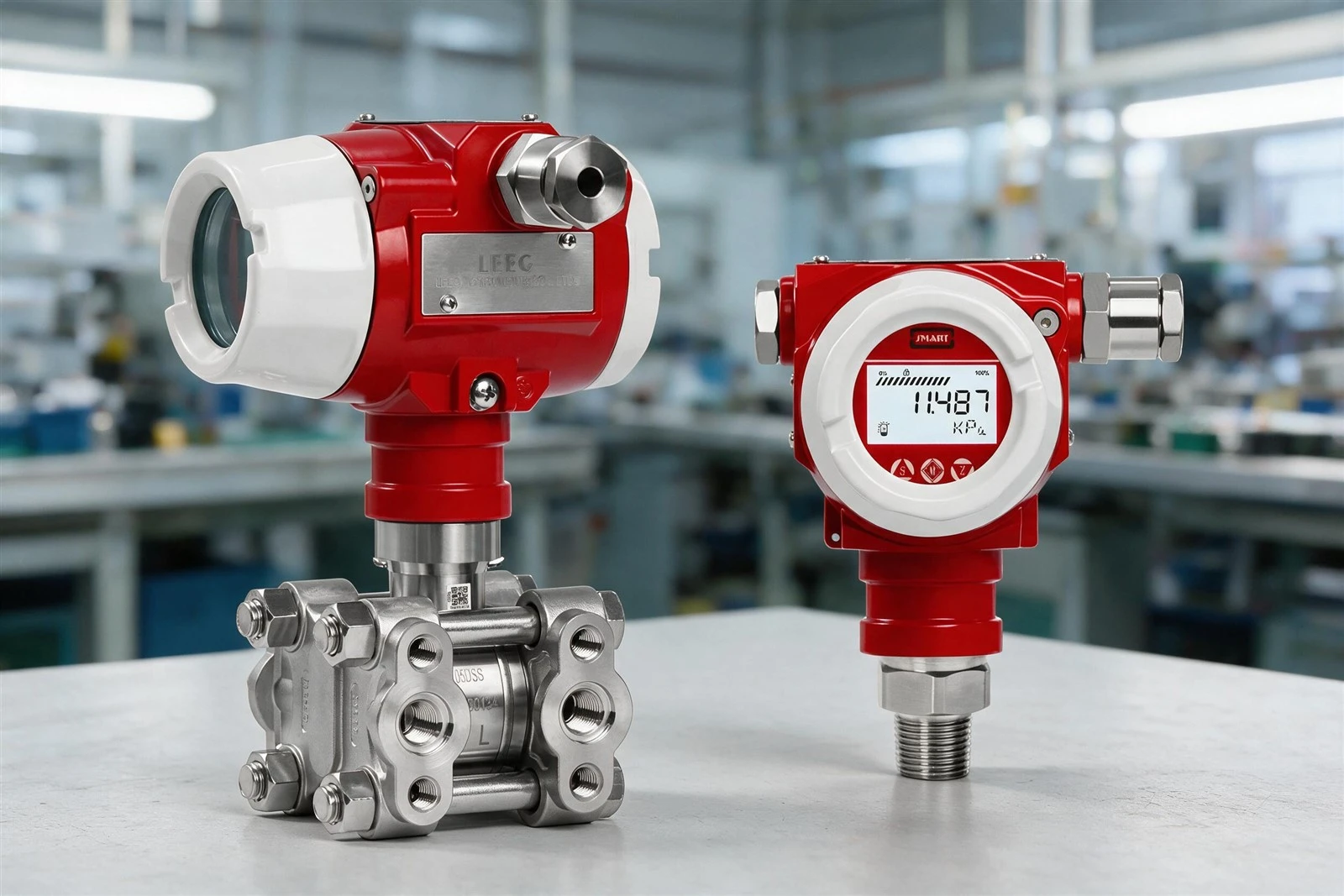
Aluminum alloy
Lightweight, high strength, and excellent heat dissipation performance. After surface coating treatment, it has good corrosion resistance and can provide stable and reliable protection for internal circuits in demanding industrial environments.
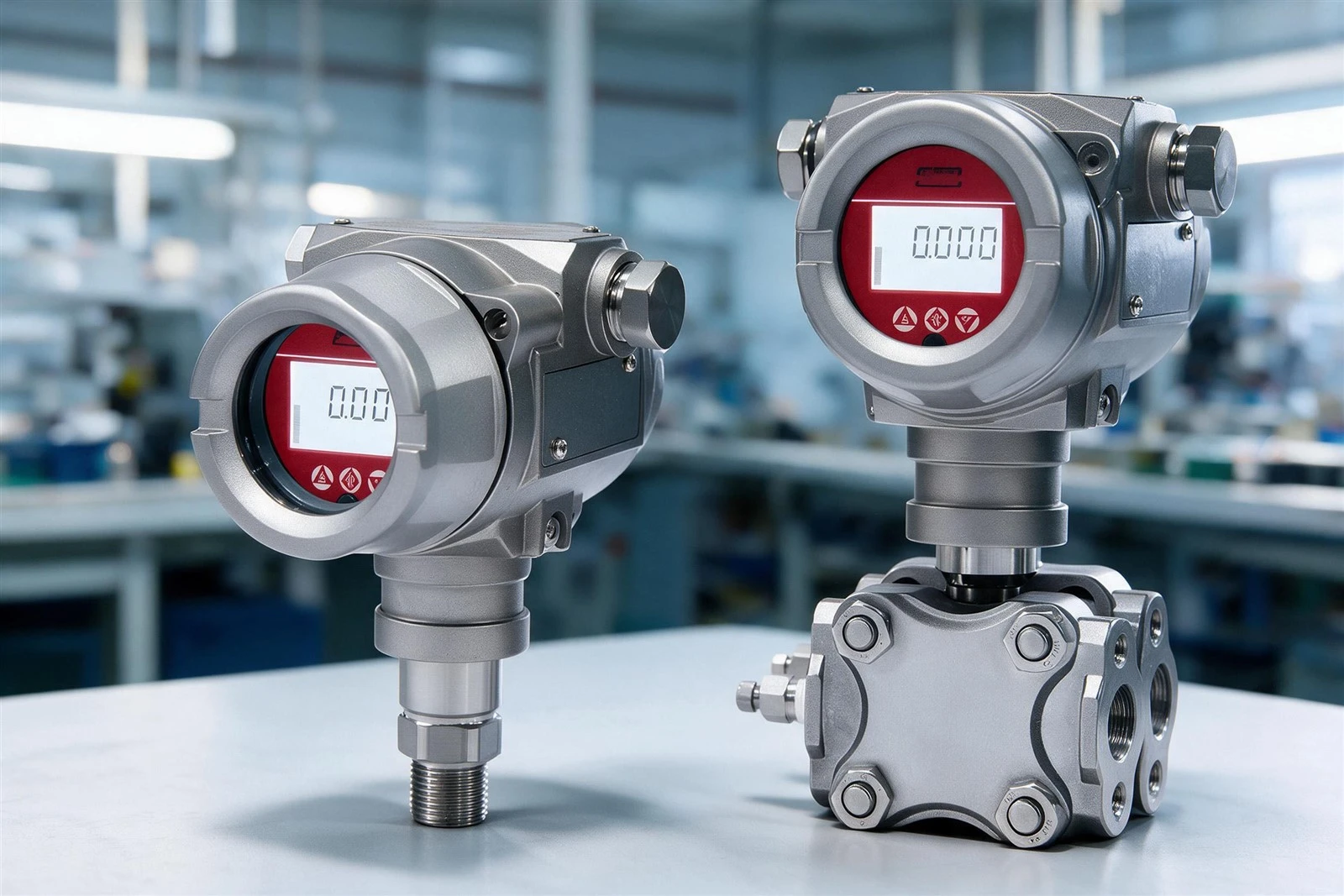
316L stainless steel
It has excellent corrosion resistance and impact resistance, and can operate stably for a long time in highly corrosive, high-humidity, and high-salt environments such as chemicals, petrochemicals, and marine applications, providing a high level of protection for internal circuits.
Pressure transmitter/sensor pressure types
Gauge pressure
- Conventional pressure measurement relative to atmospheric pressure, such as pump outlet and pipeline pressure
Differential pressure
- Used to measure the pressure difference between two points for applications such as flow measurement, filter blockage detection, liquid-level measurement, and leak detection.
Absolute pressure
- Used for applications requiring true pressure values or vacuum environments, such as vacuum systems, aerospace, and refrigeration
Sealed gauge pressure
- Used in applications requiring high precision or where atmospheric pressure fluctuates greatly, to avoid the influence of on-site atmospheric pressure changes on measurement
Vacuum pressure/negative pressure
- Used in applications below atmospheric pressure, such as negative pressure wards, vacuum degassing, and condensers
Basic parameters of pressure transmitters
|
Basic accuracy |
±0.075%F.S.,±0.05%F.S.,±0.1%F.S.,±0.2%F.S. |
|
Turndown ratio |
100:1 |
|
Pressure Range |
Gauge pressure:10kPa-100MPa |
|
Differential pressure:100Pa-10MPa |
|
|
Output signal |
4–20 mA, HART, RS-485, 1–5 V DC (low power consumption), and PROFIBUS PA |
|
Annual stability |
±0.1%SPAN/5 years, ±0.2%SPAN/5 years, ±0.1%SPAN/year |
|
Diaphragm material |
316L stainless steel, Hastelloy C (please contact our sales team for other materials) |
|
Protection class |
IP65,IP67,IP68 |
Pressure transmitter application fields

Oil and gas
Pressure monitoring of wellhead gathering and transportation pipelines, Inlet and outlet pressure monitoring of heating furnaces, oil-gas separation and crude oil dehydration monitoring, natural gas purification and pressure regulation monitoring, etc.
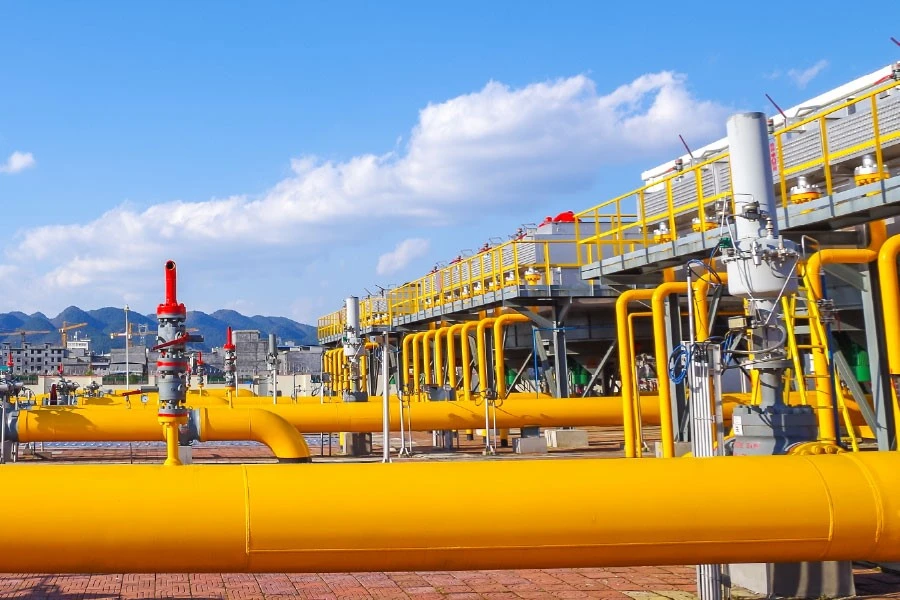
Downstream Oil & Gas Applications
Crude oil booster station monitoring, oil depot tank farm monitoring, gas station vapor recovery monitoring, cooling tower circulation system monitoring, slop oil pump station monitoring, etc.

New energy
Pressure/liquid level monitoring for hydrogen production systems, separator liquid level monitoring, pressure monitoring and control for lithium battery kilns, etc.

Marine and shipbuilding
Cooling water circulation system monitoring, power center instrument monitoring, water circulation cooling system monitoring, temperature control system monitoring, etc.

Power
Combustion furnace instrument monitoring, steam drum and turbine monitoring, steam generator monitoring, flue gas treatment tower monitoring

Chemicals
Distillation column instrument monitoring, metering tank and storage tank liquid level monitoring, reactor/separator instrument monitoring, reactor kettle instrument monitoring, etc.
Precautions before pressure transmitter selection
Clarify the measurement type and range parameters
- Distinguish the measurement type: gauge pressure, absolute pressure, differential pressure; for liquid level, use a differential pressure transmitter, and calculate the differential pressure value corresponding to the liquid level.
- Range selection: It is recommended that the normal working value fall within the 30% to 70% range of the span to ensure accuracy; reserve overload margin to withstand water hammer and impact pressure. Do not select the model based only on the process full scale.
- For differential pressure liquid level measurement, the static pressure (maximum working pressure of the vessel) must be confirmed. The pressure rating of the transmitter body must be greater than the design pressure of the equipment. Exceeding the static pressure will damage the sensor.
- Differential pressure liquid level: Calculate the positive migration/negative migration amount in advance, and confirm during selection that the instrument supports the migration function; when the density of the medium in the tank fluctuates greatly, differential pressure is not suitable for liquid level measurement.
- Determine the accuracy class and turndown ratio (adjustable ratio) to meet process control requirements. Do not blindly pursue high accuracy and cause cost waste.
Process Medium and Wetted-Part Materials
Confirm the medium properties: liquid/gas/steam; whether it is corrosive, viscous, prone to crystallization, contains solid particles, or is prone to scaling.
For ordinary water, oil, and gas, choose 316L stainless steel diaphragms; for highly corrosive media, choose special diaphragms such as Hastelloy, Monel, and tantalum (please consult engineers for special media).
For viscous, crystallizing, and slurry-containing media: give priority to remote diaphragm flanges
(flat flange/insertion flange) to avoid blockage of impulse lines; do not connect directly to the process medium through threads. (For extremely viscous media, please choose non-contact measuring instruments.)
For food/pharmaceutical sanitary conditions: choose sanitary pressure transmitters, clamp connections or connection methods that meet sanitary standards, and polished wetted surfaces.
Temperature conditions (medium temperature + ambient temperature)
High medium temperature
Evaluate whether heat dissipation components, condensers, or remote capillary isolation are needed to prevent high-temperature conduction from damaging the sensor and filling silicone oil.
Low-temperature conditions
Confirm the low-temperature working compensation range of the transmitter to prevent signal drift at low temperatures.
On-site ambient temperature
For outdoor, exposed, and severe cold environments, confirm the allowable ambient operating temperature of the instrument.
Output signal and system matching
- Conventional industry: 4-20mA two-wire; if local configuration and remote diagnostics are required, choose 4-20mA + HART protocol.
- Digital DCS/PLC: Choose Profibus PA, FF bus, or Modbus RS485 as needed.
- Confirm cable distance and whether shielded cable is required. Evaluate signal attenuation for long-distance signal transmission.
Explosion protection, ingress protection rating, and on-site environment
- Flammable and explosive hazardous areas: Strictly confirm the explosion protection rating (intrinsic safety Ex ia / flameproof Ex d). The explosion protection certification must match the on-site area classification. Ordinary non-explosion-proof models cannot be used in explosion-proof areas.
- Enclosure ingress protection rating: For indoor and outdoor use, at least IP65 is recommended for dust protection and water spray protection; for open-air and humid, water-vapor-heavy conditions, increase the ingress protection rating.
- For sites with high vibration levels, confirm the transmitter's vibration resistance specifications and avoid installing it at locations subject to severe vibration.
Process connection and accessory selection
Interface specifications
thread (M20×1.5, G1/2, etc.) or flange. Confirm the flange standard and pressure rating DN/PN.
Pressure and differential pressure transmitter accessories
Confirm whether a 2-valve manifold/3-valve manifold/5-valve manifold is required; for remote transmission types, pay attention to capillary length. Capillaries must not be sharply bent or exposed to high-temperature radiation.
Differential pressure liquid level
For closed tanks, impulse piping must be provided on the low-pressure side (gas-phase pressure tapping); for open atmospheric tanks, a single-flange remote transmission type can be used.
Differential Pressure Liquid-Level Measurement (Key Considerations)
- For liquid level measurement in closed vessels, the negative migration caused by gas phase condensate must be considered.
- If the medium is prone to crystallization and sedimentation, give priority to insertion flanges to reduce diaphragm scaling.
- Interface measurement (two liquids layered): Ensure that the liquid level is always higher than the upper pressure tapping point; changes in medium density will directly cause liquid level measurement errors.
Shanghai LEEG Instruments Co., Ltd. is one of the most professional pressure manufacturers and suppliers in China, featured by good service and competitive price. Please rest assured to buy high quality pressure made in China here from our factory. Contact us for more details.