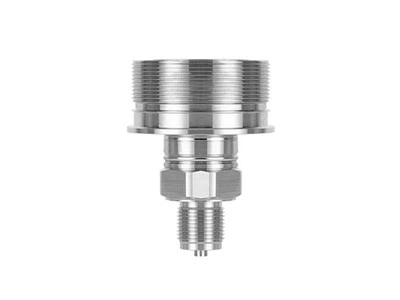
As a leading supplier of hygienic pressure sensors, I understand the critical importance of ensuring the accuracy, reliability, and compliance of these sensors in various applications. Hygienic pressure sensors are widely used in industries such as food and beverage, pharmaceuticals, and biotechnology, where maintaining high levels of hygiene and precision is paramount. In this blog, I will delve into the test methods used for hygienic pressure sensors to guarantee their optimal performance and quality.
1. Pressure Calibration
Pressure calibration is the cornerstone of testing hygienic pressure sensors. It involves comparing the output of the sensor under test with a known reference pressure. There are two main types of pressure calibration: static calibration and dynamic calibration.
Static Calibration
Static calibration is performed under steady - state conditions. The sensor is subjected to a series of known and stable pressures, and its output voltage or current is measured at each pressure point. The relationship between the input pressure and the output signal is then established. This method is relatively simple and is used to determine the basic performance parameters of the sensor, such as accuracy, linearity, and hysteresis.
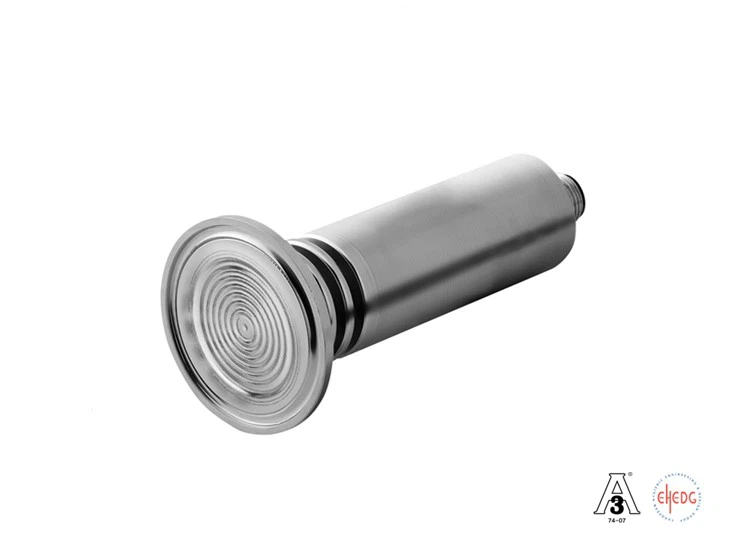
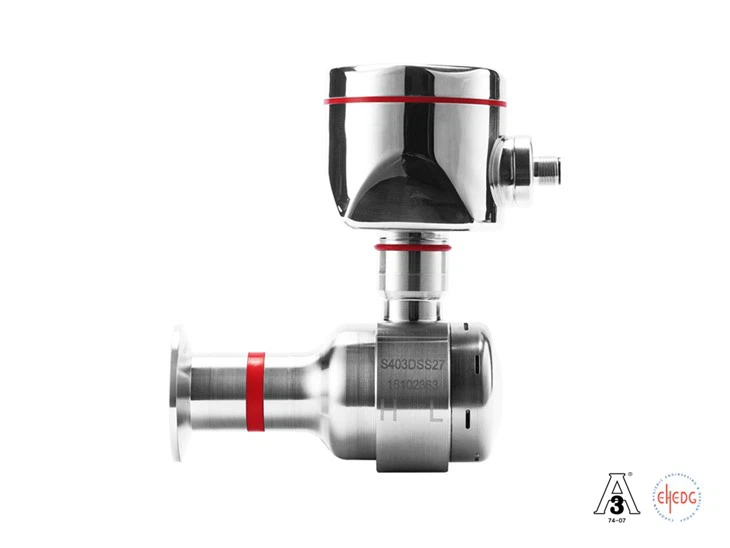
For example, we can use a dead - weight tester for static calibration. A dead - weight tester generates a known pressure by applying a calibrated weight to a piston of a known area. The sensor is connected to the tester, and the output is recorded as the pressure is varied in a step - by - step manner.
Dynamic Calibration
Dynamic calibration takes into account the sensor's response to changing pressures. In real - world applications, pressures often fluctuate rapidly, so it is essential to ensure that the sensor can accurately follow these changes. Dynamic calibration involves applying a time - varying pressure, such as a sinusoidal or a step - change pressure, to the sensor and measuring its output as a function of time.
The frequency response of the sensor is an important parameter obtained from dynamic calibration. It indicates how well the sensor can respond to different frequencies of pressure changes. High - frequency applications, such as in some hydraulic systems, require sensors with a wide frequency response.
2. Hygiene Testing
Since hygienic pressure sensors are used in industries where cleanliness is of utmost importance, they must undergo rigorous hygiene testing.
Clean - in - Place (CIP) and Sterilize - in - Place (SIP) Tests
CIP and SIP are common practices in the food and pharmaceutical industries. CIP involves cleaning the sensor in its installed position using cleaning agents, while SIP involves sterilizing the sensor using high - temperature steam or other sterilization methods.
During these tests, the sensor is exposed to a series of cleaning and sterilization cycles. After each cycle, the sensor's performance is checked to ensure that it has not been affected by the harsh cleaning and sterilization agents. For example, the sensor's accuracy and stability may be tested again after a CIP or SIP procedure to confirm that it can still provide reliable measurements.
Resistance to Microbial Growth
Microbial growth on the surface of the sensor can contaminate the process and lead to inaccurate measurements. To test the sensor's resistance to microbial growth, samples are taken from the sensor surface after a period of exposure to a microbial - rich environment. These samples are then analyzed in a laboratory to determine the number and type of microorganisms present.
Sensors should be designed with materials that resist microbial attachment and growth. For example, some sensors use special coatings that have antimicrobial properties to prevent the formation of biofilms on their surfaces.
3. Material Compatibility Testing
Hygienic pressure sensors come into contact with various process fluids, including cleaning agents and the product being processed. Therefore, it is crucial to test the compatibility of the sensor's materials with these fluids.
Chemical Resistance Testing
The sensor's wetted parts (the parts that come into contact with the fluid) are exposed to different chemicals for an extended period. The chemicals used in these tests can include acids, alkalis, and solvents commonly found in the food, pharmaceutical, and biotech industries.
After the exposure, the sensor's physical and performance properties are examined. Any signs of corrosion, swelling, or degradation of the material can affect the sensor's accuracy and reliability. For example, if the diaphragm of the sensor is corroded by a cleaning agent, it may lead to a change in its elasticity and, consequently, inaccurate pressure measurements.
Steam Resistance
In many applications, hygienic pressure sensors are exposed to high - temperature steam during the sterilization process. Steam resistance testing involves subjecting the sensor to steam at a specified temperature and pressure for a set period.
The sensor's performance is monitored during and after the steam exposure. Any changes in the output signal, such as drift or offset, can indicate that the sensor's materials are not resistant to steam and may need to be improved.
4. Electrical Performance Testing
Hygienic pressure sensors are electronic devices, and their electrical performance must be carefully tested.
Output Signal Testing
The output signal of the sensor, which can be a voltage, current, or digital signal, is tested to ensure its accuracy and stability. The output is measured at different pressure levels and compared with the expected values.
For example, a 4 - 20 mA output signal is commonly used in industrial applications. The sensor should provide a linear relationship between the input pressure and the output current within a specified range. Any deviation from this linear relationship can indicate a problem with the sensor's internal electronics.
Electrical Isolation Testing
Electrical isolation is important to prevent electrical interference and ensure the safety of the sensor and the connected system. Electrical isolation testing measures the resistance between different electrical components of the sensor, such as the input and output circuits, and the sensor's housing.
A high electrical isolation resistance indicates that the sensor is well - insulated and can reduce the risk of electrical faults and interference.
5. Mechanical Testing
Hygienic pressure sensors are often subjected to mechanical stresses in real - world applications, such as vibration, shock, and mounting forces. Therefore, mechanical testing is necessary to ensure their durability.
Vibration and Shock Testing
The sensor is placed on a vibration or shock testing machine and subjected to different levels of vibration or shock. The frequency and amplitude of the vibration or shock are carefully controlled according to the application requirements.
During the test, the sensor's output is continuously monitored to detect any changes in performance. If the sensor fails to provide accurate measurements under vibration or shock, it may not be suitable for applications where mechanical disturbances are common.
Mounting Torque Testing
The sensor is installed using different mounting torques, and its performance is tested at each torque level. Excessive mounting torque can cause mechanical stress on the sensor, which may affect its accuracy and long - term stability.
By determining the optimal mounting torque, we can ensure that the sensor is installed correctly and can provide reliable measurements throughout its service life.
Our Hygienic Pressure Sensor Products
As a supplier, we offer a range of high - quality hygienic pressure sensors, such as the SMP858 - TSF - D Gauge Pressure Transmitter, SMP858 - TSD - S Gauge Pressure Transmitter, and SMP858 - TSH - S Gauge Pressure Transmitter. These products have undergone all the above - mentioned test methods to ensure their excellent performance and compliance with industry standards.
If you are in the market for high - quality hygienic pressure sensors, we invite you to contact us for more information and to discuss your specific requirements. We are committed to providing you with the best solutions to meet your needs.
References
- "Pressure Sensor Technology" by John Doe
- "Hygiene Standards in the Food and Pharmaceutical Industries" by Jane Smith
- "Electrical Testing of Sensors" by Robert Brown