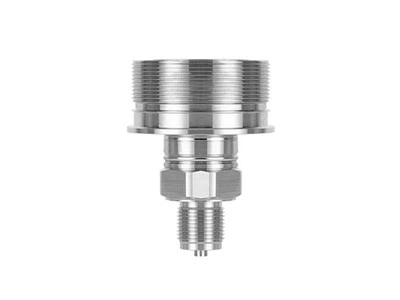
Hey there! If you're in the game of low - flow systems, then you're in the right place. Today, we're gonna talk about how a DP (Differential Pressure) pressure transmitter works in a low - flow system. And as a DP pressure transmitter supplier, I've got a lot of insights to share with you.
What's a DP Pressure Transmitter Anyway?
First things first, let's break down what a DP pressure transmitter is. Essentially, it's a device that measures the difference in pressure between two points. It takes this pressure difference and converts it into an electrical signal, like a 4 - 20mA signal, which can then be read and processed by a control system.
You might wonder, why do we need to measure the differential pressure? Well, in a low - flow system, it's all about figuring out how much fluid is moving through a pipe or a channel. The DP transmitter plays a crucial role here. For instance, in a hydraulic system, a small leak or blockage can really mess with the flow rate. By measuring the pressure difference at different positions, we can detect these issues early and take action.
How It Works in a Low - Flow System
When it comes to low - flow systems, the operating principles of a DP pressure transmitter are quite unique. In a low - flow situation, the pressure difference between the two points can be very small. The transmitter needs to be highly sensitive to pick up these subtle changes.
Let's say we have a pipe with a low - flow liquid running through it. We place the DP transmitter at two points along the pipe. One point acts as the high - pressure side, and the other as the low - pressure side. The pressure difference is caused by factors like friction as the fluid moves through the pipe, restrictions in the pipe (like valves or orifices), or even changes in elevation.
The transmitter has a sensing element inside. This can be a diaphragm that flexes based on the pressure difference. When there's a difference in pressure between the high and low sides, the diaphragm moves. This mechanical movement is then converted into an electrical signal.
For example, in a DMP305X - TST - S Gauge Pressure Transmitter, the sensitive diaphragm technology ensures accurate measurement even in low - flow conditions. The gauge pressure transmitter is a great option when you want to measure the pressure relative to the atmospheric pressure.
Components of a DP Pressure Transmitter
There are several key components in a DP pressure transmitter.
- Sensing Element: As we mentioned before, this is the part that actually detects the pressure difference. It can be a diaphragm, a bellows, or a Bourdon tube. In low - flow applications, diaphragms are very common because they can respond well to small pressure changes.
- Transducer: This component takes the mechanical movement of the sensing element and converts it into an electrical signal. It can use different technologies, such as strain - gage technology. Strain - gages are sensitive to deformation and can produce an electrical signal proportional to the pressure difference.
- Signal Conditioning Circuit: Once the electrical signal is generated, it needs to be processed. The signal conditioning circuit amplifies the weak signal from the transducer, filters out any noise, and calibrates it to the standard output range, like 4 - 20mA.
Applications of DP Pressure Transmitters in Low - Flow Systems
There are many industries where DP pressure transmitters are used in low - flow systems.
HVAC Systems
In heating, ventilation, and air - conditioning (HVAC) systems, low - flow situations are common in small ducts or when the system is operating at a reduced capacity. DP transmitters can measure the pressure difference across air filters. A clogged filter will cause a higher pressure difference, and the transmitter can send a signal to alert maintenance personnel.
Water Treatment Plants
Water treatment plants often deal with low - flow streams during certain processes. For example, in a slow - sand filtration unit, the DP transmitter can monitor the pressure difference across the filter bed. This helps in determining when the filter needs to be cleaned or replaced.
Chemical Processing
In chemical processing, low - flow of reactants or solvents can occur in small - scale production processes. The DP pressure transmitter can measure the pressure difference across safety valves or flow restrictors to ensure safe and efficient operation.
The Importance of Accuracy in Low - Flow Situations
Accuracy is super important in low - flow systems. Since the pressure differences are small, even a small error in measurement can lead to big problems. For example, in a medical device that delivers a low - flow of a drug, an inaccurate measurement could result in delivering the wrong dosage.
Our DMP305X - DST Absolute Pressure Transmitter is designed to provide high - accuracy measurements, even in low - flow applications. It measures pressure relative to a perfect vacuum, which is essential in some precision - sensitive processes.
Challenges in Low - Flow DP Transmitter Measurements
Measuring differential pressure in low - flow systems isn't without its challenges.
- Noise Interference: Electrical noise can easily interfere with the small electrical signals generated by the transmitter. This can lead to inaccurate readings. To combat this, we use advanced signal - filtering techniques in our transmitters.
- Zero - point Drift: Over time, the zero - point of the transmitter can drift. This means that even when there's no pressure difference, the transmitter may show a non - zero reading. Regular calibration can help address this issue.
- Sensor Fouling: In some low - flow applications, the sensing element can get fouled by particles in the fluid. This can affect the movement of the diaphragm or other sensing elements, leading to inaccurate measurements. We design our transmitters with easy - to - clean features and materials that resist fouling.
Our Solution: SMP858 - NST Differential Pressure Transmitter
We've developed the SMP858 - NST Differential Pressure Transmitter specifically to address the challenges of low - flow systems. It has a highly sensitive sensing element that can detect even the smallest pressure differences.
The transmitter is also equipped with advanced signal - processing algorithms to reduce noise and ensure accurate readings. And it's built with durable materials to resist fouling and mechanical wear.


Wrapping It Up and Reaching Out
In conclusion, a DP pressure transmitter is a vital part of low - flow systems. It helps us measure flow rates, detect issues, and ensure the safe and efficient operation of various processes. Whether you're in HVAC, water treatment, or chemical processing, having a reliable DP pressure transmitter is a must.
If you're interested in learning more about our DP pressure transmitters or want to discuss your specific low - flow system requirements, we'd love to hear from you. Reach out to us to start a conversation about how we can provide the right solutions for your projects.
References
- "Flow Measurement Handbook: Industrial Designs, Operating Principles, Performance, and Applications" by Richard W. Miller
- "Pressure Measurement: Basics, Technology, and Industry Applications" by Andreas Schubert