Hey there! As a supplier of DP (Differential Pressure) level measurement devices, I often get asked if DP level measurement can be used for closed - tank level measurement. Well, the short answer is yes, and in this blog, I'm gonna dig deep into why and how it works.
First off, let's understand what DP level measurement is. In simple terms, differential pressure level measurement involves measuring the difference in pressure between two points. When it comes to closed - tank level measurement, this method has some pretty cool advantages.
One of the main reasons DP level measurement is great for closed tanks is its flexibility. It can handle a wide range of tank sizes, shapes, and the types of liquids stored inside. Whether you've got a small, cylindrical tank or a large, irregularly - shaped one, DP level measurement can adapt. And it doesn't matter if you're storing water, oil, or some other chemical, DP level sensors can do the job.
Let's talk about how it actually works in a closed - tank scenario. In a closed tank, the pressure at the bottom of the tank is a combination of the hydrostatic pressure (caused by the weight of the liquid) and the pressure of the gas above the liquid. To measure the level of the liquid, we measure the differential pressure between the bottom of the tank and the gas space above the liquid.
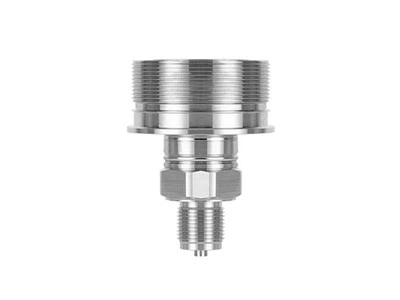
We use a differential pressure transmitter for this. For example, our SMP858 - NST Differential Pressure Transmitter is a great option. It's designed to accurately measure the difference in pressure between two points. One port of the transmitter is connected to the bottom of the tank, and the other is connected to the gas space. The transmitter then converts this pressure difference into a level reading.
Another important aspect is the accuracy of DP level measurement in closed tanks. With modern technology, these sensors can provide highly accurate level readings. They are calibrated to account for factors like temperature and the specific gravity of the liquid. This means that you can rely on the level readings to make informed decisions about your tank operations, like when to refill or empty the tank.
Now, let's consider the installation. Installing DP level measurement systems in closed tanks is relatively straightforward. You don't need to make major modifications to the tank. The sensors can be easily connected to the tank using standard fittings. And once installed, they require minimal maintenance. This is a big plus for industries where downtime is costly.
But it's not all sunshine and rainbows. There are some challenges too. One of the main challenges is dealing with changes in the gas pressure above the liquid. If the gas pressure fluctuates, it can affect the differential pressure reading and thus the level measurement. However, we've got solutions for that. Our DMP305X - TLF Gauge Pressure Transmitter can be used in conjunction with the differential pressure transmitter to measure the gas pressure and compensate for its changes.
Another challenge is the presence of foam or vapor in the tank. Foam can cause inaccurate pressure readings, and vapor can condense on the sensor, affecting its performance. But again, we've developed techniques to deal with these issues. Our sensors are designed to be resistant to the effects of foam and vapor, and we can also provide additional accessories like anti - foam shields if needed.
In terms of cost - effectiveness, DP level measurement for closed tanks is a winner. Compared to some other level measurement methods, like ultrasonic or radar, DP level sensors are generally more affordable. They also have a long lifespan, which means you won't have to replace them frequently. This makes them a great choice for industries looking to save money without sacrificing accuracy.
Let's also touch on the safety aspect. In a closed - tank environment, safety is crucial. DP level measurement systems are designed to be safe to use. They are built with high - quality materials that can withstand the harsh conditions inside the tank. And they are often equipped with safety features like over - pressure protection to prevent damage to the sensor and ensure the safety of the operators.
Now, if you're in the market for DP level measurement devices for your closed - tank applications, we've got a range of products to suit your needs. As well as the SMP858 - NST Differential Pressure Transmitter and DMP305X - TLF Gauge Pressure Transmitter I mentioned earlier, we also offer the DMP305X - TST - S Absolute Pressure Transmitter. This transmitter is great for applications where you need to measure the absolute pressure in the tank, which can be useful in some closed - tank scenarios.
If you're interested in learning more about our products or want to discuss your specific requirements, don't hesitate to reach out. We're here to help you find the best DP level measurement solution for your closed - tank needs. Whether you're a small business or a large industrial operation, we can provide you with the right equipment and support.
In conclusion, DP level measurement is definitely a viable option for closed - tank level measurement. It offers flexibility, accuracy, cost - effectiveness, and safety. With our range of high - quality products and expertise, we can help you ensure that your closed - tank level measurement is reliable and efficient. So, if you're looking for a solution, give us a shout and let's start the conversation.
References


- "Industrial Pressure Measurement Handbook"
- "Differential Pressure Level Measurement: Principles and Applications"