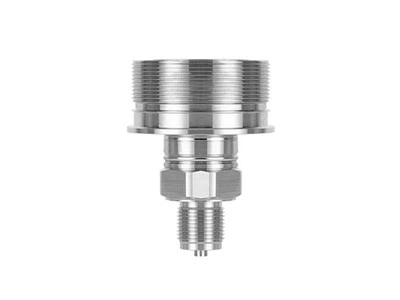
Yo, folks! As a supplier of DP type transmitters, I often get asked if these bad boys can be used in oil and gas pipelines. Well, let me break it down for you.
First off, what's a DP type transmitter anyway? A differential pressure (DP) transmitter is a device that measures the difference in pressure between two points. It's a pretty nifty tool that has a whole bunch of applications in various industries, including oil and gas.


In oil and gas pipelines, there are a ton of things that need to be monitored. You've got flow rates, levels of liquids in tanks, and the pressure of the fluids moving through the pipes. And that's where DP type transmitters come in real handy.
Let's talk about flow measurement. In oil and gas pipelines, knowing the flow rate of the fluids is crucial. It helps in managing the production, ensuring that the right amount of product is being transported, and also in detecting any leaks or blockages. A DP type transmitter can be used to measure the pressure drop across a flow element, like an orifice plate or a venturi tube. By measuring the differential pressure, we can calculate the flow rate using well - established equations.
For example, according to Bernoulli's principle, the pressure drop across a constriction in a pipe is related to the flow velocity. And the DP type transmitter can accurately measure this pressure drop. Our SMP858 - NST Differential Pressure Transmitter is a great choice for this kind of application. It's highly accurate, reliable, and can withstand the harsh conditions often found in oil and gas pipelines.
Another important aspect is level measurement. In storage tanks along the pipeline, you need to know how much oil or gas is in there. A DP type transmitter can be used to measure the level of the liquid in the tank. By measuring the differential pressure between the bottom and the top of the tank, we can figure out the liquid level. It's a simple yet effective method. Our SMP858 - DST Differential Pressure Transmitter is well - suited for level measurement applications. It has a high - quality sensor that can provide precise readings even in the presence of vibrations and temperature variations.
Now, I know what you're thinking. Oil and gas pipelines are tough environments. There's high pressure, corrosive materials, and extreme temperatures. Can DP type transmitters really handle all that? The answer is yes! Modern DP type transmitters are designed to be robust and durable. They are made with materials that can resist corrosion, such as stainless steel and Hastelloy. And they are engineered to operate over a wide range of temperatures and pressures.
For instance, our DMP305X - TLT Gauge Pressure Transmitter is built to withstand the rigors of oil and gas pipeline applications. It has a rugged housing and can handle high - pressure situations without losing its accuracy.
But, like any piece of equipment, there are some things to keep in mind when using DP type transmitters in oil and gas pipelines. First of all, proper installation is crucial. The transmitter needs to be installed in the right location and connected correctly to ensure accurate measurements. You also need to calibrate the transmitter regularly to make sure it's still giving accurate readings.
Another thing is maintenance. You should check the transmitter for any signs of wear and tear, and replace any faulty parts as soon as possible. And if you're working in a hazardous area, make sure the transmitter is certified for use in that environment.
In addition to the technical aspects, cost is also a factor. DP type transmitters can be a significant investment, but the benefits they provide in terms of accurate measurement and process control are well worth it. Think about it. By having accurate flow and level measurements, you can optimize the production process, reduce waste, and avoid costly downtime due to leaks or blockages.
So, to sum it up, yes, a DP type transmitter can definitely be used in an oil and gas pipeline. In fact, it's an essential tool for monitoring and controlling the flow of oil and gas. Whether it's for flow measurement, level measurement, or pressure monitoring, DP type transmitters offer reliable and accurate solutions.
If you're in the oil and gas business and are looking for a high - quality DP type transmitter, we've got you covered. Our range of transmitters is designed to meet the specific needs of oil and gas pipeline applications. We offer excellent customer support and after - sales service to ensure that you get the most out of your investment.
Whether you have questions about installation, calibration, or just want to learn more about our products, don't hesitate to reach out. We're here to help you make the right choice for your pipeline operations. Let's have a chat and see how we can work together to improve your oil and gas pipeline efficiency.
References
Hall, B. (2018). Pressure Measurement in Oil and Gas Pipelines. Petroleum Press.
Smith, J. (2019). Differential Pressure Transmitters: Principles and Applications. Process Instrumentation Journal.