Do transmitter accessories need to be calibrated? That's a question I get asked a lot as a supplier of Transmitter Accessories. In this blog, I'm gonna share my thoughts on this topic and why calibration might or might not be a big deal.
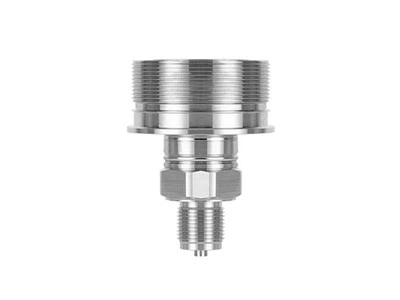
Let's start by understanding what transmitter accessories are. These are the components that work hand - in - hand with transmitters to ensure they function properly. For example, we've got things like manifolds, which help control the flow of fluids to the transmitter. Products like the FZ20 Manifold and FZ50 Manifold are common ones in our catalog. Temperature transmitters are also key, such as the THA33 Analog Temperature Transmitter.
Now, onto the big question: Do they need calibration? Well, it depends on a few factors.
Accuracy requirements play a huge role. If you're in an industry where precision is everything, like in scientific research or high - end manufacturing, then calibration is often a must. A tiny error in measurement can lead to major issues down the line. For instance, in a chemical plant, an inaccurate temperature reading due to an uncalibrated transmitter accessory could mess up a chemical reaction, causing dangerous situations or ruining the product quality.
On the other hand, if the application isn't as sensitive to small measurement errors, you might be able to skip calibration or do it less frequently. In some general industrial setups where an approximate value is good enough, calibration might not be a top priority. However, it's still something to keep in mind because over time, even small inaccuracies can add up and cause problems.
Another factor is the environment. If the transmitter accessories are operating in a harsh environment, with extreme temperatures, high humidity, or lots of vibrations, they're more likely to go out of calibration. These conditions can affect the components of the accessories and cause them to deviate from their original settings. For example, a manifold installed near a large engine that generates a lot of vibration might loosen its internal parts, which could impact its performance and require calibration.
As a supplier, I always recommend starting with a new accessory calibration. This gives you a baseline to work from. You know exactly how accurate it is when it's fresh out of the box. Then, based on the usage, environment, and accuracy needs, you can decide on a calibration schedule. Some companies do it annually, while others might do it quarterly or even monthly in critical applications.
Calibration isn't just about getting an accurate reading. It's also about compliance. In some industries, there are strict regulations that require regular calibration of instruments and their accessories. Not following these rules can lead to fines and legal issues. So, even if you think your application doesn't need super - accurate measurements, you still might have to calibrate to stay on the right side of the law.
Now, I know what you're thinking: Calibration costs money and time. Well, it's true. There are costs associated with calibration, including the cost of the calibration equipment, the labor involved, and any downtime when the accessory is taken out of service. But think about the long - term benefits. An uncalibrated accessory could cause you to make bad decisions based on inaccurate data, and that could cost you a lot more in the long run.
If you're worried about the cost, there are ways to manage it. You can work with a calibration service provider who offers affordable rates. Some suppliers, like us, can also provide guidance on calibration best practices to help you do it more efficiently.
In conclusion, while not all transmitter accessories need to be calibrated all the time, it's something that should be carefully considered. Look at your accuracy needs, the environment the accessories are in, and any regulatory requirements. Starting with a new accessory calibration and then setting up a proper schedule can save you a lot of headaches in the long term.
Whether you're just starting to think about calibration for your transmitter accessories or you're looking for new, reliable products, we're here to help. We've got a wide range of high - quality transmitter accessories, and we can offer advice on calibration and maintenance. If you're interested in learning more about our products or working out a calibration plan, don't hesitate to reach out. We're always happy to have a chat and see how we can meet your needs.


References
- Various industry standards and guidelines related to instrument calibration
- In - house knowledge and experience from working with transmitter accessories over the years