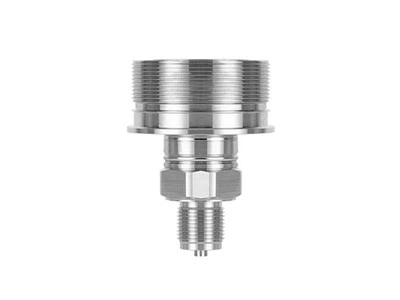
Shock resistance is a crucial factor when it comes to DP (Differential Pressure) pressure transmitters. As a supplier of these devices, I've seen firsthand how it impacts performance under various real - world conditions.
Let's first break down what shock resistance means in the context of DP pressure transmitters. In simple terms, shock resistance refers to a transmitter's ability to withstand sudden and intense forces without suffering permanent damage or significant performance degradation. These forces can be caused by a variety of events, such as machinery impacts, drops during installation or transportation, or even seismic activity in some industrial settings.
When a DP pressure transmitter is subjected to a shock, several things can happen. The internal components, like the pressure sensing element, might get misaligned. This can lead to inaccurate pressure readings, which can be a huge problem in industries where precise pressure measurements are critical. For example, in the oil and gas industry, incorrect pressure readings from a DP transmitter can lead to inefficiencies in production, and in the worst - case scenario, pose safety risks.
Now, how do we measure the shock resistance of a DP pressure transmitter? Manufacturers usually specify the shock resistance in terms of acceleration (in g - forces) and the duration of the shock. For instance, a common specification might be "100 g for 11 ms". This means the transmitter can endure a shock equivalent to 100 times the acceleration due to gravity for a duration of 11 milliseconds without malfunctioning.
There are different types of shocks that a DP pressure transmitter can encounter. Half - sine shock is one of the most common types used in testing. In this type of shock, the force increases to a peak value and then decreases in a sine - wave - like pattern. Square - wave shocks are also used in some cases, where the force suddenly jumps to a peak value and stays there for a short period before dropping suddenly.


As a supplier, we ensure that our DP pressure transmitters have high - quality shock - resistant features. For example, our DMP305X - DST Absolute Pressure Transmitter is built with robust materials and advanced internal structures. Its casing is designed to absorb and distribute shock energy, protecting the sensitive internal components. The pressure sensing element is also carefully calibrated and mounted to minimize the impact of shocks.
Another product in our lineup is the SMP858 - TST - S Gauge Pressure Transmitter. This transmitter is engineered with shock - dampening mechanisms. These mechanisms work like little cushions inside the device, reducing the force exerted on the pressure - sensing components when a shock occurs. This helps in maintaining the accuracy and reliability of the transmitter over time.
Our DMP305X - TST - S Absolute Pressure Transmitter is no exception. It incorporates state - of the - art technology to enhance its shock - resistance capabilities. The circuit boards are reinforced to prevent damage from sudden jolts, and the overall design is optimized to handle various types of shocks that might be encountered in different industrial environments.
In industries with high - shock environments, such as mining, construction, and heavy machinery manufacturing, the importance of shock - resistant DP pressure transmitters cannot be overstated. In mining operations, for example, the transmitters are often exposed to vibrations and impacts from drilling equipment and large - scale moving parts. A non - shock - resistant transmitter would quickly fail in such an environment, leading to costly downtime and maintenance.
When choosing a DP pressure transmitter, you need to consider the shock environment it will operate in. If the transmitter will be installed in an area with frequent impacts or vibrations, a high - shock - resistant model is a must. You should also look at the shock - resistance specifications provided by the manufacturer and compare them with your requirements.
We understand that different industries have different needs when it comes to shock resistance. That's why we offer a wide range of DP pressure transmitters with varying levels of shock - resistant capabilities. Whether you're in a relatively stable environment or dealing with high - impact situations, we have a product that can meet your needs.
If you're in the market for a DP pressure transmitter and are concerned about shock resistance, don't hesitate to reach out. We're here to help you find the right solution for your specific application. Our team of experts can provide detailed information about the shock - resistance features of our products and answer any questions you might have. Whether it's for a small - scale operation or a large - scale industrial project, we have the expertise and products to support you. So, come and have a chat with us about your DP pressure transmitter needs, and let's find the best fit together.
References
- Industry standards for pressure transmitter shock testing
- Manufacturer's technical documentation for DP pressure transmitters