In the realm of industrial measurement and control, pressure sensors play a pivotal role. They are the unsung heroes in countless applications, from automotive systems to aerospace, from medical devices to industrial automation. As a seasoned pressure sensor supplier, I often encounter questions from customers about various technical aspects of pressure sensors. One of the most frequently asked questions is: "What is the resolution of a pressure sensor?" In this blog post, I aim to demystify this concept and explain its significance in the context of pressure sensor performance.
Understanding the Basics of Pressure Sensors
Before delving into the resolution of a pressure sensor, it's essential to have a basic understanding of how pressure sensors work. A pressure sensor, also known as a pressure transducer, is a device that converts pressure into an electrical signal. This electrical signal can then be processed and used for various purposes, such as monitoring, control, or alarm systems.
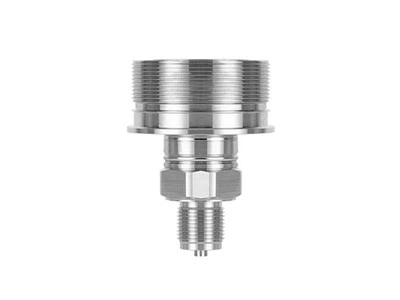
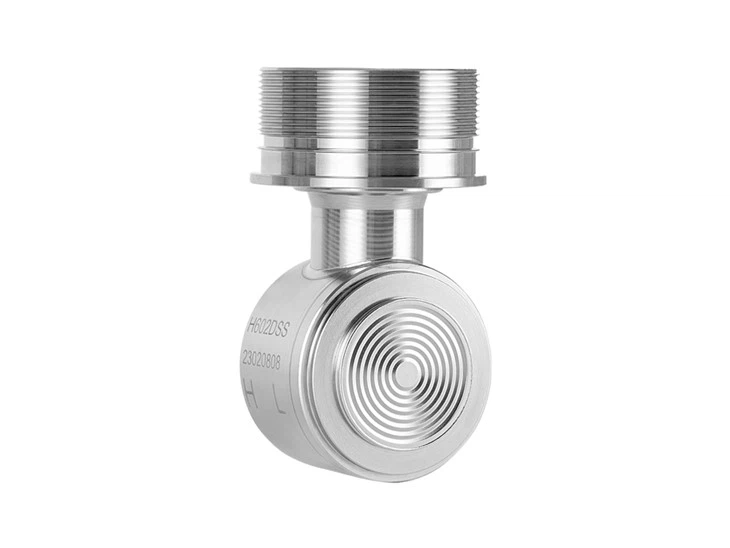
There are different types of pressure sensors available in the market, each with its own working principle and application areas. Some common types include piezoresistive sensors, capacitive sensors, and optical sensors. At our company, we offer a wide range of high - quality pressure sensors, such as the SP38D Monosilicon Pressure Sensor, SP38H Pressure Sensor, and SP19FR Monosilicon Pressure Sensor, which are designed to meet the diverse needs of our customers.
Defining Resolution
Resolution is a fundamental parameter that describes the smallest change in pressure that a pressure sensor can detect and distinguish. In other words, it is the smallest increment of pressure that the sensor can measure and report as a change in its output signal.
Mathematically, resolution can be expressed in terms of pressure units, such as pascals (Pa), pounds per square inch (psi), or bar. For example, if a pressure sensor has a resolution of 1 Pa, it means that the sensor can detect a pressure change as small as 1 Pa and provide a corresponding change in its output signal.
Importance of Resolution
The resolution of a pressure sensor is crucial in many applications. Here are some key reasons why:
1. Precision Measurement
In applications where precise pressure measurement is required, such as in scientific research, calibration laboratories, and high - end manufacturing processes, a high - resolution pressure sensor is essential. For instance, in a semiconductor manufacturing process, even a small variation in pressure can affect the quality and performance of the final product. A pressure sensor with high resolution can accurately detect these small pressure changes, ensuring the precision of the manufacturing process.
2. Control and Regulation
In control systems, pressure sensors are used to monitor and regulate pressure levels. A sensor with high resolution can provide more accurate feedback to the control system, allowing for more precise control of pressure - related processes. For example, in a hydraulic system, a high - resolution pressure sensor can help maintain a stable pressure, preventing over - or under - pressurization and ensuring the safe and efficient operation of the system.
3. Early Fault Detection
In industrial applications, early detection of pressure changes can help prevent equipment failures and downtime. A pressure sensor with high resolution can detect small, abnormal pressure changes that may indicate the onset of a problem. For example, in a pipeline system, a sudden small change in pressure may be a sign of a leak or blockage. By detecting these changes early, maintenance can be scheduled in a timely manner, reducing the risk of costly breakdowns.
Factors Affecting Resolution
Several factors can affect the resolution of a pressure sensor. Understanding these factors can help in selecting the right sensor for a specific application.
1. Sensor Technology
Different sensor technologies have different inherent resolutions. For example, piezoresistive sensors typically offer high sensitivity and relatively high resolution. These sensors work based on the change in resistance of a piezoresistive material when subjected to pressure. Capacitive sensors, on the other hand, can also provide high resolution, especially in applications where low - pressure measurements are required. They measure pressure by detecting the change in capacitance between two electrodes due to pressure - induced deformation.
2. Signal Processing
The signal processing circuitry of a pressure sensor can also impact its resolution. Advanced signal processing techniques, such as analog - to - digital conversion (ADC) with high bit - depth, can improve the resolution of the sensor. A higher bit - depth ADC can provide more discrete levels for representing the pressure signal, allowing for more precise measurement of small pressure changes.
3. Environmental Conditions
Environmental factors such as temperature, humidity, and vibration can affect the resolution of a pressure sensor. Temperature, in particular, can cause thermal drift in the sensor's output, which may reduce its effective resolution. To mitigate these effects, many pressure sensors are designed with temperature compensation circuits to maintain stable performance over a wide temperature range.
How to Choose the Right Resolution
When selecting a pressure sensor, it's important to choose the right resolution based on the specific requirements of the application. Here are some steps to consider:
1. Determine the Measurement Range
First, determine the range of pressures that need to be measured in the application. This will help narrow down the selection of sensors. For example, if the application requires measuring pressures in the range of 0 - 100 psi, a sensor with a suitable measurement range should be chosen.
2. Evaluate the Required Precision
Consider the level of precision needed in the measurement. If high precision is required, a sensor with a high resolution should be selected. However, it's also important to balance the resolution with other factors such as cost and response time.

3. Consider the Application Environment
Take into account the environmental conditions in which the sensor will operate. If the environment is harsh, with high temperatures, humidity, or vibration, a sensor that is designed to withstand these conditions and maintain its resolution should be chosen.
Our Company's Pressure Sensors and Resolution
At our company, we understand the importance of resolution in pressure sensor applications. That's why our pressure sensors, such as the SP38D Monosilicon Pressure Sensor, SP38H Pressure Sensor, and SP19FR Monosilicon Pressure Sensor, are engineered to provide high resolution and accurate pressure measurement.
These sensors are based on advanced monosilicon technology, which offers high sensitivity and excellent linearity. They are also equipped with state - of - the - art signal processing circuitry to ensure high - resolution performance. Whether you need a sensor for a precision measurement application or a control system, our sensors can meet your requirements.
Conclusion
In conclusion, the resolution of a pressure sensor is a critical parameter that determines its ability to detect and measure small pressure changes. It plays a vital role in precision measurement, control and regulation, and early fault detection. When selecting a pressure sensor, it's important to consider the application requirements, sensor technology, and signal processing capabilities to ensure the right resolution is chosen.
As a leading pressure sensor supplier, we are committed to providing high - quality sensors with excellent resolution and performance. If you are in need of a pressure sensor for your application, we invite you to contact us for more information and to discuss your specific requirements. Our team of experts is ready to assist you in selecting the most suitable sensor and providing you with the best solutions.
References
- Doebelin, E. O. (2003). Measurement Systems: Application and Design. McGraw - Hill.
- Kao, W. H. (2000). Transducers for Electronic Measuring Systems. Prentice Hall.
- Liptak, B. G. (2003). Instrument Engineers' Handbook, Volume 1: Process Measurement and Analysis. CRC Press.