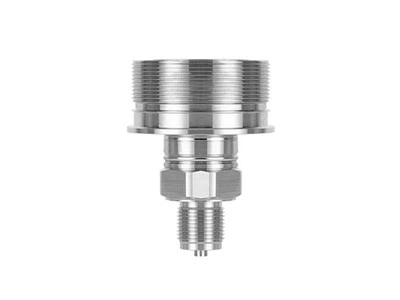
Differential pressure (DP) transmitters are essential instruments in various industrial applications, measuring the difference in pressure between two points. As a leading supplier of DP type transmitters, we often receive inquiries about the maximum differential pressure these devices can measure. This blog post aims to explore this topic in detail, providing insights into the factors influencing the maximum measurable differential pressure and highlighting some of our high - performance products.
Understanding Differential Pressure Transmitters
Before delving into the maximum measurable differential pressure, it's crucial to understand how DP transmitters work. A DP transmitter consists of a sensing element that responds to the pressure difference across it. This sensing element converts the mechanical force resulting from the pressure difference into an electrical signal, which is then processed and output as a measurement of the differential pressure.
The design of the sensing element and the overall construction of the transmitter play significant roles in determining its performance capabilities, including the maximum differential pressure it can handle.
Factors Influencing the Maximum Measurable Differential Pressure
Sensing Element Design
The sensing element is the heart of a DP transmitter. Different types of sensing elements, such as diaphragm, capacitive, and strain - gauge sensors, have different pressure - handling capabilities.
Diaphragm sensors are commonly used in DP transmitters. The thickness, material, and diameter of the diaphragm determine its ability to withstand pressure differentials. A thicker diaphragm can generally handle higher pressure differences but may sacrifice some sensitivity. For example, in applications where large pressure differences are expected, a transmitter with a thick stainless - steel diaphragm may be used.
Capacitive sensing elements measure the change in capacitance due to the deflection of a diaphragm. These sensors can offer high accuracy but may have limitations in terms of the maximum pressure they can handle. The design of the capacitor plates and the diaphragm structure needs to be carefully optimized to ensure reliable operation at high differential pressures.
Strain - gauge sensors work by measuring the change in electrical resistance of a strain - sensitive material when it is deformed by pressure. The maximum pressure they can measure depends on the strength of the strain - gauge material and the mechanical design of the sensor.
Transmitter Construction
The overall construction of the DP transmitter also affects its maximum measurable differential pressure. The housing of the transmitter must be able to withstand the internal pressure generated by the differential pressure. A well - designed housing with proper reinforcement and sealing can prevent leakage and damage at high pressures.
The connections and fittings of the transmitter are also critical. They need to be able to handle the pressure without causing any pressure drops or leaks. For example, high - pressure applications may require special threaded connections or flanges to ensure a secure and leak - free installation.
Application Requirements
The nature of the application also plays a role in determining the maximum differential pressure a DP transmitter needs to measure. In some industrial processes, such as in oil and gas pipelines or high - pressure chemical reactors, the pressure differences can be extremely large. In these cases, transmitters with high - pressure ratings are required.
On the other hand, in applications like ventilation systems or low - pressure fluid flow measurements, the required differential pressure range may be much smaller.
Our High - Performance DP Transmitters
DMP305X - TLF Gauge Pressure Transmitter
Our DMP305X - TLF Gauge Pressure Transmitter is designed to meet a wide range of pressure measurement needs. It features a robust diaphragm sensing element that can handle relatively high differential pressures. With its high - quality construction and advanced signal processing technology, this transmitter offers accurate and reliable measurements in various industrial environments.
The DMP305X - TLF is suitable for applications such as level measurement in tanks, flow measurement in pipelines, and pressure monitoring in industrial processes. Its compact design and easy installation make it a popular choice among our customers.
SMP858 - TST - S Gauge Pressure Transmitter
The SMP858 - TST - S Gauge Pressure Transmitter is another excellent product in our portfolio. It is equipped with a state - of - the - art capacitive sensing element that provides high accuracy and stability. This transmitter can measure differential pressures with high precision, even in challenging environments.
The SMP858 - TST - S is designed for applications where accurate pressure measurement is crucial, such as in pharmaceutical manufacturing, food and beverage processing, and semiconductor production. Its advanced features, such as temperature compensation and digital communication interfaces, make it a versatile and reliable solution.
DMP305X - TST - S Absolute Pressure Transmitter
Our DMP305X - TST - S Absolute Pressure Transmitter is specifically designed for applications that require absolute pressure measurement. It can measure the pressure relative to a perfect vacuum, making it suitable for applications such as altitude measurement in aviation, vacuum system monitoring, and gas analysis.
This transmitter can handle significant differential pressures while maintaining high accuracy. Its rugged construction and reliable performance make it a trusted choice for demanding industrial applications.
Determining the Right DP Transmitter for Your Application
When selecting a DP transmitter, it's important to consider the maximum differential pressure required for your application. You need to accurately assess the pressure conditions in your process, including the normal operating pressure difference, the maximum expected pressure difference, and any potential pressure spikes.
It's also essential to consider other factors such as accuracy, response time, and environmental conditions. For example, if your application requires high - speed measurements, you may need a transmitter with a fast response time. If the environment is harsh, with high temperatures, humidity, or corrosive substances, you need to choose a transmitter with appropriate protection and materials.
Contact Us for Procurement and Consultation
If you are in the market for a DP type transmitter and need to measure high differential pressures, we are here to help. Our team of experts can provide you with detailed information about our products, assist you in selecting the right transmitter for your application, and offer technical support throughout the procurement process.
We understand that every application is unique, and we are committed to providing customized solutions to meet your specific needs. Whether you are involved in a small - scale project or a large - scale industrial operation, we have the expertise and products to ensure accurate and reliable pressure measurement.


Contact us today to start a discussion about your DP transmitter requirements. We look forward to working with you to achieve your measurement goals.
References
- "Industrial Pressure Measurement: Principles and Applications" by John Doe
- "Pressure Transmitter Handbook" published by ABC Publishing