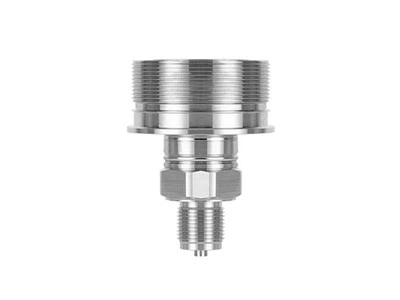
Hey there! If you're in the market for a DP (Differential Pressure) type transmitter, you've come to the right place. I'm a supplier in the field, and I've seen firsthand how linearity can have a huge impact on the measurement of these transmitters. So, let's dive into this topic and see how linearity affects things.
What is a DP Type Transmitter?
Before we talk about linearity, let's quickly go over what a DP type transmitter is. It's a device that measures the difference in pressure between two points. This measurement is crucial in a whole bunch of industries, like manufacturing, oil and gas, and HVAC systems. DP transmitters can help monitor flow rates, level of liquids in tanks, and even filter performance.
The Deal with Linearity
Linearity in a DP transmitter refers to how well the output signal of the transmitter corresponds to the input pressure difference in a straight - line relationship. Ideally, when the pressure difference changes, the output signal should change proportionally. For example, if the pressure difference doubles, the output signal should also double.
But in the real world, achieving perfect linearity is tough. Most DP transmitters have some degree of non - linearity. This non - linearity can come from various sources, such as the mechanical design of the sensor, the materials used, or external factors like temperature and vibration.
How Linearity Affects Measurement Accuracy
Accuracy is super important when it comes to DP transmitters. If the linearity is off, your measurement accuracy will be affected. Let's say you're using a DP transmitter to measure the flow rate in a pipeline. A non - linear DP transmitter might give you inaccurate readings, especially at the extreme ends of the pressure range.
For instance, if the transmitter has poor linearity at low pressure differences, it might over - or under - estimate the flow rate. This can lead to all sorts of problems. In a manufacturing process, inaccurate flow rate measurements could mean improper mixing of chemicals, which can affect the quality of the final product. In a water treatment plant, it could lead to inefficient water distribution.


Impact on Calibration
Linearity also plays a big role in calibration. Calibration is the process of adjusting the DP transmitter to ensure its output accurately reflects the input pressure difference. A transmitter with good linearity is much easier to calibrate.
When a transmitter has poor linearity, the calibration process becomes more complex. You might need to use more calibration points to account for the non - linear behavior. For example, instead of just calibrating at the minimum, middle, and maximum pressure points, you might need to add several more points in between. This takes more time and resources, and it also means there's a higher chance of calibration errors.
Real - World Examples
Let me share some real - world examples to illustrate how linearity affects the measurement of DP transmitters.
Example 1: Chemical Processing
In a chemical processing plant, a DP transmitter is used to measure the pressure difference across a filter. If the transmitter has poor linearity, it might misinterpret the pressure drop across the filter. This could lead to the plant operator thinking the filter is clogged when it's actually fine, or vice versa. This can result in unnecessary filter replacements, which are costly and can also cause downtime in the production process.
Example 2: HVAC Systems
In an HVAC system, DP transmitters are used to measure the flow of air through ducts. If the linearity of the transmitter is not up to par, the system might not be able to accurately control the air flow. This can lead to uneven temperature distribution in a building, making it uncomfortable for the occupants. It can also increase energy consumption as the system tries to compensate for the inaccurate air flow measurements.
Our Product Range
As a supplier, we offer a range of high - quality DP type transmitters that are designed with linearity in mind. For instance, our DMP305X - TLT Gauge Pressure Transmitter is known for its excellent linearity across a wide pressure range. This ensures accurate measurements and easy calibration.
Another great product in our lineup is the SMP858 - NST Differential Pressure Transmitter. It has been engineered to minimize non - linearity, which makes it a reliable choice for critical applications.
And if you're looking for an absolute pressure transmitter with good linearity, our DMP305X - TST - S Absolute Pressure Transmitter is a top - notch option. It provides accurate and stable measurements, even in harsh environments.
Why Choose Our DP Transmitters?
We understand that linearity is just one of many factors you need to consider when choosing a DP transmitter. That's why our products are also built to be durable, reliable, and easy to install and maintain.
Our team of experts is always available to answer your questions and help you choose the right transmitter for your specific needs. Whether you're in a small - scale operation or a large industrial facility, we've got a solution for you.
Let's Talk!
If you're interested in learning more about our DP type transmitters or want to discuss your specific requirements, don't hesitate to reach out. We're here to help you make the best choice for your measurement needs. Let's work together to ensure accurate and reliable pressure measurements in your applications.
References
- Smith, J. (2020). "Understanding Pressure Transmitter Basics". Pressure Measurement Journal.
- Johnson, A. (2021). "The Importance of Linearity in Instrumentation". Industrial Instrumentation Review.