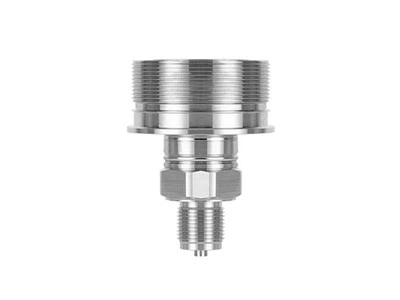
Hey there! As a supplier of DP pressure transmitters, I'm stoked to dive into how these nifty devices work in a two - phase flow system. So, let's get right into it.


First off, what's a two - phase flow system? Well, it's a system where two different phases of matter, like a liquid and a gas, flow together. Think of it like a pipeline carrying a mixture of oil and natural gas. These systems are super common in industries such as oil and gas, chemical processing, and power generation.
Now, onto the star of the show: the DP pressure transmitter. DP stands for differential pressure. In simple terms, a DP pressure transmitter measures the difference in pressure between two points in a system. This measurement is crucial because it can tell us a whole lot about what's going on inside that two - phase flow system.
So, how does it actually work? Let's break it down step by step.
The Basics of Pressure Measuring
At the heart of a DP pressure transmitter are two pressure sensing elements. These elements are designed to detect the pressure at two different points in the two - phase flow system. One sensing element is connected to the high - pressure side, and the other is connected to the low - pressure side.
When the two - phase fluid flows through the system, it exerts different pressures at these two points. The transmitter measures these pressures and then calculates the difference between them. This differential pressure reading is what gives us valuable information about the flow characteristics of the two - phase mixture.
The Role of Diaphragms
Most DP pressure transmitters use diaphragms as the pressure - sensing elements. These diaphragms are thin, flexible membranes that deform when pressure is applied to them. On the high - pressure side, the diaphragm gets pushed in one direction, and on the low - pressure side, it gets pushed in the opposite direction.
The deformation of the diaphragms is then converted into an electrical signal. This is usually done using a strain gauge or a capacitive sensing mechanism. A strain gauge changes its electrical resistance when it's deformed, while a capacitive sensor changes its capacitance. These changes in electrical properties are proportional to the amount of diaphragm deformation, which in turn is related to the pressure difference.
Signal Processing
Once the electrical signal is generated, it goes through a signal - processing unit in the transmitter. This unit amplifies the weak electrical signal and converts it into a more useful form, like a 4 - 20 mA current signal or a digital signal.
The processed signal can then be sent to a control system or a monitoring device. Operators can use this information to make decisions about the operation of the two - phase flow system. For example, they can adjust the flow rate, check for blockages, or monitor the quality of the two - phase mixture.
Challenges in Two - Phase Flow
Measuring differential pressure in a two - phase flow system isn't always a walk in the park. There are several challenges that can affect the accuracy of the DP pressure transmitter.
One major challenge is the presence of bubbles or droplets in the flow. These can cause fluctuations in the pressure readings, making it difficult to get a stable and accurate differential pressure measurement. To overcome this, some DP pressure transmitters are designed with special features, like anti - clogging mechanisms or advanced signal - filtering algorithms.
Another challenge is the change in the physical properties of the two - phase mixture. For example, the density and viscosity of the mixture can vary depending on factors like temperature, pressure, and the ratio of the two phases. These changes can also affect the pressure readings, so the transmitter needs to be calibrated regularly to ensure accurate measurements.
Our Products: A Closer Look
As a supplier, we offer a range of high - quality DP pressure transmitters that are specifically designed for two - phase flow systems. One of our popular products is the SMP858 - NST Differential Pressure Transmitter. This transmitter is known for its high accuracy and reliability, even in challenging two - phase flow conditions.
It features advanced diaphragm technology that can withstand the forces exerted by the two - phase mixture. The signal - processing unit is also top - notch, with built - in algorithms to filter out noise and provide stable differential pressure readings.
We also have the SMP858 - NST Differential Pressure Transmitter, which offers similar performance but with some additional features for specific applications. And if you're looking for a gauge pressure transmitter, our SMP858 - TST - S Gauge Pressure Transmitter is a great option. It can be used in conjunction with the DP pressure transmitter to get a more comprehensive view of the pressure conditions in the two - phase flow system.
Why Choose Our DP Pressure Transmitters?
There are several reasons why you should consider our DP pressure transmitters for your two - phase flow system.
First of all, our products are built to last. We use high - quality materials and advanced manufacturing processes to ensure that our transmitters can withstand the harsh environments often found in industrial two - phase flow applications.
Secondly, our transmitters are highly accurate. We invest a lot of time and resources in research and development to improve the accuracy of our pressure - sensing technology. This means you can rely on our transmitters to give you precise differential pressure measurements, which are essential for the efficient operation of your two - phase flow system.
Finally, we offer excellent customer support. Our team of experts is always ready to help you with installation, calibration, and troubleshooting. We understand that every two - phase flow system is unique, and we're committed to providing you with the best solutions for your specific needs.
Conclusion and Call to Action
In conclusion, DP pressure transmitters play a crucial role in two - phase flow systems. They help us measure the differential pressure, which gives us valuable insights into the flow characteristics of the two - phase mixture. Despite the challenges, our high - quality DP pressure transmitters, like the SMP858 - NST Differential Pressure Transmitter and SMP858 - TST - S Gauge Pressure Transmitter, are designed to provide accurate and reliable measurements.
If you're in the market for a DP pressure transmitter for your two - phase flow system, we'd love to hear from you. Whether you have questions about our products, need help with installation, or are ready to place an order, don't hesitate to reach out. We're here to help you find the perfect solution for your industrial needs.
References
- Miller, R. W. (1983). Flow measurement engineering handbook. McGraw - Hill.
- Spitzer, D. W. (2003). Industrial flow measurement. ISA - The Instrumentation, Systems, and Automation Society.
- Beck, M. S., & Plaskowski, A. (1997). Flow measurement in two - phase systems. Chapman & Hall.