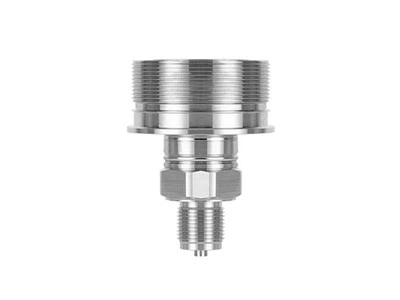
Hey there! As a supplier of DP type transmitters, I often get asked about the shielding measures that can be taken to ensure these devices work their best. So, I thought I'd share some insights on this topic.
First off, let's understand why shielding is so important for DP type transmitters. These transmitters are used in various industrial applications to measure the difference in pressure between two points. They're sensitive little gadgets, and factors like electromagnetic interference (EMI), radio - frequency interference (RFI), and electrostatic discharge (ESD) can mess with their accuracy and reliability.
1. Physical Shielding
One of the most straightforward shielding methods is physical shielding. We can use metal enclosures to house the DP type transmitters. Metals like aluminum and steel are great choices because they can block a significant amount of EMI and RFI. A well - constructed metal enclosure acts as a Faraday cage. It redirects the electromagnetic waves around the transmitter, keeping the sensitive internal components safe from interference.
For example, when we manufacture our SMP858 - DST Differential Pressure Transmitter, we use a high - quality aluminum enclosure. This not only provides physical protection against impacts but also shields the internal circuitry from external electromagnetic fields. The enclosure is designed to be airtight as much as possible, reducing the chances of dust and moisture getting in, which can also cause problems for the transmitter.
2. Cable Shielding
The cables connected to the DP type transmitters are like highways for electrical signals. But they can also pick up interference along the way. That's where cable shielding comes in. Shielded cables have an extra layer of conductive material, usually copper or aluminum foil, wrapped around the inner conductors.
This shielding layer acts as a barrier, preventing external electromagnetic fields from inducing unwanted currents in the signal - carrying conductors. When installing our transmitters, we always recommend using shielded cables. For instance, the DMP305X - DST Absolute Pressure Transmitter comes with detailed installation instructions that emphasize the use of shielded cables. The shield of the cable should be properly grounded at one end (usually the transmitter end) to ensure effective shielding.
3. Grounding
Grounding is another crucial shielding measure. A proper grounding system provides a low - resistance path for electrical currents to flow safely into the ground. When a DP type transmitter is grounded correctly, it helps to dissipate any static charges that might build up on the device.
In industrial environments, there can be a lot of electrical equipment operating nearby. These can create electrical noise that can interfere with the transmitter. By grounding the transmitter, we can reduce the impact of this noise. We make sure that all our transmitters, including the SMP858 - NST Differential Pressure Transmitter, have clear grounding instructions. The grounding should be done to a reliable earth ground, and the grounding conductor should be of an appropriate size to handle any potential fault currents.


4. Filtering
Filtering is a way to clean up the electrical signals going in and out of the DP type transmitter. Electronic filters can be used to block unwanted frequencies while allowing the desired signal frequencies to pass through.
There are different types of filters, such as low - pass filters, high - pass filters, and band - pass filters. For example, a low - pass filter can be used to block high - frequency noise that might be present in the power supply or the signal lines. We often integrate filtering circuits into our transmitters to improve their immunity to interference. This helps to ensure that the measurements taken by the transmitter are accurate and consistent, even in noisy industrial environments.
5. Isolation
Isolation is a technique that separates the electrical circuits of the DP type transmitter from the external environment. This can be achieved using isolation transformers or opto - isolators.
Isolation transformers use magnetic coupling to transfer electrical power or signals between two circuits without a direct electrical connection. This helps to block DC and low - frequency interference. Opto - isolators, on the other hand, use light to transfer signals between two circuits. They provide electrical isolation by converting the electrical signal into light and then back into an electrical signal on the other side. This effectively blocks any electrical interference that might try to cross between the two circuits.
We incorporate isolation techniques in our transmitters to protect them from ground loops and other forms of interference. This ensures that the transmitter can operate independently and accurately, regardless of the electrical conditions in the surrounding environment.
6. Software - based Shielding
In addition to the hardware shielding measures, we also use software - based techniques to enhance the performance of our DP type transmitters. Software algorithms can be used to detect and correct for any interference - induced errors in the measurement data.
For example, we can use digital filtering algorithms in the transmitter's firmware. These algorithms can analyze the incoming data and remove any noise or spikes that are likely to be caused by interference. The software can also perform self - diagnostics to detect if there is any abnormal behavior in the transmitter's operation, which might be due to interference. If an issue is detected, the software can take corrective actions, such as adjusting the measurement parameters or sending an alert to the user.
Conclusion
In conclusion, there are several shielding measures that can be taken for DP type transmitters. Physical shielding, cable shielding, grounding, filtering, isolation, and software - based techniques all play important roles in protecting these devices from electromagnetic interference, radio - frequency interference, and electrostatic discharge.
At our company, we take these shielding measures very seriously. We design and manufacture our transmitters with the latest shielding technologies to ensure that they provide accurate and reliable pressure measurements in even the most challenging industrial environments.
If you're in the market for a high - quality DP type transmitter and want to learn more about how we implement these shielding measures, or if you have any specific requirements for your application, don't hesitate to reach out. We're here to help you find the perfect transmitter solution for your needs and ensure that it operates at its best.
References
- "Electromagnetic Compatibility Engineering" by Henry W. Ott
- "Industrial Instrumentation and Control Handbook" by B.C. Nakra and K.K. Chaudhry