Hey there! As a supplier of DP pressure transmitters, I often get asked about how these nifty devices work in a multiphase flow system. So, I thought I'd take the time to break it down for you in a way that's easy to understand.
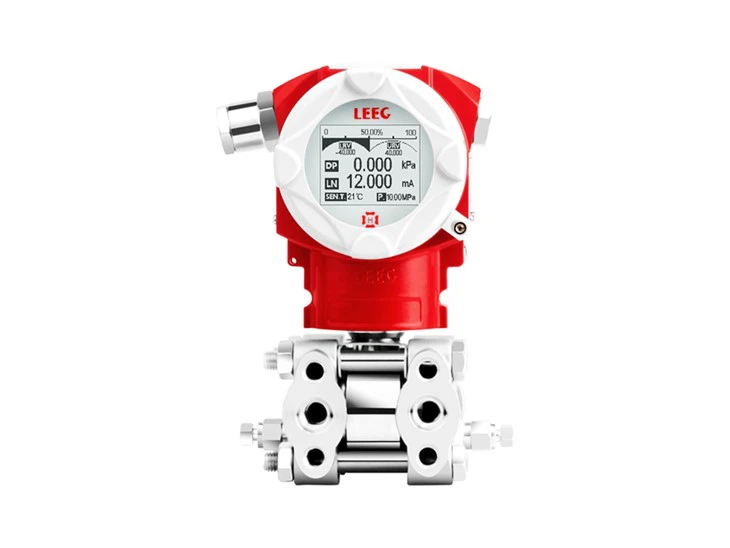
First off, let's talk about what a DP pressure transmitter is. DP stands for differential pressure, and a DP pressure transmitter measures the difference in pressure between two points in a system. It's a crucial tool in many industries, especially when it comes to measuring flow rates in pipes.
Now, a multiphase flow system is a bit more complex. In a multiphase flow, you've got two or more phases of matter flowing together. This could be a combination of gas, liquid, and solid particles. Think of an oil well, where you've got crude oil (a liquid), natural gas (a gas), and sometimes even sand or other solids flowing through the pipes. Measuring the flow in a multiphase system is tricky because the different phases have different densities and flow characteristics.
So, how does a DP pressure transmitter fit into all this? Well, the basic principle is still the same. The transmitter measures the differential pressure across a specific element in the pipe, like an orifice plate, a venturi tube, or a flow nozzle. These elements are designed to create a pressure drop when the fluid flows through them. The greater the flow rate, the bigger the pressure drop.
Let's take a closer look at how this works. When the multiphase fluid flows through the flow element, it experiences a change in velocity. According to Bernoulli's principle, as the velocity of a fluid increases, its pressure decreases. So, the fluid's pressure drops as it passes through the flow element. The DP pressure transmitter measures this pressure difference between the upstream and downstream sides of the flow element.
But here's the catch. In a multiphase flow, the pressure drop isn't just a function of the flow rate. It also depends on the composition of the phases, their densities, and how they're distributed within the pipe. For example, if there's a lot of gas in the mixture, it will have a different effect on the pressure drop compared to a mostly liquid flow.
To account for these complexities, modern DP pressure transmitters are equipped with advanced sensors and algorithms. These sensors can detect changes in the fluid's properties, such as density and viscosity, and the algorithms use this information to calculate the flow rate more accurately. Some transmitters can even provide separate measurements for each phase in the multiphase flow.
Now, let's talk about some of the products we offer. We've got the 2035 Multivariable Transmitter. This bad boy is a real all - rounder. It can measure differential pressure, static pressure, and temperature all in one device. This is super useful in a multiphase flow system because it gives you more data to work with. By knowing the static pressure and temperature, you can better understand the state of the fluid and make more accurate flow calculations.
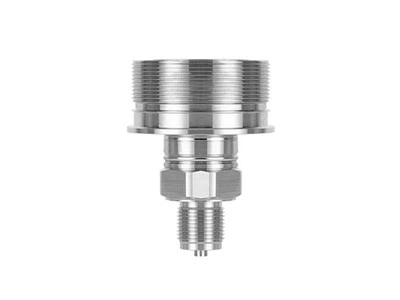
Another great option is the SMP858 - DST Differential Pressure Transmitter. It's designed to be highly accurate and reliable, even in harsh industrial environments. It has a wide range of measurement capabilities and can handle high - pressure differentials, which is important in a multiphase flow where the pressure changes can be significant.
And then there's the DMP305X - TLF Gauge Pressure Transmitter. This one is great for measuring the gauge pressure in the system. While it might not be directly measuring the differential pressure for flow calculations, it provides valuable information about the overall pressure conditions in the pipe, which can be used in conjunction with the differential pressure measurements.

In a multiphase flow system, having accurate pressure measurements is crucial for process control, safety, and efficiency. If you're not measuring the flow correctly, you could end up with issues like over - or under - production, equipment damage, or even safety hazards.
So, if you're in the market for a DP pressure transmitter for your multiphase flow system, we've got you covered. Our products are designed to provide accurate, reliable measurements in even the most challenging conditions. Whether you're in the oil and gas industry, chemical processing, or any other field that deals with multiphase flows, we can help you find the right solution.
If you're interested in learning more about our products or have any questions about how they can work in your specific application, don't hesitate to reach out. We're here to assist you with all your DP pressure transmitter needs. Let's have a chat and see how we can improve your multiphase flow measurement system.
References
- "Flow Measurement Handbook: Industrial Designs and Applications" by Richard W. Miller
- "Multiphase Flow Measurement: Fundamentals and Applications" by John G. Collier and J. R. Thome