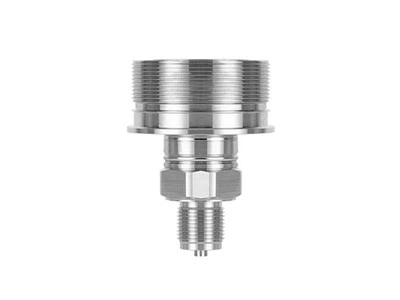
In the intricate world of low - temperature liquid systems, precision and reliability are paramount. Differential pressure (DP) transmitters play a crucial role in ensuring the smooth operation of these systems. As a trusted DP pressure transmitter supplier, I am delighted to share how these remarkable devices work in low - temperature liquid setups.
The Basics of a DP Pressure Transmitter
A DP pressure transmitter measures the difference in pressure between two points in a system. It consists of a sensing element, a signal - processing unit, and an output stage. The sensing element is the heart of the transmitter, as it detects the pressure difference and converts it into an electrical signal.
In a low - temperature liquid system, the two pressure points could be on either side of a flow restrictor, a heat exchanger, or a storage tank. For example, when measuring the flow rate of a cryogenic liquid through a pipe, the DP transmitter measures the pressure drop across an orifice plate. This pressure drop is directly related to the flow rate according to fluid dynamics principles.
Sensing Elements in Low - Temperature Applications
The sensing element in a DP pressure transmitter for low - temperature liquid systems must be able to withstand extreme cold while maintaining high accuracy. There are several types of sensing elements commonly used:
Capacitive Sensing Elements
Capacitive sensing elements work based on the change in capacitance due to the pressure difference. A diaphragm is placed between two electrodes. When pressure is applied, the diaphragm deflects, changing the distance between the diaphragm and the electrodes. This change in distance results in a change in capacitance, which is then measured and converted into an electrical signal.
In low - temperature applications, the materials used in capacitive sensing elements are carefully selected to have low thermal expansion coefficients. This ensures that the performance of the sensing element is not affected by the temperature changes. For example, some capacitive sensing elements use ceramic diaphragms, which are highly resistant to thermal shock and have excellent mechanical properties at low temperatures.
Strain - Gauge Sensing Elements
Strain - gauge sensing elements rely on the change in electrical resistance of a metal foil or semiconductor when it is deformed under pressure. In a DP transmitter, the pressure difference causes a diaphragm to deflect, which in turn strains the strain gauges attached to the diaphragm. The change in resistance is proportional to the pressure difference and can be measured using a Wheatstone bridge circuit.
For low - temperature liquid systems, strain - gauge materials are chosen to have stable electrical properties at low temperatures. Special coatings and encapsulation techniques are also used to protect the strain gauges from the corrosive effects of cryogenic liquids and to prevent moisture ingress, which could affect the performance of the sensing element.
Signal Processing and Output
Once the sensing element has converted the pressure difference into an electrical signal, the signal - processing unit takes over. This unit amplifies, filters, and linearizes the signal to ensure accurate and reliable measurement.
In modern DP pressure transmitters, microprocessor - based signal processing is commonly used. The microprocessor can perform complex calculations, compensate for temperature and other environmental factors, and provide diagnostic information. For example, it can detect if the sensing element is damaged or if there is a problem with the electrical connections.
The output stage of the DP transmitter converts the processed electrical signal into a standard output signal, such as a 4 - 20 mA current loop or a digital communication protocol like HART or Modbus. This allows the transmitter to interface with other control and monitoring systems in the low - temperature liquid system.
Challenges in Low - Temperature Liquid Systems
Operating a DP pressure transmitter in a low - temperature liquid system presents several challenges:
Thermal Effects
Low temperatures can cause thermal contraction of materials, which can affect the mechanical and electrical properties of the sensing element and other components of the transmitter. For example, the thermal stress on the diaphragm can cause it to crack or deform, leading to inaccurate measurements. To mitigate these effects, DP transmitters are designed with thermal compensation techniques. These techniques use temperature sensors to measure the ambient temperature and adjust the output signal accordingly.
Cryogenic Fluid Properties
Cryogenic liquids have unique properties, such as low viscosity and high volatility. These properties can cause problems such as cavitation, which can damage the sensing element and other components of the transmitter. To prevent cavitation, proper installation and piping design are essential. For example, the use of flow straighteners and proper orifice plate design can help to reduce the occurrence of cavitation.
Condensation and Frosting
In low - temperature environments, condensation and frosting can occur on the surface of the transmitter. This can affect the performance of the electrical components and optical sensors (if used). To prevent condensation and frosting, the transmitter can be heated or insulated. Some transmitters are equipped with built - in heaters or insulation materials to maintain a stable operating temperature.
Our Product Offerings
As a leading DP pressure transmitter supplier, we offer a range of high - quality products suitable for low - temperature liquid systems. Our SMP858 - DST Differential Pressure Transmitter is designed with advanced capacitive sensing technology, providing high accuracy and reliability in extreme cold conditions. It features a robust construction and excellent thermal compensation, making it ideal for applications such as cryogenic storage and transportation.
The DMP305X - DST Differential Pressure Transmitter is another great option. It uses strain - gauge sensing elements and offers a wide range of pressure ranges and output options. With its advanced signal - processing capabilities, it can provide accurate measurements even in the presence of temperature variations and other environmental factors.
Our SMP858 - NST Differential Pressure Transmitter is specifically designed for applications where high - precision measurement is required. It features a high - resolution sensing element and advanced digital signal processing, ensuring accurate and stable measurements in low - temperature liquid systems.


Conclusion
DP pressure transmitters are essential components in low - temperature liquid systems, providing accurate and reliable pressure difference measurements. By understanding how they work and the challenges they face in these environments, users can make informed decisions when selecting and installing these devices.
If you are in the market for high - quality DP pressure transmitters for your low - temperature liquid system, we invite you to contact us for procurement and further discussions. Our experienced team is ready to assist you in finding the best solution for your specific needs.
References
- "Principles of Pressure Measurement" by R. P. Benedict
- "Cryogenic Engineering" by R. Barron
- Manufacturer's technical manuals for SMP858 - DST, DMP305X - DST, and SMP858 - NST Differential Pressure Transmitters