Hey there! As a supplier of DP transmitters, I often get asked about the linearity of these devices. So, I thought I'd take a moment to break it down and explain what linearity in a DP transmitter really means.
First off, let's talk about what a DP transmitter is. A differential pressure (DP) transmitter measures the difference in pressure between two points in a system. It's used in a whole bunch of industries, like oil and gas, chemical processing, and water treatment. You name it, if there's a need to measure pressure differences, chances are a DP transmitter is in the mix.
Now, onto linearity. In simple terms, linearity refers to how well the output of the DP transmitter corresponds to the input pressure difference in a straight - line relationship. Ideally, when you increase the pressure difference applied to the transmitter, the output signal should increase proportionally. For example, if you double the differential pressure, the output signal should also double.
Let's say you're using a DP transmitter to measure the flow of a liquid through a pipe. The flow rate is related to the differential pressure across a flow element (like an orifice plate). If the DP transmitter has good linearity, then the output signal it gives you can be directly correlated to the actual flow rate. This makes it super easy to calculate and control the flow.
But in the real world, achieving perfect linearity is a bit of a challenge. There are several factors that can affect the linearity of a DP transmitter.
One of the main factors is the sensor technology. Most DP transmitters use either capacitive or piezoresistive sensors. Capacitive sensors work by changing the capacitance between two electrodes as the pressure difference causes a diaphragm to deflect. Piezoresistive sensors, on the other hand, change their resistance when subjected to pressure.
Each type of sensor has its own characteristics that can affect linearity. Capacitive sensors are known for their high accuracy and good linearity over a wide range of pressures. However, they can be sensitive to temperature changes and vibrations. Piezoresistive sensors are more rugged and less expensive, but they may have a bit more non - linearity, especially at high pressures.
Another factor is the calibration of the transmitter. Even if a transmitter has excellent inherent linearity, if it's not calibrated correctly, the output won't accurately represent the input pressure difference. Calibration involves adjusting the transmitter so that the output signal matches a known set of pressure inputs. This is usually done at the factory, but it may also need to be done periodically in the field to ensure continued accuracy.


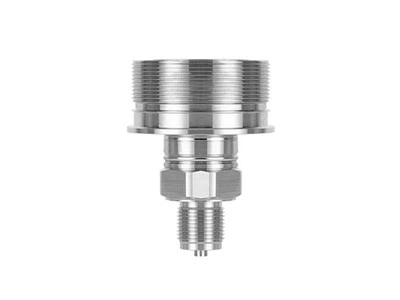
Let's look at some of the products we offer as a supplier. We have the SMP858 - DST Differential Pressure Transmitter. This transmitter is designed with high - quality sensors and advanced signal processing technology to provide excellent linearity. It's suitable for a wide range of industrial applications where accurate differential pressure measurement is crucial.
The DMP305X - TST - S Absolute Pressure Transmitter is another great option. Although it's an absolute pressure transmitter, the concept of linearity still applies. It offers a high level of accuracy and linearity in measuring absolute pressure, which is essential in applications like vacuum systems and altimetry.
And then there's the DMP305X - DST Differential Pressure Transmitter. This one is built to be reliable and accurate in measuring differential pressure. Its design focuses on minimizing non - linearity, so you can get a consistent and predictable output.
Now, why does linearity matter so much? Well, in industrial processes, accurate pressure measurement can mean the difference between a smooth - running operation and a costly disaster. If the DP transmitter has poor linearity, it can lead to inaccurate flow, level, or pressure measurements. This can cause problems like over - or under - filling of tanks, incorrect control of pumps and valves, and even safety hazards.
For instance, in a chemical plant, accurate pressure measurement is vital for maintaining the right reaction conditions. If the DP transmitter gives incorrect readings due to non - linearity, it could lead to unwanted chemical reactions or even explosions.
On a more positive note, when you have a DP transmitter with good linearity, you can trust the data it provides. This allows for better process control, higher efficiency, and lower maintenance costs. You can be confident that your system is operating as it should, and you can make informed decisions based on the accurate pressure measurements.
As a supplier, we understand the importance of linearity in our products. We use the latest manufacturing techniques and quality control processes to ensure that our DP transmitters offer the best possible linearity. We also provide detailed calibration information and support to help you get the most out of your transmitter.
If you're in the market for a DP transmitter and you're looking for reliable, accurate, and linear performance, we're here to help. Whether you need a transmitter for a small - scale operation or a large - industrial project, we have the right product for you.
Don't hesitate to reach out if you have any questions or if you're interested in discussing your specific requirements. We'd be more than happy to assist you in choosing the best DP transmitter for your needs and guide you through the purchasing process.
In conclusion, linearity is a key characteristic of a DP transmitter that directly impacts its performance and reliability. By choosing a high - quality transmitter with good linearity, you can ensure more accurate measurement and better control of your industrial processes.
References:
- "Industrial Pressure Measurement Handbook": A comprehensive guide on pressure measurement techniques and the importance of linearity in pressure transmitters.
- Manufacturer's specifications for various DP transmitters, which often include details about linearity and accuracy.