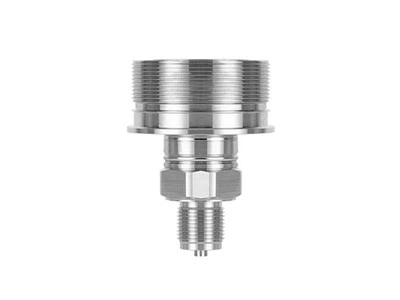
When it comes to accurately measuring the level of liquids or solids in a tank, a differential pressure (DP) level transmitter is a reliable and widely used solution. As a trusted DP level transmitter supplier, we understand the importance of proper installation to ensure accurate and consistent measurements. In this blog post, we'll discuss the key installation considerations for a DP level transmitter in a tank.
1. Location Selection
The first step in installing a DP level transmitter is to choose the right location. The location should be carefully selected to minimize the impact of external factors on the measurement accuracy.
- Avoid Turbulence: Install the transmitter away from areas where there is high turbulence, such as near inlets, outlets, or agitators. Turbulence can cause fluctuations in pressure, leading to inaccurate level readings. For example, if the tank has a high - speed inlet valve, the water flow can create a turbulent area. Placing the transmitter too close to this area will result in inconsistent pressure measurements.
- Accessible for Maintenance: Ensure that the installation location allows easy access for maintenance and calibration. This is crucial because regular maintenance is necessary to keep the transmitter functioning properly. Technicians should be able to reach the transmitter without having to remove other equipment or enter hazardous areas.
- Proper Mounting Height: The mounting height of the transmitter is also important. It should be installed at a height that is appropriate for the tank's geometry and the type of measurement required. For a simple cylindrical tank, the transmitter can be mounted at the bottom or at a specific height depending on the range of the level to be measured.
2. Mounting the Transmitter
Once the location is selected, the next step is to mount the transmitter correctly.
- Vertical Mounting: For most applications, vertical mounting is preferred. This helps to ensure that the diaphragm of the transmitter is in a proper orientation and reduces the risk of air bubbles or debris accumulating on the diaphragm. When mounting the transmitter vertically, make sure it is plumb to avoid any angular errors that could affect the pressure measurement.
- Use of Mounting Brackets: Use high - quality mounting brackets to secure the transmitter to the tank or a nearby structure. The brackets should be strong enough to withstand the weight of the transmitter and any external forces, such as vibrations or shocks. For example, in an industrial environment where there are constant vibrations from machinery, a sturdy mounting bracket is essential to prevent the transmitter from moving and causing inaccurate readings.
3. Pressure Connection
Proper pressure connection is vital for the accurate operation of the DP level transmitter.
- Correct Tubing: Use the appropriate tubing to connect the transmitter to the tank. The tubing should be made of a material that is compatible with the process fluid. For corrosive fluids, stainless - steel or PTFE tubing may be required. The diameter of the tubing should also be chosen carefully. A too - small diameter can cause pressure drops, while a too - large diameter may increase the response time of the transmitter.
- Sealing the Connections: Ensure that all pressure connections are properly sealed to prevent leaks. Leaks can lead to inaccurate pressure measurements and may also pose a safety hazard. Use appropriate gaskets or seals at each connection point. For example, when connecting the tubing to the transmitter, a rubber gasket can be used to create a tight seal.
- Isolation Valves: Install isolation valves between the transmitter and the tank. These valves allow for the isolation of the transmitter during maintenance or calibration. They also provide a safety mechanism in case of a problem with the transmitter or the process fluid.
4. Impulse Lines
Impulse lines are used to transfer the pressure from the tank to the transmitter.
- Keep Lines Short and Straight: Short and straight impulse lines minimize pressure losses and response time. Long and winding lines can cause delays in pressure transmission and may also trap air bubbles or debris. If possible, route the impulse lines in a direct path from the tank to the transmitter.
- Slope the Lines: Slope the impulse lines to prevent the accumulation of liquids or solids. For liquid - filled impulse lines, the lines should be sloped towards the tank to allow any trapped air to escape. For gas - filled impulse lines, the slope should be towards the transmitter to prevent liquid from accumulating.
- Insulation: In some applications, insulation of the impulse lines may be required. This is especially important in environments where the temperature changes significantly. Insulation helps to maintain a stable temperature in the impulse lines, which is crucial for accurate pressure measurements.
5. Electrical Installation
The electrical installation of the DP level transmitter is another critical aspect.
- Proper Wiring: Use the correct gauge and type of wiring for the electrical connection. The wiring should be able to carry the electrical current required by the transmitter without excessive voltage drop. Follow the manufacturer's wiring diagram carefully to ensure that all connections are made correctly. Incorrect wiring can lead to malfunction or even damage to the transmitter.
- Grounding: Proper grounding is essential to protect the transmitter from electrical interference and lightning strikes. Connect the transmitter to a reliable ground source. This helps to ensure the safety of the equipment and the accuracy of the measurements.
- Use of Conduits: Protect the wiring by using conduits. Conduits provide physical protection to the wiring and also help to prevent moisture and dust from entering the electrical connections. They also make it easier to manage the wiring and perform maintenance.
6. Calibration
Calibration is an important step after the installation of the DP level transmitter.
- Initial Calibration: Perform an initial calibration after the transmitter is installed. This involves adjusting the transmitter to match the actual level in the tank. Use a known reference level, such as a dipstick measurement, to calibrate the transmitter. This ensures that the transmitter provides accurate level readings from the start.
- Regular Calibration: Regular calibration is necessary to maintain the accuracy of the transmitter over time. The frequency of calibration depends on the application and the environment. In a harsh industrial environment, more frequent calibration may be required compared to a clean laboratory environment.
7. Considerations for Different Tank Types
The type of tank also affects the installation of the DP level transmitter.
- Open Tanks: For open tanks, the reference pressure is usually atmospheric pressure. The transmitter measures the hydrostatic pressure of the liquid in the tank relative to the atmospheric pressure. In this case, the low - pressure side of the transmitter can be left open to the atmosphere.
- Closed Tanks: In closed tanks, the reference pressure is the pressure inside the vapor space above the liquid. The transmitter measures the differential pressure between the bottom of the tank and the vapor space. This requires a proper connection to the vapor space to ensure accurate measurement.
Our Product Offerings
As a leading DP level transmitter supplier, we offer a range of high - quality products, including the DMP305X - TLT Gauge Pressure Transmitter, DMP305X - DST Differential Pressure Transmitter, and SMP858 - TST - S Gauge Pressure Transmitter. These transmitters are designed to provide accurate and reliable level measurements in various tank applications.
Contact Us for Purchase and Consultation
If you are in the market for a DP level transmitter or need more information about installation and application, we are here to help. Our team of experts can provide you with detailed advice on the best product for your specific needs and assist you with the installation process. Contact us today to start the procurement process and ensure that you get the most accurate and reliable level measurement solution for your tank.


References
- [1] "Industrial Pressure Transmitter Handbook", XYZ Publishing, 2022
- [2] "Measurement and Control of Liquid Levels in Tanks", ABC Institute, 2021
- [3] "Best Practices for DP Level Transmitter Installation", DEF Engineering Journal, 2020