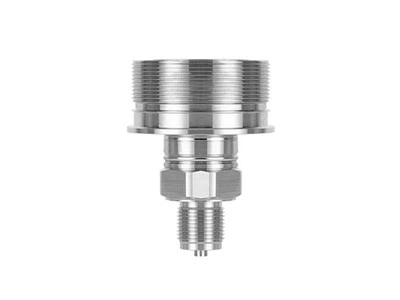
How accurate is an ex proof pressure sensor?
In the industrial landscape, explosion-proof (Ex proof) pressure sensors play a crucial role in ensuring safety and efficiency in hazardous environments. These sensors are designed to operate in areas where there is a risk of explosion due to the presence of flammable gases, vapors, or dust. As a supplier of Ex proof pressure sensors, I often encounter questions about the accuracy of these devices. In this blog post, I will delve into the factors that affect the accuracy of Ex proof pressure sensors and discuss how to ensure reliable and precise measurements.
Understanding Accuracy in Pressure Sensors
Accuracy is a fundamental parameter when it comes to pressure sensors. It refers to how closely the measured value of a sensor corresponds to the true value of the pressure being measured. In the context of Ex proof pressure sensors, accuracy is of utmost importance as it directly impacts the safety and performance of industrial processes.
The accuracy of a pressure sensor is typically expressed as a percentage of the full-scale output (FSO). For example, a sensor with an accuracy of ±0.5% FSO means that the measured value can deviate by up to 0.5% from the true value across the entire measurement range. This deviation accounts for various sources of error, including non-linearity, hysteresis, and temperature effects.
Factors Affecting the Accuracy of Ex Proof Pressure Sensors
Several factors can influence the accuracy of Ex proof pressure sensors. Understanding these factors is essential for selecting the right sensor for a specific application and ensuring optimal performance.
Sensor Technology
Different sensor technologies have varying levels of accuracy. The most common types of pressure sensors used in Ex proof applications include piezoresistive, capacitive, and strain gauge sensors. Piezoresistive sensors are known for their high sensitivity and relatively low cost, but they may be more susceptible to temperature variations. Capacitive sensors offer excellent linearity and stability, making them suitable for applications requiring high accuracy. Strain gauge sensors, on the other hand, are robust and can withstand harsh environments, but they may have a slightly lower accuracy compared to capacitive sensors.
Temperature Effects
Temperature is one of the most significant factors affecting the accuracy of pressure sensors. Changes in temperature can cause the sensor's materials to expand or contract, leading to changes in the sensor's output. To compensate for temperature effects, many Ex proof pressure sensors are equipped with temperature compensation circuits. These circuits adjust the sensor's output based on the temperature to maintain accuracy over a wide temperature range. However, it is important to note that temperature compensation is not perfect, and some residual error may still remain.


Pressure Range
The pressure range of a sensor also plays a role in its accuracy. Generally, sensors with a wider pressure range tend to have a lower accuracy compared to sensors with a narrower range. This is because the sensor's internal components may experience more stress and deformation at higher pressures, leading to increased non-linearity and hysteresis. When selecting an Ex proof pressure sensor, it is important to choose a sensor with a pressure range that is appropriate for the application to ensure the best possible accuracy.
Installation and Mounting
Proper installation and mounting of the pressure sensor are crucial for accurate measurements. Incorrect installation can introduce additional stress and strain on the sensor, leading to measurement errors. It is important to follow the manufacturer's installation instructions carefully and ensure that the sensor is mounted in a stable and vibration-free environment. Additionally, the sensor should be installed in a location where it is not exposed to excessive heat, moisture, or mechanical shock.
Ensuring Accuracy in Ex Proof Pressure Sensor Applications
To ensure the accuracy of Ex proof pressure sensors in industrial applications, several steps can be taken.
Calibration
Regular calibration is essential for maintaining the accuracy of pressure sensors. Calibration involves comparing the sensor's output to a known reference pressure and adjusting the sensor's output if necessary. Most Ex proof pressure sensors should be calibrated at least once a year, or more frequently depending on the application and the manufacturer's recommendations. Calibration should be performed by a qualified technician using calibrated equipment to ensure accurate results.
Quality Assurance
When purchasing Ex proof pressure sensors, it is important to choose a reputable supplier that offers high-quality products. Look for sensors that are certified to meet relevant industry standards, such as ATEX, IECEx, or UL. These certifications ensure that the sensor has been tested and approved for use in hazardous environments. Additionally, consider the supplier's reputation for quality and reliability, as well as their customer support and after-sales service.
Monitoring and Maintenance
Regular monitoring and maintenance of the pressure sensors can help detect and prevent potential accuracy issues. This includes checking the sensor's output regularly, looking for any signs of drift or instability, and performing any necessary maintenance or repairs. It is also important to keep a record of the sensor's calibration history and performance to track its accuracy over time.
Our Ex Proof Pressure Sensor Products
As a supplier of Ex proof pressure sensors, we offer a wide range of products to meet the diverse needs of our customers. Our products are designed to provide accurate and reliable pressure measurements in hazardous environments. Some of our popular products include:
- SMP131-DLD Differential Pressure Transmitter: This transmitter is suitable for measuring differential pressure in various industrial applications. It features high accuracy, excellent stability, and a compact design.
- SMP131-TCD(H) Gauge Pressure Transmitter: This transmitter is designed for measuring gauge pressure in hazardous environments. It offers high accuracy, wide temperature compensation, and a rugged construction.
- SMP131-TLN Gauge Pressure Transmitter: This transmitter is ideal for applications where high accuracy and reliability are required. It features a low-noise design, excellent linearity, and a wide operating temperature range.
Conclusion
The accuracy of Ex proof pressure sensors is a critical factor in ensuring the safety and efficiency of industrial processes in hazardous environments. By understanding the factors that affect accuracy and taking appropriate steps to ensure reliable measurements, such as proper calibration, quality assurance, and monitoring, you can maximize the performance of your pressure sensors. If you are in the market for high-quality Ex proof pressure sensors, we invite you to [contact us] to discuss your specific requirements and explore how our products can meet your needs. Our team of experts is ready to assist you in selecting the right sensor for your application and providing you with the support and service you deserve.
References
- "Pressure Sensor Technology Handbook" by John P. Bentley
- "Industrial Pressure Measurement" by Peter J. D. Lintern
- Manufacturer's datasheets and technical documentation for Ex proof pressure sensors