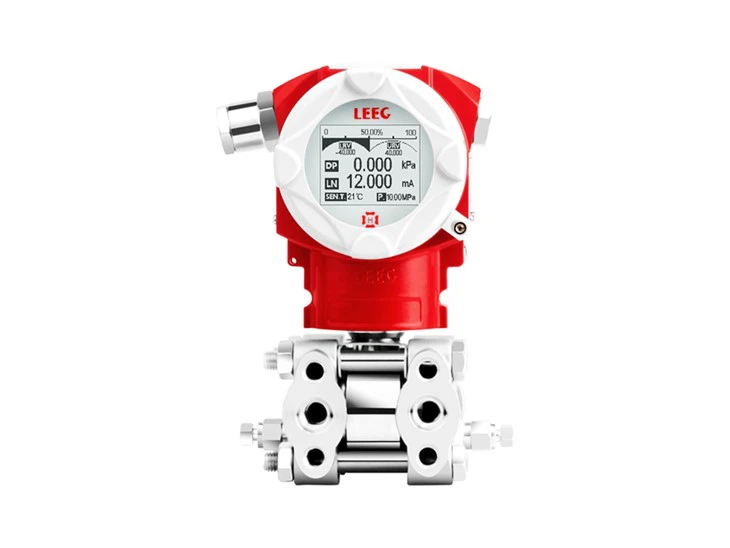
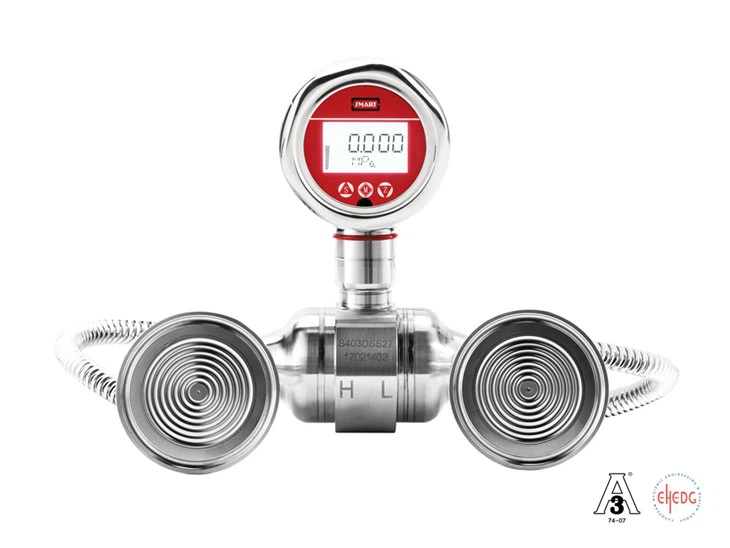
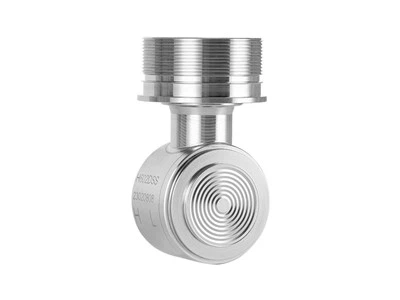
LEEG smart pressure transmitters feature multiple output options including 4-20mA, HART, 1-5VDC low power consumption, RS485, and PA. They enable real-time data transmission to cloud platforms for digital factory management. With self-diagnostic functions that provide early warnings for potential failures, these transmitters are ideal for smart applications in petroleum, chemical, energy, and other industries, helping customers improve efficiency and reduce maintenance costs.
Industrial Pressure Transmitter
LEEG industrial pressure transmitters are designed for harsh operating conditions, featuring aluminum alloy housings with an IP67 protection rating. They withstand extreme temperatures and high-pressure shocks while delivering 0.05% accuracy. Suitable for heavy industries such as petroleum, natural gas, and power, their modular design supports various process connections, ensuring long-term stability in corrosive and high-vibration environment.


Hygienic Pressure Transmitter
LEEG hygienic pressure transmitters comply with EHEDG and FDA standards, featuring a dead-space-free polished design (Ra≤0.4μm) and Tri-Clamp connections. Developed for pharmaceutical and food & beverage industries, their materials are 3-A certified to guarantee measurement accuracy and compliance in sterile production processes.


Temperature Transmitter
LEEG temperature transmitters accept PT100 platinum resistance inputs and support 4-20mA/HART output with ±0.5% accuracy. Their explosion-proof design (CSA certified) suits hazardous areas, making them widely used in temperature control applications for refining, pharmaceuticals, and other industries. The IP67-rated housing and EMI-resistant design ensure reliable data acquisition.

Working Principle of Smart Pressure Transmitters
Smart pressure transmitters operate based on advanced sensing technology and digital processing systems. When process medium pressure acts on the isolation diaphragm, it is transmitted via fill fluid to internal piezoresistive or capacitive sensing elements, converting physical pressure into electrical signals. These weak signals are conditioned by high-precision amplifiers and digitized by 24-bit ADCs. An embedded microprocessor performs temperature compensation, nonlinear correction, and other complex calculations to ensure measurement accuracy up to ±0.075% FS.
Unlike traditional products, the core advantage of smart pressure transmitters lies in their digital and intelligent features. The built-in self-diagnostic system continuously monitors key parameters such as diaphragm integrity and circuit stability while enabling bidirectional data communication via HART, Modbus, or PROFIBUS protocols. This design not only supports 4-20mA analog output for legacy system compatibility but also allows remote parameter configuration and firmware updates. In industrial applications, smart pressure transmitters leverage real-time data analysis to predict equipment anomalies and optimize processes, significantly enhancing system reliability and energy efficiency.
Smart pressure transmitters represent the evolution of modern industrial measurement technology, integrating traditional pressure sensing with digital and networked capabilities to transform from standalone instruments into Industrial IoT nodes. This shift not only improves measurement precision and stability but also provides data foundations for predictive maintenance and energy optimization, making them critical enablers for smart industrial automation systems.
What Media Can Smart Pressure Transmitters Measure?
• General liquids: Water, hydraulic oil, coolant
• Corrosive liquids: Acids/alkalis (requires Hastelloy diaphragms), seawater (requires titanium materials)
• High-viscosity liquids: Crude oil, heavy oil, asphalt (requires flushable designs)
2.Gas Media
• Inert gases: Nitrogen, argon
• Corrosive gases: Chlorine, sulfur dioxide
• Flammable/explosive gases: Natural gas, hydrogen (requires explosion-proof certification)
3.Special Media
• High-temperature steam: Saturated/ superheated steam (requires cooling assemblies)
• Food-grade media: Milk, beverages (requires 316L stainless steel + polished surfaces)
• Pharmaceutical media: Vaccines, biologics (requires dead-space-free sanitary design)
Key Selection Factors:
• Diaphragm material: 316L (standard), Hastelloy C276 (strong corrosion), tantalum (high acidity)
• Sealing method: O-ring (general), welded seal (high-purity requirements)
• Process connection: Threaded (general), flange (high pressure), clamp (sanitary applications)
Typical Industry Applications:
• Petrochemical: Crude oil, ethylene hydrocarbons
• Power: Boiler feedwater, superheated steam
• Pharmaceutical: Purified water, compressed air
• Food: Beer, edible oils