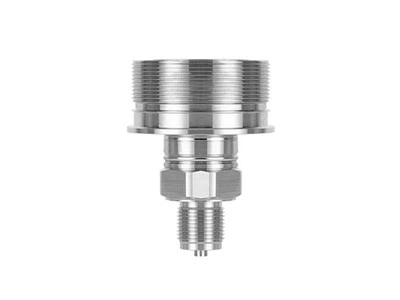
What is the principle of a Temperature Transmitter?
As a supplier of temperature transmitters, I often get asked about the principles behind these essential devices. Temperature transmitters play a crucial role in a wide range of industries, from manufacturing and process control to environmental monitoring and HVAC systems. Understanding how they work is key to making informed decisions when it comes to selecting the right temperature transmitter for your specific needs.
Basic Concept of Temperature Transmitters
At its core, a temperature transmitter is a device that converts a temperature measurement into an electrical signal. This signal can then be transmitted to a control system, a display unit, or other monitoring equipment for further processing and analysis. The basic principle involves using a temperature sensor to detect the temperature and then converting that physical quantity into an electrical one.
There are several types of temperature sensors commonly used in temperature transmitters, each with its own working principle. The most popular ones include thermocouples, resistance temperature detectors (RTDs), and thermistors.
Thermocouples
Thermocouples are based on the Seebeck effect, which was discovered by Thomas Johann Seebeck in 1821. The Seebeck effect states that when two different metals are joined at two junctions and there is a temperature difference between these junctions, an electromotive force (EMF) is generated.
In a thermocouple, one junction is exposed to the temperature being measured (the measuring junction), while the other is kept at a known reference temperature (the reference junction). The generated EMF is proportional to the temperature difference between the two junctions. By knowing the reference temperature and measuring the EMF, the temperature at the measuring junction can be determined.
Thermocouples are widely used because they are relatively inexpensive, have a wide temperature range, and are rugged. However, they require compensation for the reference junction temperature, which is usually done electronically in modern temperature transmitters.
Resistance Temperature Detectors (RTDs)
RTDs operate on the principle that the electrical resistance of a metal changes with temperature. Most RTDs are made of platinum, although other metals such as nickel and copper can also be used. Platinum RTDs are preferred due to their high accuracy, stability, and wide temperature range.


The resistance of an RTD increases linearly with temperature according to a known temperature - resistance relationship. For example, the resistance of a platinum RTD at 0°C is typically 100 ohms (PT100) or 1000 ohms (PT1000). By measuring the resistance of the RTD, the temperature can be calculated.
To measure the resistance accurately, a constant current is passed through the RTD, and the voltage across it is measured. The temperature transmitter then uses this voltage measurement to determine the resistance and convert it into a temperature value.
Thermistors
Thermistors are semiconductor devices whose resistance changes significantly with temperature. Unlike RTDs, which have a positive temperature coefficient (PTC), many thermistors have a negative temperature coefficient (NTC), meaning their resistance decreases as the temperature increases.
Thermistors are very sensitive to temperature changes, making them suitable for applications where high - sensitivity temperature measurements are required. However, their temperature range is relatively limited compared to thermocouples and RTDs, and their resistance - temperature relationship is highly non - linear. Temperature transmitters using thermistors need to perform complex signal processing to linearize the output and accurately determine the temperature.
Signal Conversion and Transmission
Once the temperature sensor has detected the temperature and converted it into an electrical quantity (such as voltage or resistance), the temperature transmitter needs to convert this signal into a standard output signal that can be easily transmitted and processed by other equipment.
The most common output signals for temperature transmitters are 4 - 20 mA current signals and 0 - 10 V voltage signals. These standard signals are widely used in industrial control systems because they are less susceptible to interference and can be transmitted over long distances.
To convert the sensor signal into a 4 - 20 mA or 0 - 10 V signal, the temperature transmitter uses signal conditioning circuits. These circuits amplify, filter, and linearize the sensor signal and then convert it into the desired output signal.
For example, in a temperature transmitter using a PT100 RTD, the measured resistance is first converted into a voltage signal using a bridge circuit. This voltage signal is then amplified and linearized to match the temperature range of the application. Finally, the linearized voltage signal is converted into a 4 - 20 mA current signal using a current - generating circuit.
Our Product Offerings
As a temperature transmitter supplier, we offer a wide range of products to meet different customer needs. For example, our DMP305X - TST - S Absolute Pressure Transmitter is a high - quality device that can also be used in applications where accurate temperature and pressure measurements are required. It combines advanced sensor technology with reliable signal processing to provide accurate and stable measurements.
In addition, our LG8 Remote Display Instrument can be used in conjunction with our temperature transmitters to provide a convenient way to monitor temperature readings remotely. It has a clear display and can be easily integrated into existing control systems.
Another popular product is our SMP858 - TST - S Gauge Pressure Transmitter, which is designed for industrial applications where gauge pressure and temperature monitoring are necessary. It offers high accuracy and reliability, making it a great choice for many industrial processes.
Contact Us for Procurement
If you are in the market for temperature transmitters or related products, we invite you to contact us for procurement discussions. Our team of experts is ready to help you select the right products for your specific applications and provide you with the best solutions. Whether you need a single temperature transmitter for a small project or a large - scale supply for an industrial plant, we can meet your needs.
References
- "Temperature Measurement Handbook" by Omega Engineering
- "Industrial Instrumentation and Control Handbook" by B.C. Nakra and K.K. Chaudhry