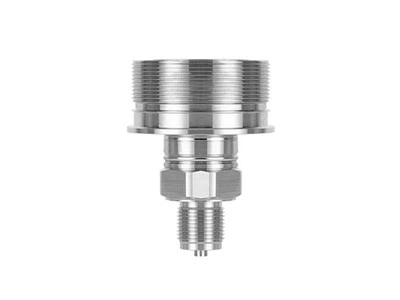
As a supplier of sanitary level sensors, I've witnessed firsthand how crucial accurate measurement is across a wide range of industries, from food and beverage production to pharmaceuticals and biotechnology. One factor that significantly influences the measurement accuracy of these sensors is the sensor position. In this blog, I'll explore the impact of sensor position on the measurement accuracy of sanitary level sensors.
Understanding Sanitary Level Sensors
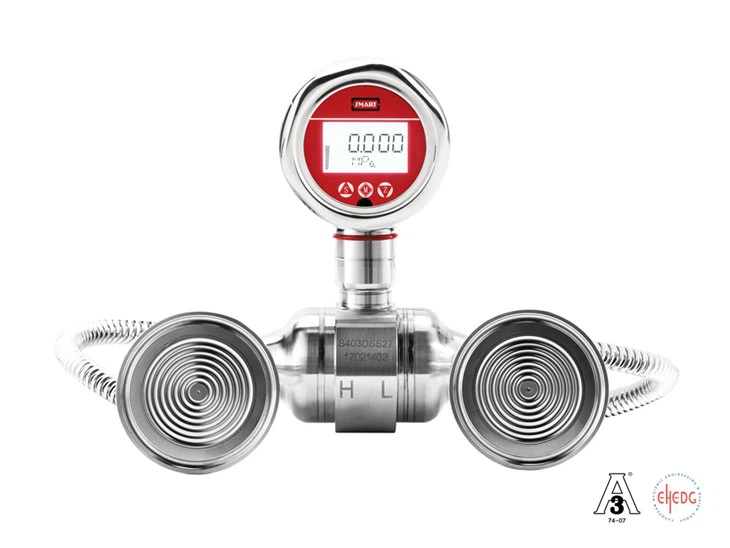
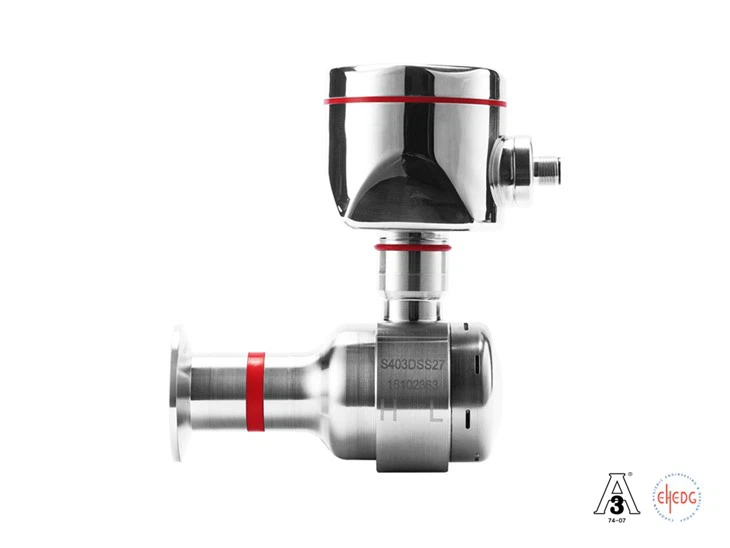
Sanitary level sensors are designed to measure the level of liquids, solids, or slurries in containers or pipes within sanitary applications. These applications require strict adherence to hygiene standards to prevent contamination and ensure product safety. Our company offers a variety of high - quality sanitary level sensors, such as the SMP858 - NSF Differential Pressure Transmitter, SMP858 - TSF - D Gauge Pressure Transmitter, and SMP858 - TLF Gauge Pressure Transmitter. These transmitters are engineered to meet the demanding requirements of sanitary environments while providing accurate and reliable level measurements.
Effects of Sensor Position on Measurement Accuracy
Vertical Positioning
The vertical position of a sanitary level sensor within a tank or vessel can have a profound impact on measurement accuracy. When installing a sensor vertically, it is essential to consider the surface conditions of the liquid and the shape of the tank.
-
At the Surface: Placing the sensor close to the liquid surface can lead to inaccurate measurements. The surface of the liquid may have waves, ripples, or foam, which can cause the sensor to detect an inconsistent level. For example, in a fermentation process where carbon dioxide is released, foam may accumulate on the surface, leading to false high - level readings if the sensor is positioned too close to the top.
-
At the Bottom: Installing the sensor at the bottom of the tank can also present challenges. Debris, sediment, or solids may settle at the bottom, potentially clogging the sensor or causing it to measure a falsely high level. In addition, the pressure exerted at the bottom of a tall tank can be significantly different from that at the top, and if not properly compensated, it can lead to errors in level measurement.
-
Optimal Vertical Position: The ideal vertical position for a sanitary level sensor is typically a few inches below the liquid surface and above the potential area of sediment accumulation. This position allows the sensor to avoid the surface disturbances while still measuring the true level of the liquid. Some of our sensors are equipped with advanced algorithms that can compensate for minor variations in pressure due to the liquid column height, ensuring accurate measurements regardless of the vertical position to some extent.
Horizontal Positioning
Horizontal positioning of the sensor can also affect measurement accuracy, especially in tanks with irregular shapes or complex internal geometries.
- Near the Wall: Placing the sensor near the wall of a tank may introduce errors due to the boundary layer effect. The fluid flow near the wall is different from that in the center of the tank, and there may be temperature gradients or concentration differences. For instance, in a heat - exchanger tank, the fluid near the walls may be cooler, which can affect the density of the liquid and thus the level measurement.
- In the Center: Mounting the sensor in the center of the tank generally provides a more representative measurement of the overall liquid level. However, this may not always be practical, especially in large tanks with internal structures or in systems where access to the center is difficult.
- Avoiding Obstacles: It is crucial to ensure that the sensor is not obstructed by any internal structures such as baffles, agitators, or pipes. These obstacles can interfere with the sensor's ability to detect the liquid level accurately, causing false readings.
Angular Positioning
The angular position of the sensor can also influence its performance.
- Proper Orientation: Sanitary level sensors are designed to operate within a specific range of angular positions. If the sensor is installed at an incorrect angle, it may not be able to detect the liquid level accurately. For example, some ultrasonic sensors rely on a clear line - of - sight to the liquid surface. If the sensor is tilted too much, the ultrasonic beam may reflect off the side of the tank instead of the liquid surface, resulting in inaccurate readings.
- Compensation for Angle: Some of our more advanced sensors are capable of compensating for minor angular deviations. However, it is still best practice to install the sensor as close to the recommended angular position as possible to ensure optimal performance.
Practical Considerations for Sensor Positioning
Accessibility and Maintenance
When choosing the position for a sanitary level sensor, accessibility for maintenance and calibration is an important factor. The sensor should be installed in a location where it can be easily reached for cleaning, inspection, and adjustment. In a food processing plant, for example, the sensor must be accessible for regular cleaning to meet hygiene standards.
Process Conditions
The process conditions within the tank or vessel, such as temperature, pressure, and flow rate, should also be considered. High - temperature or high - pressure environments may require special mounting arrangements or sensors with enhanced performance characteristics. Additionally, the flow rate of the liquid can affect the sensor's ability to measure accurately. In a high - flow system, the sensor may need to be installed in a location where the flow is more stable to avoid errors caused by turbulence.
Conclusion
The position of a sanitary level sensor plays a critical role in determining its measurement accuracy. By carefully considering the vertical, horizontal, and angular positioning of the sensor, taking into account practical factors such as accessibility and process conditions, you can ensure that your sanitary level sensors provide reliable and accurate measurements.
As a trusted supplier of sanitary level sensors, we understand the importance of accurate measurement in your operations. Our range of products, including the SMP858 - NSF Differential Pressure Transmitter, SMP858 - TSF - D Gauge Pressure Transmitter, and SMP858 - TLF Gauge Pressure Transmitter, are designed to meet the highest standards of accuracy and reliability.
If you're facing challenges with level measurement in your sanitary applications or are looking to upgrade your existing sensors, we're here to help. Contact us to discuss your specific requirements and explore how our solutions can enhance the efficiency and accuracy of your processes.
References
- Brown, R. A. (2007). Process Instrumentation and Control Technology. McGraw - Hill Education.
- Doebelin, E. O., & Sheppard, R. G. (2011). Measurement Systems: Application and Design. Wiley.
- Li, S., & Wang, G. (2015). Advanced Techniques for Level Measurement. Elsevier.