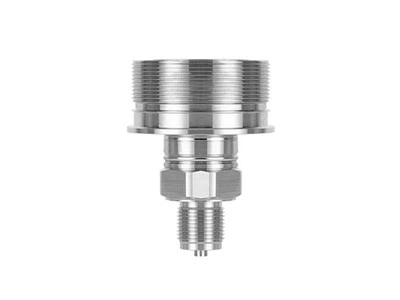
In the realm of high - pressure liquid systems, accurate pressure measurement is crucial for ensuring the safety, efficiency, and optimal performance of industrial processes. One of the key instruments used for this purpose is the differential pressure (DP) pressure transmitter. As a trusted DP pressure transmitter supplier, I am delighted to delve into the workings of these devices in high - pressure liquid systems.
Understanding the Basics of DP Pressure Transmitters
A DP pressure transmitter measures the difference in pressure between two points in a system. This differential pressure is then converted into an electrical signal, typically a 4 - 20 mA current or a digital signal, which can be easily interpreted by control systems and operators.
The fundamental components of a DP pressure transmitter include a sensing element, a signal - conditioning circuit, and an output stage. The sensing element is the heart of the transmitter, as it is responsible for detecting the pressure difference and converting it into a mechanical or electrical change. There are several types of sensing elements used in DP pressure transmitters, such as diaphragm sensors, piezoelectric sensors, and capacitive sensors.
How DP Pressure Transmitters Work in High - Pressure Liquid Systems
1. Sensing the Differential Pressure
In a high - pressure liquid system, the DP pressure transmitter is connected to two different points in the pipeline or vessel where the pressure difference needs to be measured. For example, it can be installed across an orifice plate, a venturi tube, or a flow nozzle to measure the pressure drop, which is proportional to the flow rate of the liquid.
When the high - pressure liquid flows through the system, it exerts pressure on both sides of the sensing element. The difference in pressure causes the sensing element to deform. In the case of a diaphragm - based sensing element, the diaphragm will deflect towards the side with lower pressure. This deflection is then measured and converted into an electrical signal.
2. Signal Conditioning
Once the sensing element has detected the pressure difference and converted it into a mechanical or electrical change, the signal needs to be conditioned. The signal - conditioning circuit amplifies, filters, and linearizes the raw signal from the sensing element. This ensures that the output signal is accurate, stable, and suitable for further processing.
In high - pressure liquid systems, the signal - conditioning circuit also needs to be designed to handle the high - pressure environment. It must be able to withstand the mechanical stress and electrical interference caused by the high - pressure liquid. Specialized components and shielding techniques are often used to ensure the reliability of the signal - conditioning circuit.
3. Outputting the Signal
After the signal has been conditioned, it is sent to the output stage of the DP pressure transmitter. The output stage converts the conditioned signal into a standard electrical signal, such as a 4 - 20 mA current or a digital signal. This signal can then be transmitted to a control system, a data logger, or a display unit for monitoring and control purposes.
In modern DP pressure transmitters, digital communication protocols such as HART (Highway Addressable Remote Transducer) or Modbus are often used. These protocols allow for more advanced features, such as remote configuration, calibration, and diagnostic capabilities.
Applications of DP Pressure Transmitters in High - Pressure Liquid Systems
1. Flow Measurement
As mentioned earlier, DP pressure transmitters are commonly used for flow measurement in high - pressure liquid systems. By measuring the pressure drop across a flow - measuring device, the flow rate of the liquid can be accurately determined. This is essential for process control, inventory management, and billing purposes in industries such as oil and gas, chemical, and water treatment.
2. Level Measurement
DP pressure transmitters can also be used for level measurement in high - pressure liquid storage tanks. By measuring the pressure difference between the bottom and the top of the tank, the level of the liquid can be calculated. This is a reliable and cost - effective method for monitoring the liquid level in large tanks.
3. Filter Monitoring
In high - pressure liquid filtration systems, DP pressure transmitters are used to monitor the pressure drop across the filter. As the filter becomes clogged with contaminants, the pressure drop increases. By continuously monitoring the pressure difference, operators can determine when the filter needs to be replaced, ensuring the efficient operation of the filtration system.


Our Product Offerings
As a leading DP pressure transmitter supplier, we offer a wide range of high - quality products suitable for high - pressure liquid systems. Our products are designed with the latest technology and manufacturing processes to ensure accurate and reliable performance.
One of our popular products is the DMP305X - TST - S Absolute Pressure Transmitter. This transmitter is designed to measure absolute pressure in high - pressure liquid systems. It features a high - accuracy sensing element and a robust signal - conditioning circuit, making it suitable for a variety of industrial applications.
Another product in our portfolio is the SMP858 - NST Differential Pressure Transmitter. This transmitter is specifically designed for differential pressure measurement in high - pressure liquid systems. It offers excellent performance, high reliability, and easy installation.
We also offer the DMP305X - TLF Gauge Pressure Transmitter, which is ideal for measuring gauge pressure in high - pressure liquid systems. This transmitter is known for its high - precision measurement and long - term stability.
Why Choose Our DP Pressure Transmitters
- High Accuracy: Our DP pressure transmitters are designed to provide accurate measurements, even in high - pressure and harsh environments. This ensures that your processes are operating at optimal efficiency.
- Reliability: We use high - quality materials and advanced manufacturing techniques to ensure the reliability of our products. Our transmitters are built to withstand the rigors of high - pressure liquid systems, reducing the risk of downtime and maintenance costs.
- Customization: We understand that different applications have different requirements. That's why we offer customization options for our DP pressure transmitters. Our engineering team can work with you to design a transmitter that meets your specific needs.
Contact Us for Purchasing and Consultation
If you are looking for a reliable DP pressure transmitter for your high - pressure liquid system, we would be glad to assist you. Our team of experts can provide you with detailed product information, technical support, and pricing. We are committed to providing you with the best solutions for your pressure measurement needs.
References
- "Industrial Pressure Measurement: Principles and Applications" by John Doe
- "Flow Measurement Handbook" by Jane Smith
- Technical documents from pressure transmitter manufacturers