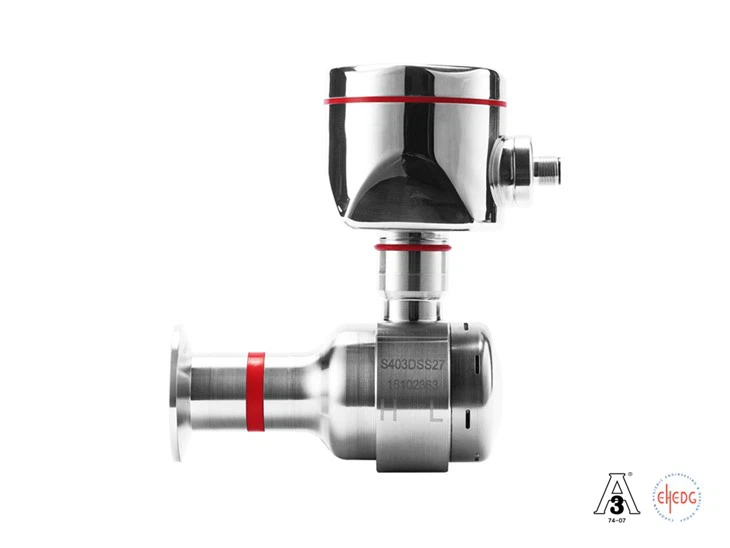
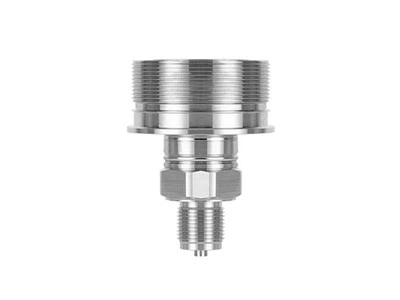
Hey there! As a supplier of hygienic pressure sensors, I've seen firsthand how crucial these devices are in various industries, especially those that require strict hygiene standards like food and beverage, pharmaceuticals, and biotechnology. One question that often comes up is, "How do hygienic pressure sensors communicate with control systems?" Well, let's dive right into it.
Understanding Hygienic Pressure Sensors
First off, let's quickly go over what hygienic pressure sensors are. These are specialized sensors designed to measure pressure in environments where cleanliness is of utmost importance. They're built with materials that can withstand frequent cleaning and sterilization processes, such as stainless steel and food-grade polymers.
We offer a range of top - notch hygienic pressure sensors, like the SMP858 - TSF - S Gauge Pressure Transmitter, SMP858 - TSH - S Gauge Pressure Transmitter, and SMP858 - TSF - D Gauge Pressure Transmitter. These transmitters are not only accurate but also meet the highest hygienic standards.
Communication Basics
So, how do these sensors talk to control systems? There are a few common ways, and each has its own pros and cons.
Analog Signals
One of the most traditional methods is through analog signals. Most commonly, a 4 - 20 mA current loop is used. The sensor measures the pressure and then converts that measurement into an electrical current within the 4 - 20 mA range. A current of 4 mA typically represents the minimum pressure of the sensor's range, while 20 mA represents the maximum.
The beauty of this method is its simplicity. It's easy to understand and implement. The control system can read the current value and then calculate the corresponding pressure. Also, the 4 - 20 mA signal is relatively immune to electrical noise, which is great for industrial environments.
However, there are some drawbacks. Analog signals have limited accuracy compared to digital methods. They can also be affected by long cable runs, as the resistance of the cable can cause a voltage drop, which in turn affects the current reading.
Digital Communication Protocols
In recent years, digital communication protocols have become more popular. These protocols offer several advantages over analog signals.
Modbus
Modbus is a widely used open - standard protocol. It allows multiple devices to communicate over a serial network. In the context of hygienic pressure sensors, the sensor can be configured as a Modbus slave device. The control system, acting as a master, can then send requests to the sensor to read pressure values or other parameters.
The advantage of Modbus is its versatility. It can be used in different types of networks, such as RS - 232, RS - 485, and Ethernet. It's also easy to integrate with existing control systems, as many industrial controllers support Modbus natively.
Profibus
Profibus is another well - known industrial communication protocol. It's designed for high - speed communication between field devices and control systems. Hygienic pressure sensors that support Profibus can communicate real - time pressure data to the control system quickly and accurately.
Profibus is great for applications where fast response times are required. It also has built - in error detection and correction mechanisms, which ensures the reliability of the data transmission.
Ethernet/IP
With the increasing adoption of Ethernet in industrial settings, Ethernet/IP has emerged as a popular choice. It combines the simplicity of Ethernet networking with the power of the Common Industrial Protocol (CIP). Hygienic pressure sensors with Ethernet/IP capabilities can be easily integrated into an Ethernet - based network.
The main advantage of Ethernet/IP is its high - speed data transfer. It allows for large amounts of data to be transmitted quickly, which is useful for applications that require continuous monitoring and control.
Wireless Communication
In some cases, wireless communication can be a great option. Wireless hygienic pressure sensors eliminate the need for cables, which can simplify installation and reduce maintenance costs.
Bluetooth
Bluetooth is a short - range wireless technology that's commonly used in consumer electronics. In the industrial world, Bluetooth can be used to connect hygienic pressure sensors to mobile devices or local control units. This is useful for applications where the sensor needs to be accessed or configured on - site.
Wi - Fi
Wi - Fi offers a longer range and higher data transfer rates compared to Bluetooth. Hygienic pressure sensors with Wi - Fi capabilities can communicate with a central control system over a local area network (LAN) or even the internet. This is ideal for remote monitoring applications, where the sensor can be located in a different building or even a different city.
ZigBee
ZigBee is a low - power, wireless communication protocol designed for sensor networks. It's suitable for applications where multiple sensors need to communicate with a central control system over a relatively short distance. ZigBee sensors can form a mesh network, which means that the data can be routed through multiple sensors to reach the control system.
Integration with Control Systems
Once the hygienic pressure sensor is communicating with the control system, the next step is to integrate the data into the overall control strategy.
The control system can use the pressure data to make decisions. For example, in a food processing plant, if the pressure in a pipeline exceeds a certain threshold, the control system can automatically shut off a valve to prevent a spill. Or, in a pharmaceutical manufacturing process, the control system can adjust the flow rate of a liquid based on the pressure readings.
To make this integration seamless, the control system needs to be properly configured. This involves setting up the communication parameters, such as the baud rate for serial communication or the IP address for Ethernet - based communication. It also involves programming the control logic to respond to the pressure data.
Why Choose Our Hygienic Pressure Sensors
Our hygienic pressure sensors are designed with communication in mind. Whether you prefer analog signals or digital protocols, we have a sensor that can meet your needs. Our sensors are also easy to integrate with existing control systems, thanks to their flexible communication options.
We understand that every application is unique, and that's why we offer a wide range of products, including the SMP858 - TSF - S Gauge Pressure Transmitter, SMP858 - TSH - S Gauge Pressure Transmitter, and SMP858 - TSF - D Gauge Pressure Transmitter. These sensors are not only reliable but also offer high - accuracy pressure measurements.
Contact Us for Purchase and Consultation
If you're in the market for hygienic pressure sensors and want to learn more about how they can communicate with your control systems, don't hesitate to reach out. We're here to help you find the right solution for your specific needs. Whether you're a small - scale food producer or a large pharmaceutical company, we have the expertise and products to support your operations.
References
- Industrial Communication Technology Handbook, Second Edition, by Peter Welander
- Modern Industrial Electronics, by Timothy W. Barret
So, that's a wrap on how hygienic pressure sensors communicate with control systems. I hope this blog post has been helpful to you. If you have any questions, feel free to drop them in the comments below.