In industries with stringent hygiene requirements, such as the food, beverage, and pharmaceutical industries, process instrumentation must not only ensure measurement accuracy and stability but also meet stringent hygienic design standards. As one of the most commonly used measurement devices, hygienic pressure transmitters face significant challenges in terms of structural design, material selection, and process details, all directly impacting product safety and cleanliness. This article will explain key hygienic design considerations for hygienic pressure transmitters, focusing on thread structure, fill fluid selection, and the hygienic design of non-product contact surfaces.
3.5 Thread Structure
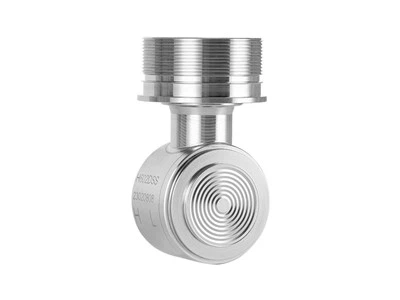
The threaded structure is also a common process connection for transmitters. For hygienic products, the use of threaded structures that are difficult to clean is generally not recommended, as they may cause unnecessary contamination of the measured product. If unavoidable, open threads on product contact surfaces should be avoided, and closed-thread connections between the sensor and piping accessories are not recommended. This is because if the primary seal is damaged, product leakage into the threads is highly likely, making cleaning difficult. When closed threads are used, the assembly must meet the following condition: it should only be used for assembling the sensor probe to the sensor component or adapter. The threads of the mounting components must be sealed at the product contact surface to prevent media, liquid, or microorganisms from entering and contacting the threads. If cavities exist behind the threads, any leakage through the threads should be directly vented to the atmosphere or connected via a leakage detection port.
3.6 Selection of Internal Fill Fluid
Conventional pressure transmitters typically use a fill fluid for pressure transmission. For hygienic design, the selection of fill fluid is also critical, as any leakage could directly contaminate the measured product. The fill fluid must be non-toxic and harmless, ensuring that even in the event of leakage, it does not cause secondary contamination to the measured product. According to 3-A Sanitary Standards, the fill fluid must be certified by the U.S. FDA.
4 Hygienic Design of Non-Product Contact Surfaces
4.1 Surface Finish
Non-product contact surfaces shall be relatively smooth, free of pits and cracks, and knurled surfaces shall not be used. Surfaces shall be designed and constructed to facilitate easy cleaning and inspection, preventing the accumulation of liquid or product residues that could become difficult to clean. Surfaces shall be designed to minimize liquid retention and ensure that liquids cannot flow onto product contact surfaces. If the external surface of the transmitter is not made of corrosion-resistant metal, it shall be painted or coated. Any paint or coating used must resist peeling, denting, flaking, blistering, or deformation under intended operating conditions, including cleaning and sterilization.
4.2 Welding
Permanent joints shall be made using continuous welding. Weld surfaces shall be smooth and uniform without defects such as pits, creases, cracks, or fissures. Post-weld grinding or polishing is not required.
4.3 Screws and Threads
Socket head cap screws shall generally not be used. Instead, screws with drainable designs, such as slotted pan head screws, shall be employed. Socket head cap screws may be used only in locations remote from or isolated from product contact surfaces and potential residue accumulation, but must still be drainable. Rivets shall not be used, except for nameplates on the transmitter housing.
Open threads should be avoided whenever possible. When necessary, the thread length shall not exceed half of the nominal thread diameter. Threads that may be exposed to splashing during production or cleaning shall be covered with sealed nuts.
4.4 Nameplates
Information labels and nameplates shall be acid-etched or laser-etched, continuously welded, and hermetically sealed to the transmitter. Non-metallic adhesively bonded information plates and nameplates are also acceptable. Information labels and nameplates may also be attached to the transmitter using removable connectors.
4.5 Capillaries and Wires
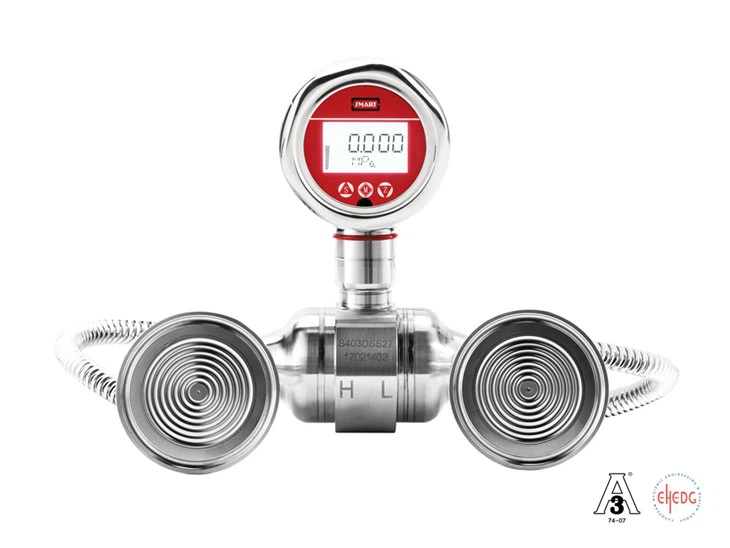
All interconnected capillaries and wires shall feature optical fibers that are corrosion-resistant, with smooth and cleanable surfaces. If armored, they shall be covered with spiral stainless steel and plastic coating, and must not be exposed.

In summary, hygienic pressure transmitters in process applications must not only meet measurement requirements but also adhere to international hygienic standards in terms of structure, materials, and process. Appropriate thread design, appropriate fill fluid selection, and strict control of non-contact surfaces, welds, fasteners, and cables are all key to ensuring cleanliness and safety. By adhering to these principles, hygienic pressure transmitters can be both efficient and reliable in actual production, while also preventing potential secondary contamination of the product.