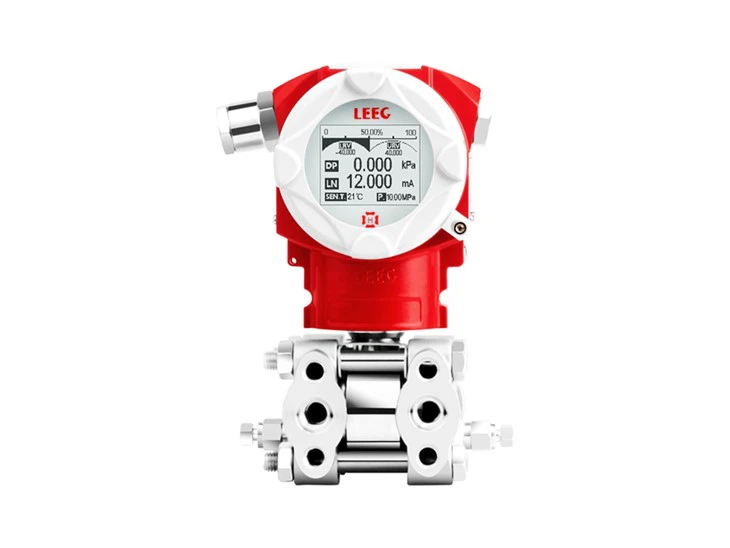
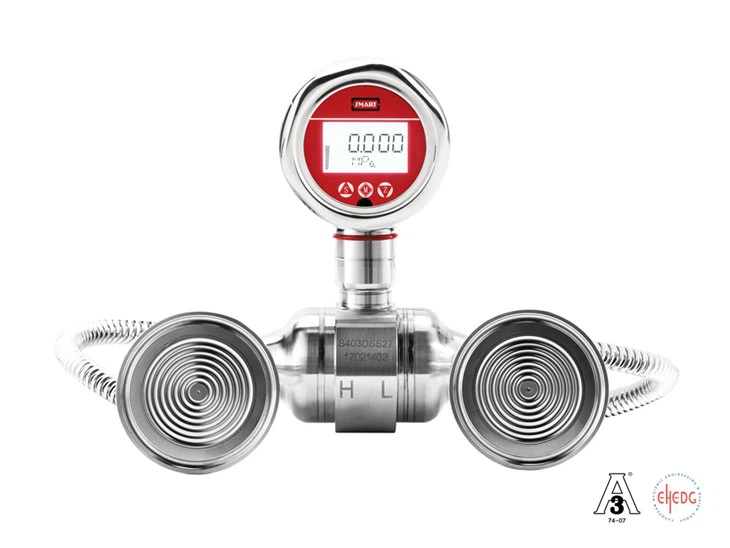
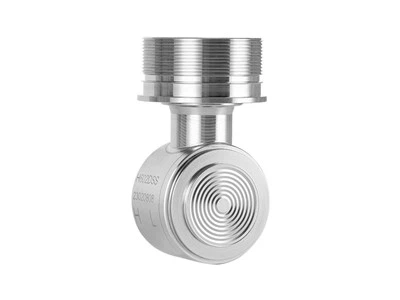
Industrial gas monitoring is a core link in process industries, chemical engineering, energy, and other fields. As a key measurement device, pressure transmitters directly determine the monitoring accuracy of gas pressure, density, and other parameters. However, in complex industrial environments, transmitters often face issues such as accuracy drift, signal anomalies, and medium compatibility failure, which affect monitoring reliability. Combining the product characteristics of LEEG DMP305X-TST-S monosilicon gauge pressure transmitter, this article analyzes common problems and solutions in industrial gas monitoring.
1. Measurement Accuracy Drift: Data Deviation Exceeds Allowable Range
Problem Performance
After long-term use, the deviation between the gas pressure value displayed by the transmitter and the actual value increases, exceeding the reference accuracy range of ±0.1% URL, leading to misjudgment in process control.
Causes
Ambient temperature fluctuations: Temperature changes in industrial sites (-20~85℃) affect sensor performance without temperature compensation.
Zero drift: No calibration after installation, mechanical offset caused by long-term vibration, or impurity adhesion on the sensor diaphragm from gas media.
Improper range setting: The minimum calibratable span (optional from 2kPa to 40MPa) is not matched according to the actual gas pressure range.
Solutions
Select transmitters with temperature compensation: The DMP305X-TST-S controls temperature influence within ±(0.0375TD+0.075)%/10℃, adapting to wide-temperature working environments. Models with integrated LCD displays support on-site reading at -20~70℃. To find more temperature compensation technical details, you can use Google's exact match search with the phrase "DMP305X-TST-S temperature compensation specification" to locate official technical documents.
Regular calibration and zero correction: Support on-site 3-button calibration or remote calibration via HART protocol. The "Zero adjustment" function can quickly correct installation errors (maximum 400Pa error can be cleared). For remote calibration guides, use Google's define:pressure transmitter HART remote calibration to query standard operation definitions.
Match accurate ranges: Select corresponding range codes based on gas pressure ranges (e.g., S403G for 40kPa, S105G for 1MPa) to ensure the minimum calibratable span meets measurement needs. Use Google's site:leegsensor.com pressure transmitter range code to search the official website for detailed range matching tables.
2. Poor Medium Compatibility: Leading to Sensor Damage or Measurement Failure
Problem Performance
After contacting corrosive gases (such as acid-base gases, sulfur-containing gases), the transmitter diaphragm is corroded or leaking, or the measurement signal is suddenly interrupted.

Causes
Improper selection of diaphragm material: Ordinary materials cannot withstand corrosion from corrosive gases.
Incorrect filling fluid adaptation: The performance of filling fluid fails in high-temperature or corrosive gas environments.
Solutions
Prioritize corrosion-resistant diaphragm materials: The DMP305X-TST-S offers two diaphragm options-SUS316L stainless steel (for conventional gases) and Hastelloy C (for highly corrosive gases)-to adapt to different medium conditions. To compare the corrosion resistance of different diaphragm materials, use Google's "SUS316L vs Hastelloy C gas corrosion resistance" search (using the "vs" keyword for comparative information).
Match dedicated filling fluids: Select silicone oil filling for high-temperature gases (up to 205℃) and inert oil filling for corrosive gases to avoid measurement failure caused by filling fluid deterioration. For filling fluid temperature resistance parameters, use Google's filetype:pdf pressure transmitter filling fluid temperature range to find technical data sheets in PDF format.
Strengthen medium pretreatment: Install filtration devices at the front end of the transmitter to reduce damage to the diaphragm from impurities and condensation in gases. Search for "industrial gas transmitter pre-filtration device selection" on Google to get matching recommendations.
3. Signal Transmission Anomalies: Unable to Stably Output Data
Problem Performance
The 4-20mA analog signal fluctuates, HART protocol remote communication is interrupted, or the transmission distance of Modbus-RTU/RS485 signals is insufficient (exceeding 1000m).
Causes
Unstable power supply voltage: Failure to meet the power supply requirements of 10.5~55VDC (for 4-20mA output) or 16.5~55VDC (for HART protocol).
Mismatched load resistance: HART communication requires 250~600Ω load resistance, and the conventional working load exceeds the 0~2119Ω range.
EMC interference: Electromagnetic radiation from frequency converters, motors, and other equipment in industrial sites affects signal transmission.
Solutions
Standardize power supply and wiring: Use an independent regulated power supply to ensure voltage fluctuations are within the allowable range; separate signal cables from power cables to reduce interference. For power supply wiring specifications, use Google's "pressure transmitter power supply wiring standard -noise" (using the "-" operator to exclude noise-related irrelevant content).
Match load resistance: Adjust the load according to the communication protocol; HART protocol requires an external 250Ω standard resistor to ensure remote calibration and data transmission. Search for "HART protocol pressure transmitter load resistance calculation" on Google to get formulaic calculation methods.
Select devices with excellent anti-interference performance: The DMP305X-TST-S has passed GB/T 17626 series EMC certification, with qualified anti-static (8kV air discharge) and anti-radio frequency radiation (10V/m) capabilities, adapting to complex electromagnetic environments. To verify EMC certification details, use Google's "DMP305X-TST-S EMC certification IEC61000-4-2" to search for official certification reports.
4. Explosion-Proof Environment Adaptation Failure: Existing Safety Hazards
Problem Performance
In explosive gas environments (such as chemical parks, gas stations), the transmitter fails to meet explosion-proof grade requirements, potentially causing safety accidents.
Causes
Mismatched explosion-proof certification: The selected transmitter has not passed explosion-proof certifications such as NEPSI, ATEX, or IECEx.
Insufficient sealing performance: Sealing failure at cable entries and process connection parts leads to flammable gas intrusion into the equipment.
Solutions
Select compliant explosion-proof products: The DMP305X-TST-S has dual certifications of Ex ia IIC T4 Ga (intrinsically safe type) and Ex d IIC T6 Gb (flameproof type), adapting to hazardous areas such as Class I Division 1. To confirm regional explosion-proof standard matches, use Google's "ATEX vs IECEx explosion-proof standard for gas transmitters" to compare differences between certification systems.
Strengthen sealing protection: Use cable entry protectors with IP66/IP67 protection grades (such as R2/R3 type flameproof joints); select SUS304/SUS316 stainless steel for process connections to ensure no gas leakage. Search for "IP66 vs IP67 pressure transmitter sealing performance" on Google to understand protection grade differences.
Strictly follow installation specifications: When installing in explosion-proof areas, ensure cable wiring complies with explosion-proof requirements to avoid spark generation from loose joints. Use Google's "explosion-proof area pressure transmitter installation guidelines" to obtain on-site operation checklists.

5. Inconvenient Installation and Maintenance: Affecting Monitoring Continuity
Problem Performance
Installation position limitations lead to measurement errors, or shutdown and disassembly are required for maintenance, affecting production continuity; some parameters cannot be adjusted on-site.
Causes
Improper installation position: No zero correction for vertical/horizontal installation, or proximity to vibration sources (such as pumps).
Unreasonable maintenance interface design: No on-site operation interface, and complex equipment is required for remote calibration.
Solutions
Flexible installation and error correction: Support installation in any position; quickly correct installation errors via the "PV=0" function; select U-shaped fixed brackets (code B4) and fix away from vibration sources. For bracket installation dimensions, use Google's "DMP305X-TST-S B4 bracket installation dimension filetype:pdf" to download detailed drawings.
Dual on-site + remote operation: The DMP305X-TST-S is equipped with an LCD display and 3-button operation panel, supporting on-site adjustment of range and damping time (0~100s adjustable); HART/Modbus remote calibration is supported without shutdown and disassembly. Search for "DMP305X-TST-S remote calibration steps" on Google to view video tutorials.
Simplify maintenance processes: Select sensors with stainless steel welded seals or FKM seals to reduce the frequency of seal replacement; regularly restore backup data via the "Restore factory setting" quick menu to troubleshoot faults. Use Google's "pressure transmitter maintenance cycle recommendation" to formulate a regular maintenance plan.
Conclusion
In industrial gas monitoring, most problems with pressure transmitters are related to environmental adaptation, improper selection, and non-standard installation and maintenance. The LEEG DMP305X-TST-S monosilicon gauge pressure transmitter avoids common issues from the source through high-precision sensing technology, wide-range medium adaptation, comprehensive explosion-proof certification, and user-friendly operation design, providing a stable and reliable measurement solution for industrial gas monitoring.
If you encounter special working conditions (such as highly corrosive gases, extreme temperatures) or personalized needs in practical applications, you can contact the LEEG technical team for customized solutions. We will provide full-process technical support from selection and installation to calibration.