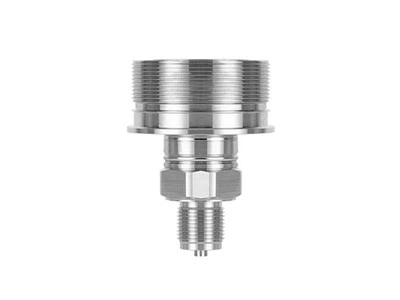
In the industrial landscape, differential pressure (DP) transmitters play a pivotal role in measuring and monitoring pressure differences across various processes. At the heart of these sophisticated devices lies a crucial mechanism: the pressure - to - optical signal conversion. As a trusted DP pressure transmitter supplier, we are passionate about sharing in - depth knowledge of this technology, which is fundamental to the operation and performance of our products.
Understanding the Basics of DP Pressure Transmitters
Before delving into the pressure - to - optical signal conversion, it's essential to understand the primary function of DP pressure transmitters. A DP pressure transmitter is designed to measure the difference in pressure between two points in a system. This measurement is crucial in a multitude of industries, including oil and gas, chemical processing, and water treatment. For instance, in a filtration system, a DP transmitter can monitor the pressure drop across a filter, indicating when the filter needs to be replaced.
The Significance of Pressure - to - Optical Signal Conversion
The conversion of pressure into an optical signal is a revolutionary advancement in DP pressure transmitter technology. Traditional pressure measurement methods often relied on electrical signals, which can be susceptible to electromagnetic interference (EMI). In contrast, optical signals are immune to EMI, offering a higher level of accuracy and reliability.
This conversion process begins with the pressure sensing element of the DP transmitter. When a pressure difference is applied across the sensing element, it undergoes a physical deformation. This deformation is then translated into a change in an optical property, such as the intensity, phase, or wavelength of light.
Components Involved in the Conversion
- Pressure Sensing Element
The pressure sensing element is the first line of interaction with the pressure being measured. It can be a diaphragm or a Bourdon tube, depending on the design of the DP transmitter. For example, in our DMP305X - TLT Gauge Pressure Transmitter, a high - precision diaphragm is used as the sensing element. When pressure is applied, the diaphragm deflects, and this deflection serves as the input for the subsequent optical conversion process. - Optical Transduction Mechanism
Once the sensing element is deformed by the pressure, an optical transduction mechanism comes into play. There are several types of optical transduction mechanisms, including Fabry - Perot interferometry and fiber Bragg grating (FBG) technology.
In Fabry - Perot interferometry, two parallel reflective surfaces are used. The deformation of the pressure sensing element changes the distance between these two surfaces, which in turn affects the interference pattern of the light passing through. By analyzing this interference pattern, the pressure can be accurately determined.
FBG technology, on the other hand, utilizes a fiber optic cable with periodic variations in the refractive index. When pressure is applied, the grating spacing changes, causing a shift in the reflected wavelength of light. This wavelength shift is proportional to the applied pressure, allowing for precise pressure measurements. Our SMP858 - NST Differential Pressure Transmitter and SMP858 - NST Differential Pressure Transmitter incorporate advanced optical transduction mechanisms to ensure high - accuracy pressure measurements.
3. Optical Detection and Signal Processing
After the optical signal has been modulated by the pressure - induced changes, it is detected by an optical detector. The detector converts the optical signal into an electrical signal, which can then be processed by the transmitter's internal electronics. The processed signal is typically in a standard industrial output format, such as 4 - 20 mA or digital communication protocols like HART or Modbus.
Advantages of Pressure - to - Optical Signal Conversion in DP Pressure Transmitters
- Improved Accuracy
Optical signals are less affected by noise and interference compared to electrical signals. This results in more accurate pressure measurements, especially in environments with high electromagnetic activity. For industries where precise pressure control is crucial, such as pharmaceutical manufacturing, the high accuracy of optical - based DP transmitters can significantly enhance the quality and consistency of the production process. - Enhanced Reliability
Optical components are generally more stable and durable than their electrical counterparts. They are less prone to wear and tear, corrosion, and temperature - related drift. This means that DP transmitters using pressure - to - optical signal conversion can operate reliably for longer periods, reducing maintenance costs and downtime. - Increased Safety
In hazardous environments, such as oil refineries or chemical plants, electrical signals can pose a potential fire hazard. Optical signals, being non - electrical, eliminate this risk, making optical - based DP transmitters a safer choice for these applications.
Applications of DP Pressure Transmitters with Pressure - to - Optical Signal Conversion
- Flow Measurement
In fluid flow systems, the pressure difference across an orifice plate or a venturi tube is proportional to the flow rate. DP pressure transmitters with pressure - to - optical signal conversion can accurately measure this pressure difference, providing reliable flow rate data for process control and optimization. - Level Measurement
In tanks and vessels, the pressure at the bottom is related to the liquid level. By measuring the pressure difference between the bottom and the top of the tank, a DP transmitter can determine the liquid level. The high accuracy and reliability of optical - based DP transmitters make them ideal for critical level measurement applications, such as in storage tanks for hazardous chemicals. - Filtration Monitoring
As mentioned earlier, DP transmitters can monitor the pressure drop across filters. By accurately detecting changes in pressure, they can indicate when a filter is clogged, allowing for timely replacement and preventing process inefficiencies.
Future Trends in Pressure - to - Optical Signal Conversion Technology
The field of pressure - to - optical signal conversion is constantly evolving. Future advancements may include the development of more compact and cost - effective optical components, as well as the integration of advanced signal processing algorithms to further improve measurement accuracy. Additionally, the use of wireless communication technology in conjunction with optical - based DP transmitters may become more prevalent, enabling remote monitoring and control of industrial processes.
Conclusion
In conclusion, the pressure - to - optical signal conversion in DP pressure transmitters is a game - changing technology that offers numerous advantages in terms of accuracy, reliability, and safety. As a leading DP pressure transmitter supplier, we are committed to leveraging this technology to provide our customers with the highest - quality products for their industrial applications.
If you are in need of a reliable DP pressure transmitter for your process, we invite you to contact us for a detailed discussion. Our team of experts is ready to assist you in selecting the most suitable product for your specific requirements. Let's work together to optimize your industrial processes with the latest in pressure measurement technology.


References
- Smith, J. (2018). "Advances in Optical Pressure Sensing Technology." Journal of Industrial Instrumentation.
- Brown, L. (2019). "Application of Differential Pressure Transmitters in Modern Industries." Industrial Engineering Review.
- Green, M. (2020). "Optical Signal Processing for Pressure Measurement." Optics and Photonics Research Journal.