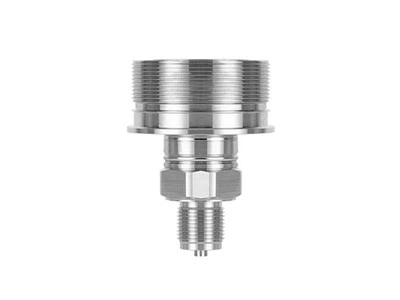
Hey there! As a supplier of remote seal transmitters, I often get asked about the installation clearance requirements for these nifty devices. So, let's dive right in and break it down.
First off, what the heck is a remote seal transmitter? Well, it's a type of pressure transmitter that uses a diaphragm seal to isolate the process fluid from the pressure sensing element. This is super useful in applications where the process fluid is corrosive, viscous, or contains solids that could damage the transmitter. The remote seal is connected to the transmitter via a capillary tube filled with a fill fluid, which transfers the pressure from the process fluid to the sensing element.
Now, onto the installation clearance requirements. These requirements are crucial because they ensure the proper functioning and longevity of the remote seal transmitter. There are a few key factors to consider when it comes to installation clearance.
Vertical Clearance
One of the most important aspects of installation clearance is vertical clearance. When installing a remote seal transmitter, you need to make sure there's enough space above and below the device. This is because the fill fluid in the capillary tube can expand or contract due to temperature changes. If there isn't enough vertical clearance, the expansion or contraction of the fill fluid can cause issues with the pressure measurement.
For example, if the fill fluid expands and there isn't enough space above the transmitter, it could cause the diaphragm seal to deform or even rupture. On the other hand, if the fill fluid contracts and there isn't enough space below the transmitter, it could cause air bubbles to form in the capillary tube, which can also affect the accuracy of the pressure measurement.
As a general rule of thumb, you should aim for at least 6 inches of vertical clearance above and below the remote seal transmitter. However, this can vary depending on the specific model and application. Some transmitters may require more or less clearance, so it's always a good idea to check the manufacturer's instructions.
Horizontal Clearance
In addition to vertical clearance, you also need to consider horizontal clearance. This refers to the amount of space around the sides of the remote seal transmitter. Having enough horizontal clearance is important for a few reasons.
First, it allows for easy access to the transmitter for maintenance and calibration. If there isn't enough space around the sides of the transmitter, it can be difficult to reach the connections and adjust the settings. Second, horizontal clearance helps with heat dissipation. Remote seal transmitters generate heat during operation, and having enough space around the device allows the heat to dissipate more effectively, preventing overheating.


A good rule of thumb for horizontal clearance is to leave at least 4 inches of space around the sides of the transmitter. Again, this can vary depending on the model and application, so be sure to check the manufacturer's recommendations.
Clearance from Obstructions
Another important factor to consider is clearance from obstructions. You need to make sure there aren't any objects or structures that could interfere with the operation of the remote seal transmitter. This includes things like pipes, valves, and other equipment.
Obstructions can block the flow of the process fluid, which can affect the pressure measurement. They can also cause vibrations or mechanical stress on the transmitter, which can lead to damage over time. When installing a remote seal transmitter, make sure there's a clear path for the process fluid to flow to and from the diaphragm seal, and that there are no objects that could come into contact with the transmitter.
Mounting Orientation
The mounting orientation of the remote seal transmitter also plays a role in the installation clearance requirements. Most remote seal transmitters can be mounted in a variety of orientations, including horizontal, vertical, and angled. However, the orientation you choose can affect the performance of the device.
For example, if you mount the transmitter vertically with the diaphragm seal at the bottom, you need to make sure there's enough vertical clearance to prevent the fill fluid from pooling in the diaphragm seal. On the other hand, if you mount the transmitter horizontally, you need to make sure there's enough horizontal clearance to allow for proper heat dissipation.
It's important to follow the manufacturer's recommendations for mounting orientation to ensure the best performance and accuracy of the remote seal transmitter.
Our Product Recommendations
At our company, we offer a range of high-quality remote seal transmitters that are designed to meet the needs of various applications. Some of our popular products include the DMP305X-TLF Gauge Pressure Transmitter, the DMP305X-TLT Gauge Pressure Transmitter, and the DMP305X-TST-S Absolute Pressure Transmitter.
These transmitters are built with precision and reliability in mind, and they come with detailed installation instructions that include information on the installation clearance requirements. Our team of experts is also available to provide support and guidance to ensure that you install the transmitters correctly and get the most out of them.
Conclusion
In conclusion, the installation clearance requirements for a remote seal transmitter are an important consideration that can affect the performance and accuracy of the device. By ensuring that there's enough vertical and horizontal clearance, clearance from obstructions, and following the proper mounting orientation, you can help to ensure that your remote seal transmitter operates smoothly and provides accurate pressure measurements.
If you're in the market for a remote seal transmitter, we'd love to hear from you. Our team is ready to assist you in choosing the right product for your application and providing you with all the support you need for installation and maintenance. Don't hesitate to reach out to us to start the conversation about your pressure measurement needs.
References
- Manufacturer's manuals for DMP305X-TLF, DMP305X-TLT, and DMP305X-TST-S transmitters.
- Industry standards and best practices for pressure transmitter installation.