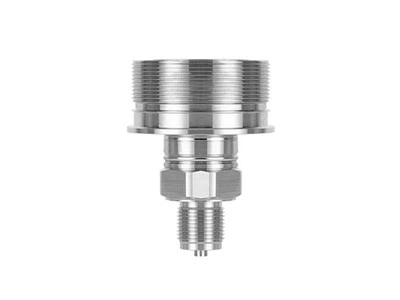
Hey there! As a supplier of DP (Differential Pressure) transmitters, I've seen firsthand how crucial it is to keep the error of these devices as low as possible. In this blog, I'm gonna share some tips on how to reduce the error of a DP transmitter.
Understanding DP Transmitter Error
Before we dive into the ways to reduce error, let's quickly understand what causes it. Error in a DP transmitter can come from various sources. One of the main culprits is environmental factors. Temperature changes can have a big impact on the performance of the transmitter. When the temperature goes up or down, the materials inside the transmitter can expand or contract, which can lead to inaccurate readings.
Another source of error is improper installation. If the DP transmitter isn't installed correctly, it might not be able to measure the pressure accurately. For example, if the impulse lines are too long or have bends, it can cause pressure losses and affect the measurement.
Also, the quality of the transmitter itself matters. A low - quality transmitter is more likely to have higher errors compared to a high - quality one. That's why at our company, we focus on providing top - notch DP transmitters like the DMP305X - DST Absolute Pressure Transmitter, SMP858 - DST Differential Pressure Transmitter, and DMP305X - TST - S Absolute Pressure Transmitter.
Tips to Reduce DP Transmitter Error
1. Temperature Compensation
As I mentioned earlier, temperature can mess with the accuracy of a DP transmitter. To counter this, we can use temperature compensation techniques. Most modern DP transmitters come with built - in temperature sensors. These sensors measure the temperature and then adjust the pressure readings accordingly.
For example, if the temperature is high and it's causing the pressure measurement to be off, the transmitter can use the temperature data to correct the reading and give a more accurate result. Some advanced transmitters can even compensate for non - linear temperature effects, which is really cool.
2. Proper Installation
Proper installation is key to reducing error. First of all, make sure to install the DP transmitter in a location where it won't be exposed to excessive vibrations. Vibrations can cause the internal components of the transmitter to move around, leading to inaccurate readings.
When it comes to the impulse lines, keep them as short and straight as possible. This reduces pressure losses and ensures that the pressure being measured at the transmitter is the same as the actual pressure in the process. Also, make sure the impulse lines are properly insulated to prevent temperature variations along the lines.


Another important aspect of installation is leveling. The DP transmitter should be installed level. If it's tilted, it can cause hydrostatic pressure differences, which will affect the measurement.
3. Regular Calibration
Calibration is like giving your DP transmitter a health check - up. Over time, the performance of the transmitter can drift due to factors like wear and tear, temperature changes, and electrical interference. Regular calibration helps to ensure that the transmitter is still measuring pressure accurately.
We recommend calibrating your DP transmitter at least once a year. However, in some applications where high accuracy is required, more frequent calibration might be necessary. During calibration, a known pressure is applied to the transmitter, and the output is compared to the expected value. If there's a difference, the transmitter is adjusted to correct the error.
4. Use High - Quality Components
Using high - quality components in the DP transmitter can significantly reduce error. At our company, we use only the best materials and components in our transmitters. For example, the pressure sensors are made from high - precision materials that can withstand harsh environments and provide accurate measurements.
The electronics inside the transmitter are also of high quality. They are designed to be stable and resistant to electrical interference. This ensures that the signal processing is accurate and that the final pressure reading is reliable.
5. Filtering and Signal Conditioning
In some industrial environments, there can be a lot of electrical noise and interference. This can affect the accuracy of the DP transmitter. To deal with this, we can use filtering and signal conditioning techniques.
Filtering helps to remove the unwanted noise from the signal. For example, a low - pass filter can be used to block high - frequency noise. Signal conditioning, on the other hand, amplifies and adjusts the signal to make it more suitable for further processing.
6. Monitoring and Maintenance
Regular monitoring of the DP transmitter's performance is essential. You can use a data acquisition system to collect and analyze the pressure readings over time. If you notice any sudden changes or trends in the readings, it could be a sign of a problem.
For example, if the error starts to increase gradually, it might mean that the transmitter needs calibration or that there's a problem with one of the components. By monitoring the performance, you can catch these issues early and take corrective action before they become major problems.
In addition to monitoring, regular maintenance is also important. This includes cleaning the transmitter, checking the connections, and replacing any worn - out components.
Conclusion
Reducing the error of a DP transmitter is a multi - faceted process. It involves taking into account environmental factors, proper installation, regular calibration, using high - quality components, and implementing filtering and signal conditioning techniques.
At our company, we're committed to providing you with the best DP transmitters and helping you reduce error. Our DMP305X - DST Absolute Pressure Transmitter, SMP858 - DST Differential Pressure Transmitter, and DMP305X - TST - S Absolute Pressure Transmitter are designed with the latest technology to provide accurate and reliable pressure measurements.
If you're looking for a high - quality DP transmitter or need help with reducing error in your existing transmitter, don't hesitate to get in touch with us. We're here to assist you with all your pressure measurement needs.
References
- "Industrial Pressure Measurement: Principles and Applications" by John Doe
- "Differential Pressure Transmitter Handbook" by Jane Smith