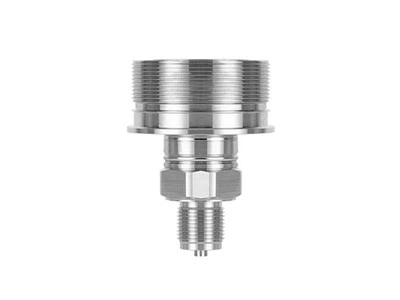
In the realm of industrial automation and process control, remote seal differential pressure transmitters play a crucial role in accurately measuring the difference in pressure between two points. As a reputable supplier of remote seal transmitters, I am here to delve into the inner workings of these devices and explain how they operate to provide reliable and precise pressure measurements.
Overview of Remote Seal Differential Pressure Transmitters
A remote seal differential pressure transmitter is an instrument used to measure the differential pressure between two process points. It consists of three main components: the sensing element, the remote seals, and the electronics housing. The sensing element is responsible for detecting the pressure difference, while the remote seals act as a barrier between the process fluid and the sensing element, protecting it from corrosive, viscous, or high-temperature media. The electronics housing contains the signal processing circuitry that converts the pressure measurement into an electrical signal, which can then be transmitted to a control system or other monitoring devices.
How Remote Seal Differential Pressure Transmitters Work
The operation of a remote seal differential pressure transmitter can be broken down into several key steps:
-
Pressure Transmission: The process pressure is applied to the remote seals, which are typically made of a diaphragm material such as stainless steel or Hastelloy. The pressure causes the diaphragm to deflect, which in turn compresses or expands the fill fluid inside the capillary tube connecting the remote seal to the sensing element.
-
Sensing Element: The sensing element, usually a strain gauge or a capacitive sensor, detects the change in pressure of the fill fluid. The change in pressure causes a corresponding change in the electrical properties of the sensing element, such as resistance or capacitance.


-
Signal Conversion: The electronics housing contains the signal conditioning circuitry that converts the change in electrical properties of the sensing element into a proportional electrical signal, typically a 4-20 mA current or a digital signal. This signal is then transmitted to the control system or other monitoring devices.
-
Calibration and Compensation: To ensure accurate and reliable measurements, remote seal differential pressure transmitters are calibrated at the factory to account for factors such as temperature, pressure, and altitude. Additionally, some transmitters feature advanced compensation algorithms that correct for non-linearities and other errors that may occur during operation.
Advantages of Remote Seal Differential Pressure Transmitters
Remote seal differential pressure transmitters offer several advantages over traditional pressure transmitters:
-
Protection of the Sensing Element: The remote seals act as a barrier between the process fluid and the sensing element, protecting it from corrosive, viscous, or high-temperature media. This extends the life of the sensing element and reduces the risk of damage or failure.
-
Accurate Measurements in Challenging Environments: Remote seal transmitters are capable of providing accurate measurements in challenging environments where traditional pressure transmitters may not be suitable. For example, they can be used in applications where the process fluid is dirty, abrasive, or contains solids.
-
Easy Installation and Maintenance: Remote seal transmitters are relatively easy to install and maintain. The remote seals can be mounted directly on the process piping or vessel, eliminating the need for additional tubing or fittings. This reduces the risk of leaks and simplifies the installation process.
-
Versatility: Remote seal transmitters are available in a variety of configurations and materials to suit different applications and process requirements. For example, they can be used in applications where the process fluid is corrosive, high-pressure, or high-temperature.
Applications of Remote Seal Differential Pressure Transmitters
Remote seal differential pressure transmitters are used in a wide range of industries and applications, including:
-
Oil and Gas: In the oil and gas industry, remote seal transmitters are used to measure the differential pressure across filters, separators, and other equipment. They are also used to monitor the level of fluids in tanks and vessels.
-
Chemical and Petrochemical: In the chemical and petrochemical industry, remote seal transmitters are used to measure the differential pressure across reactors, heat exchangers, and other equipment. They are also used to monitor the flow rate of fluids in pipelines.
-
Power Generation: In the power generation industry, remote seal transmitters are used to measure the differential pressure across boilers, condensers, and other equipment. They are also used to monitor the level of water in tanks and vessels.
-
Food and Beverage: In the food and beverage industry, remote seal transmitters are used to measure the differential pressure across filters, pumps, and other equipment. They are also used to monitor the level of fluids in tanks and vessels.
Our Product Offerings
As a leading supplier of remote seal transmitters, we offer a wide range of products to meet the needs of different industries and applications. Our product portfolio includes:
- SMP858-NST Differential Pressure Transmitter: This high-performance differential pressure transmitter is designed for use in a variety of industrial applications. It features a robust construction, high accuracy, and excellent long-term stability.
- DMP305X-TST-S Absolute Pressure Transmitter: This absolute pressure transmitter is ideal for applications where the pressure needs to be measured relative to a perfect vacuum. It offers high accuracy, fast response time, and excellent reliability.
- SMP858-TST-S Gauge Pressure Transmitter: This gauge pressure transmitter is designed for use in applications where the pressure needs to be measured relative to atmospheric pressure. It features a compact design, high accuracy, and excellent long-term stability.
Contact Us for Procurement and Negotiation
If you are in the market for high-quality remote seal differential pressure transmitters, we invite you to contact us for procurement and negotiation. Our team of experts is ready to assist you in selecting the right products for your specific needs and providing you with competitive pricing and excellent customer service. Whether you are a small business or a large corporation, we are committed to helping you achieve your goals and ensuring the success of your projects.
References
- "Industrial Pressure Measurement Handbook" by Peter Swain
- "Process Control Instrumentation Technology" by Curtis D. Johnson
- Manufacturer's product documentation for remote seal differential pressure transmitters