2.3 Design Determination of Measuring Diaphragm
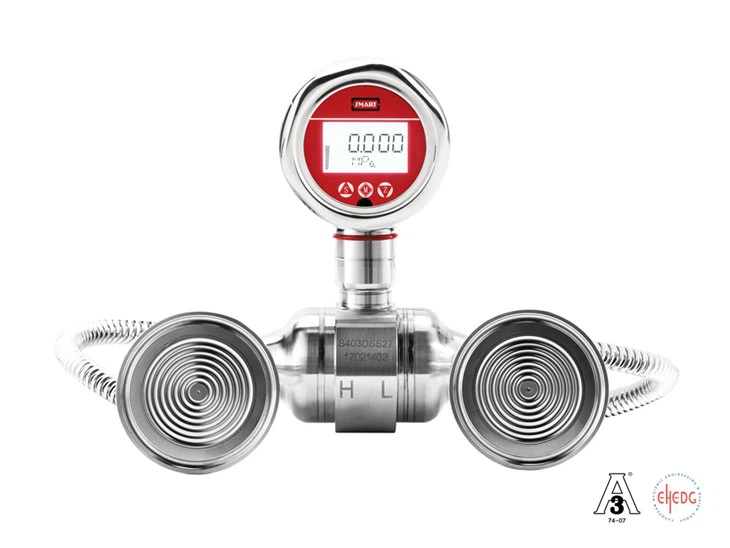
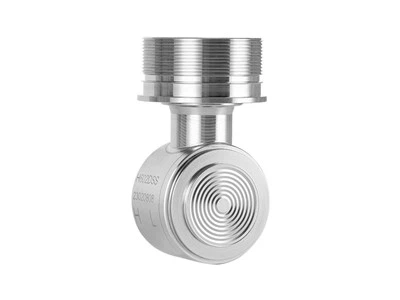
The measuring diaphragm is the core elastic component of a remote flange differential pressure transmitter, influencing its pressure response, measurement error, long-term drift, zero drift, and long-term stability. Therefore, the design determination of the measuring diaphragm is critically important, which is reflected in the following four aspects:
Material Selection for Measuring Diaphragm
The measuring diaphragm must maintain elasticity and linear stability during operation, requiring metal materials with a high elastic limit. The higher the elastic limit of the material, the greater its elastic energy storage and the smaller its non-elastic effects. Common materials for measuring diaphragms include 316, Hastelloy C, tantalum, titanium, and Monel alloy, each with different properties and applications.
316L is the most widely used material for measuring diaphragms. Due to its low carbon content, it does not require heat treatment after welding. It is commonly used in non-corrosive and sanitary applications, as well as in moderately corrosive environments such as sulfuric acid, sulfide solutions, sodium and manganese salt solutions, hydrochloric acid solutions, phosphoric acid solutions, acetic acid, formic acid, and hot alkaline solutions.
Hastelloy C offers significantly higher corrosion resistance than 316L and is often used in mixed corrosive media, including wet/dry chlorine gas, nitric acid (<50°C), hydrochloric acid, sulfuric acid, phosphoric acid, acetic acid, hypochlorites, ferric chloride, copper chloride, caustic soda, seawater, and various organic acids.
Tantalum is a highly chemically stable pure metal, suitable for extremely corrosive environments such as inorganic acids, aqua regia, organic acids, chlorides, salts, and corrosive gases.
Titanium is another highly corrosion-resistant pure metal, commonly used in strong corrosive environments like nitric acid (various concentrations), organic acids, chlorides, wet chlorine gas, and alkalis.
Monel alloy is one of the most resistant metals to hydrofluoric acid (second only to platinum and silver) and can also serve as a corrosion-resistant material in chlorides, seawater, and alkalis.
Thickness Design of Measuring Diaphragm
The measuring diaphragm transmits pressure, and its thickness is crucial for minimizing transmission loss. If the diaphragm is too thin, it may corrode or lose elasticity and linearity over time. If it is too thick, increased rigidity and internal stress can cause hysteresis or pressure transmission loss. To ensure effective pressure transmission, the diaphragm thickness should be maintained between 0.025 mm and 0.2 mm.
Standard remote flange differential pressure transmitters typically use a 0.08 mm diaphragm.
High-temperature and high-vacuum applications require a thicker diaphragm, usually around 0.2 mm.
Welding Process for Measuring Diaphragm
The measuring diaphragm is welded to the flange to form a pressure-sealed cavity, so the weld must be leak-free. The welding quality directly affects the leakage rate. Common welding methods include laser welding, arc welding, and resistance welding.
Laser welding offers concentrated energy, minimizing wrinkles or damage to the diaphragm. However, its point-beam welding approach may result in insufficient penetration or missed welds, leading to leaks.
Arc welding provides more uniform and reliable welds, but its high and dispersed energy can burn through thin diaphragms. A thicker compression ring is often added to assist the welding process.
Resistance welding is typically used for special diaphragms. It generates resistance heat between the diaphragm's inner surface and the flange's outer surface, achieving fusion without damaging the diaphragm. This method is ideal when the flange and diaphragm materials differ, preventing pitting corrosion at the weld joint.
Size of Measuring Diaphragm
Besides thickness, the diaphragm's diameter also affects pressure transmission. Process pressure acts on the diaphragm, and its diameter directly influences the force driving the fill fluid.
A larger driving force improves the dynamic response of the transmitter.
A smaller driving force (especially for ranges below 10 kPa) degrades dynamic response. Increasing the diaphragm diameter can mitigate this issue.
However, the diaphragm size is constrained by the flange's corrugation diameter. Excessive sizing can cause calibration and installation problems. Therefore, some manufacturers recommend:
Avoiding flanges smaller than DN25 for remote flange differential pressure transmitters.
Using DN50 or larger flanges for products with ranges below 40 kPa to ensure sufficient diaphragm size for reliable pressure transmission.