Dual-Diaphragm Structure Design of Pressure Transmitters
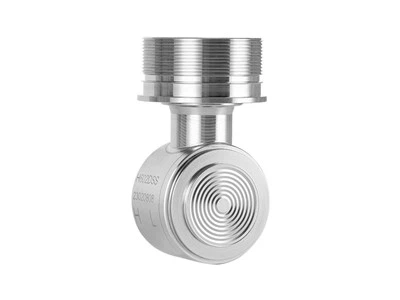
Fundamental research on diaphragm materials for pressure transmitters requires long-term accumulation and continuous improvement by experts across various fields and manufacturing processes to achieve success. Facing the growing market demand for transmitters, we can effectively address the impact of sudden temperature shocks on measurement accuracy through a dual-diaphragm structure. Deformation caused by rapid temperature changes occurs within a certain range. By reducing or eliminating this deformation range through structural compensation, we can effectively ensure measurement accuracy during process testing and guarantee transmitter reliability. As shown in Figure 6, the dual-diaphragm structure incorporates an absorption diaphragm in addition to the pressure-sensing diaphragm. When the pressure-sensing diaphragm deforms due to temperature shock, the absorption diaphragm undergoes deformation in the same direction under pressure, effectively canceling out the force generated by the temperature shock before it reaches the pressure silicon chip. The movement of the absorption diaphragm has position-limiting requirements, meaning the maximum deformation range caused by sudden temperature changes must be calculated and tested based on diaphragm size and the volume density of the filling fluid. During design, the oil cavity volume (oil quantity) of the pressure-sensing diaphragm must exceed that of the absorption diaphragm's limiting cavity; otherwise, pressure transmission failure may occur. The dual-diaphragm structure can effectively address situations involving sudden temperature changes during CIP cleaning, ensuring accurate and stable pressure readings throughout the cleaning process. Of course, this structural design has its limitations, as it may cause some pressure hysteresis, requiring comprehensive consideration of operational conditions for its application.

Figure 6
4 Conclusions and Prospects
Sanitary pressure transmitters are widely used in production process monitoring applications in food, pharmaceutical, beverage, and dairy industries. CIP cleaning represents the most critical production process for ensuring processing safety and hygiene. To meet reliable monitoring requirements for CIP cleaning, this paper has briefly described, analyzed, and explored temperature shock in transmitters from three aspects: dual-temperature compensation structure design, sensing diaphragm process and material design, and dual-diaphragm structure design, providing valuable research directions for solving temperature shock issues in transmitters while contributing to the continuous development and strengthening of domestic transmitters.
In recent years, global pressure transmitter technology has continued to innovate, achieving significant breakthroughs in measurement accuracy, environmental adaptability, and long-term stability. As an important industry participant, Chinese manufacturers are actively investing in R&D of fundamental materials, core processes, and chip technologies. With support from national industrial policies, domestic enterprises have made continuous progress in key technological areas such as sensor design and signal processing, with product competitiveness steadily improving. LEEG Instruments remains committed to providing customers with superior measurement solutions through technological innovation. We look forward to deepening cooperation with international partners to jointly promote technological advancement in the industry and global application development.