Abstract: Hygienic Pressure Transmitters are a critical component in process monitoring for food and pharmaceutical production equipment, with stringent hygienic design requirements. However, domestic standards have yet to form a comprehensive system. Based on international authoritative standards such as the U.S. 3-A Sanitary Standards, this study explores the hygienic design principles for product contact surfaces and non-contact surfaces. Meaningful conclusions have been drawn, providing insights for the formulation of relevant national standards and promoting the development of China's transmitter industry.
Key words: 3-A Sanitary Standards; transmitter; hygienic design; national standards; product contact surface; non-contact surface
Introduction
Hygienic Pressure Transmitters are essential components in process monitoring for food and pharmaceutical production equipment. With the continuous advancement of China's production processes and technologies, the transmitter industry has also achieved significant progress, with product quality and performance gradually approaching international levels. However, it is undeniable that China's transmitter industry started relatively late, and the design standards for transmitters remain underdeveloped, particularly in the area of hygienic design, which remains largely unexplored. Therefore, research on the hygienic design of transmitters holds significant practical importance.
1 Terminology Definitions
1.1 Hygienic Standards
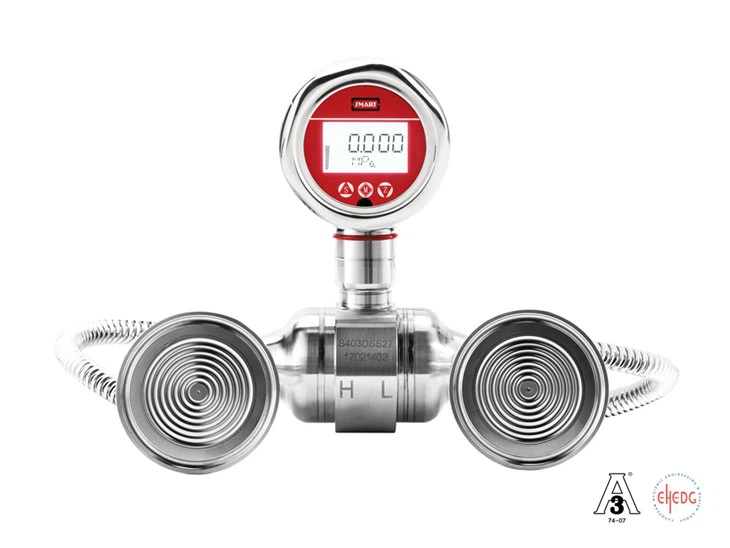
Currently, there are no domestic hygienic standards for transmitters. Internationally, the primary standards are the U.S. "3-A Sanitary Standard" and Germany's "EHEDG Standard." Among these, the "74-06" standard under the U.S. 3-A Sanitary Standards specifically addresses the hygienic requirements for sensors, their accessories, and connectors. These two organizations provide hygienic testing, certification, and re-inspection services for equipment and suppliers worldwide that have hygienic requirements, issuing hygienic certification (3-A and EHEDG certificates) for compliant products. Currently, many foreign transmitter manufacturers have obtained these certificates. As domestic requirements for transmitter hygiene become increasingly stringent and emphasized, major domestic transmitter manufacturers are also striving to acquire these certifications.
1.2 Hygienic Design
Hygienic design refers to designs that prevent contamination by harmful substances during the production, harvesting, processing, transportation, storage, and sale of food and pharmaceuticals. The purpose of hygienic design for transmitters is to meet cleaning requirements in production environments, ensuring that cleaning achieves the necessary cleanliness, preventing secondary contamination of products, and ultimately fulfilling hygienic standards.
1.3 Product Contact Surface and Non-Contact Surface
Hygienic design for transmitters inevitably involves two key concepts: product contact surfaces and non-contact surfaces. A product contact surface refers to any surface that comes into direct contact with the measured product or where the product may discharge, leak, diffuse, or penetrate. A non-contact surface refers to any surface where the measured product will not discharge, leak, diffuse, or penetrate.
2 Transmitter Structure and Material Selection
2.1 Transmitter Structure
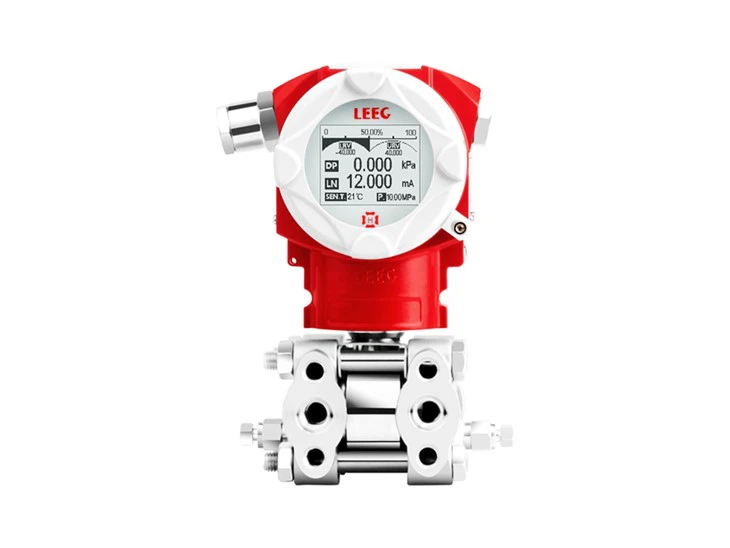
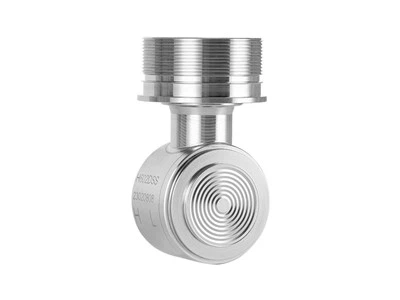
A Hygienic Pressure Transmitters generally consists of a process connection and sensor, a transmitter circuit module, and a cable entry protector. The figures below illustrate the structural diagram and overall dimensions of a stainless steel housing transmitter.