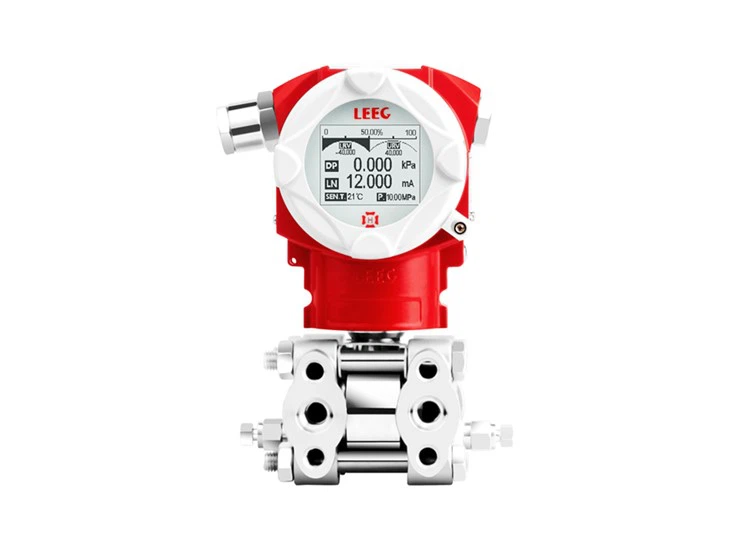
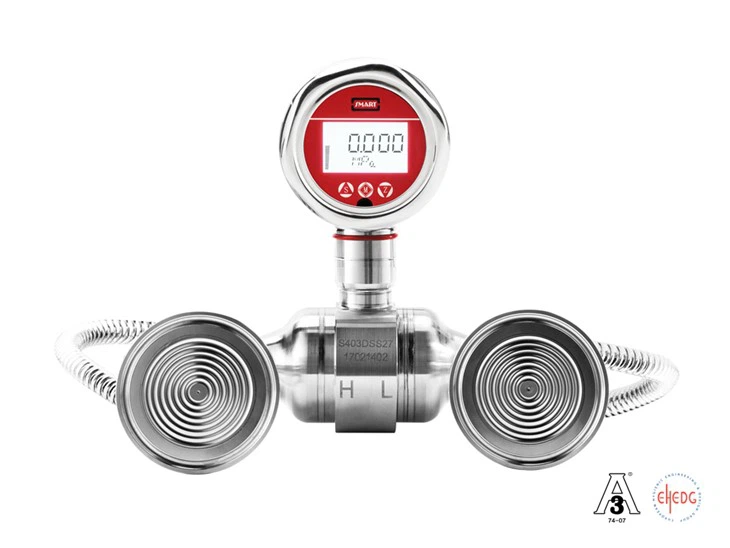
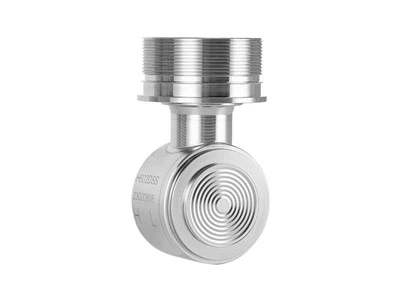
As bridges remain in service over extended periods, factors such as environmental erosion and long-term load effects inevitably lead to structural deterioration, material aging, and performance degradation, necessitating measures to prevent safety hazards. Effective monitoring of the structural safety performance of both existing and new bridges is essential. By leveraging information-based, digital, and intelligent technological methods and tools, continuous monitoring, effective recording, data display, and alarm assessment of parameters related to the bridge's environment, structural responses, and structural changes can be achieved. The core role of LEEG pressure transmitters in bridge digital monitoring systems is to measure pressure or liquid level changes related to the forces acting on the bridge, thereby providing insight into the stress state of the bridge and contributing to the safety of bridge transportation.
Typical Application 1: Bearing Pressure
The monitoring target of the pressure transmitter here is the bridge bearing (the component connecting the superstructure to the substructure). Its function is critical: bearings transfer the load from the superstructure to the substructure. Pressure transmitters can measure the vertical bearing reaction force in real-time, helping to understand support pressure variations under vehicle loads, temperature changes, or seismic activities.
Significance:
• Determine if the bearing is experiencing abnormal stress (e.g., eccentric loading, failure, or uplift).
• Assist in evaluating the overall load-bearing capacity of the bridge.

Typical Application 2: Cable Tension Monitoring
This application primarily targets cable-stayed bridges and suspension bridges. The pressure transmitter monitors the hydraulic tensioning system or cylinder pressure at the anchorages of the main cables or stay cables. Its function is to calculate the cable tension based on the hydraulic system pressure. Cylinder pressure is generated by pumping oil into the cylinder, causing the piston to move and produce force. The pressure range is typically 0-25 MPa, with special high-pressure applications reaching up to 40 MPa.
Significance:
• Ensure the stability of the pre-stress in stay cables or main cables, preventing structural instability due to stress relaxation or fatigue.
• Maintain the pressure value within the set range; the monitoring system will trigger an alarm if values deviate, preventing damage to bearings, cables, or girders.
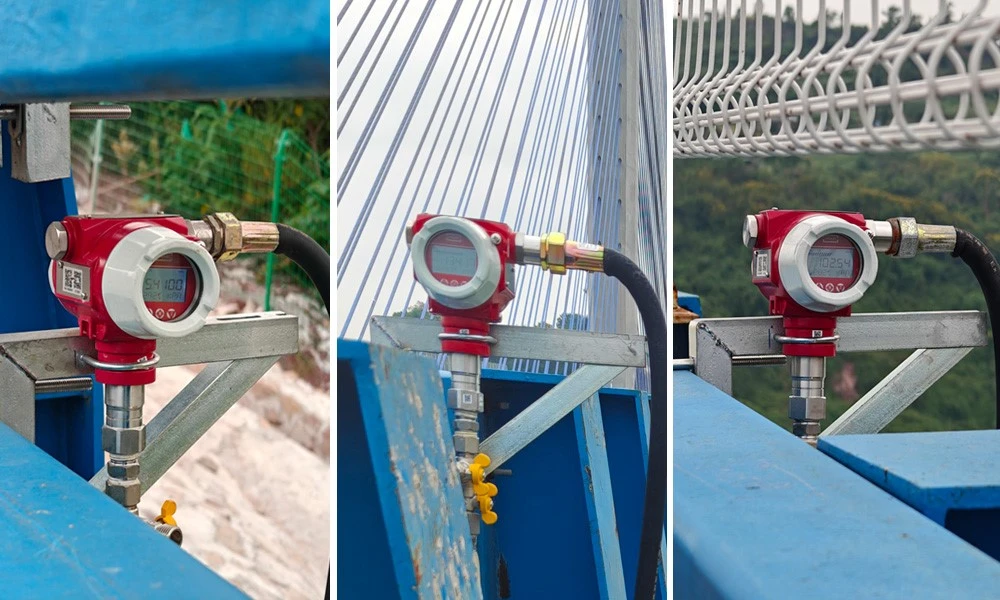
Other Applications of Pressure Transmitters in Bridges:
Pressure transmitters are also used for monitoring pressure/pipeline pressure in the bridge deck drainage system. They primarily monitor the liquid level or pipeline pressure in deck drainage pipes and expansion joint drainage pipes to prevent water accumulation during rainy seasons, which could affect traffic safety or cause structural corrosion.