In precision manufacturing or the chemical industry, airtightness is a critical factor in production efficiency and safety. In the era of intelligent manufacturing driven by high-quality development, traditional water testing methods and mechanical dial monitoring are being replaced by digital and intelligent solutions. Intelligent differential pressure transmitters have become the core engine of leakage detection technology.
With the continuous advancement of smart sensor technology, the field of airtightness testing is moving toward three major goals: high precision, automation, and traceability. In applications such as seal testing for new energy batteries, sterile environment monitoring in pharmaceutical production, semiconductor chamber sealing tests, and online detection systems for gas self-closing valves, intelligent differential pressure transmitters are redefining the safety boundaries of leakage detection.

As a core measurement device in industrial process control, differential pressure transmitters enable precise judgment of micro-leakages through high-precision differential pressure measurement, becoming a key support for modern non-destructive leak testing.
The core principle of differential pressure leak detectors is to compare the pressure difference between the test piece and a standard reference (an ideal leak-free component) to determine airtightness. When a leak occurs in a pipeline or container, a pressure gradient forms on either side of the leak point, and the differential pressure value changes significantly as the leakage increases. The workflow consists of four stages: inflation, balancing, detection, and exhaust. A high-precision differential pressure transmitter measures the pressure difference between the two chambers in real time. If the pressure difference exceeds the threshold, a leak is determined.
Application Solutions
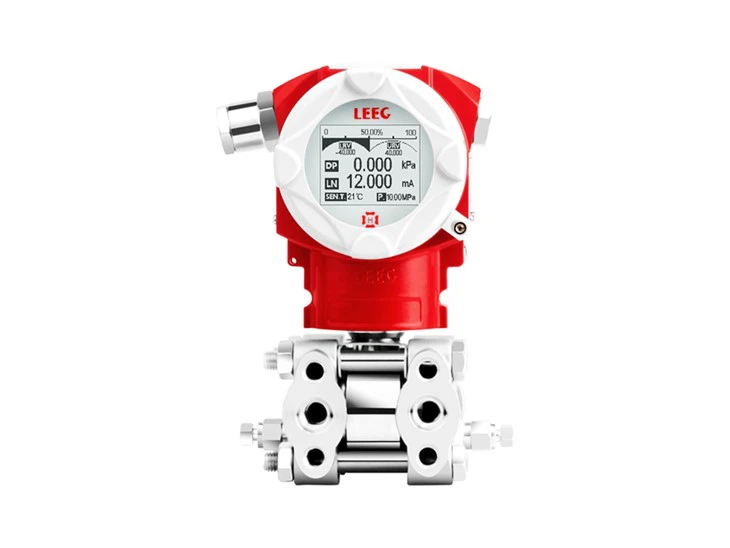
Micro-Leakage Measurement: Traditional bubble observation or mechanical pressure gauge methods face significant limitations in accuracy and efficiency. LEEG's DMP305X Intelligent Differential Pressure Transmitter addresses industry needs with its second-generation mono-silicon composite sensor and neural network algorithm compensation for multi-temperature and multi-pressure points. It achieves precise measurement even for micro-differential pressures (-100 Pa to 100 Pa), enabling real-time monitoring of minor leaks and improving airtightness testing efficiency.
- High Reliability: In precision manufacturing, production lines often operate 24/7, requiring transmitters to maintain long-term stability and avoid false judgments caused by zero drift or span drift. LEEG's intelligent differential pressure transmitter features proprietary filtering algorithms to prevent sudden output fluctuations, ensuring high stability for reliable operation and reducing maintenance frequency.
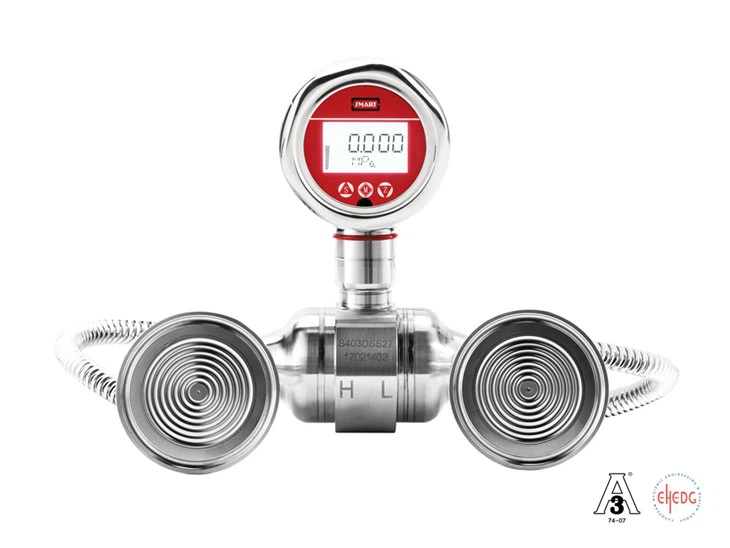
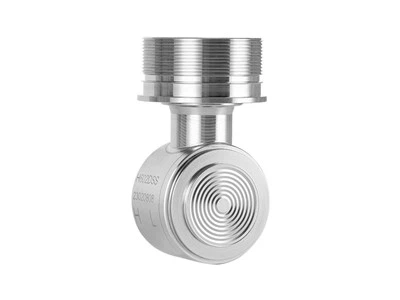
- Customized Compact Design for Easy Installation: For compact differential pressure leak detectors, LEEG offers customized small-sized transmitters to meet installation requirements in tight spaces.

Product Features:
- Second-generation mono-silicon composite sensor technology, automated core encapsulation, and full temperature-pressure compensation and calibration, with each unit supplied with an inspection report.
- Measurement range: Minimum differential pressure range of -100 to 100 Pa.
- Compliance with explosion-proof certifications: NEPSI (China) and international standards such as ATEX, IECEx, and CSA.
- Accuracy: ±0.05% FS.
- Multiple housing options for various working conditions: aluminum alloy, 316L stainless steel, and low-copper zinc alloy.
- Modular design, dual-chamber structure, IP67 protection rating, and low maintenance costs.
- Maximum static pressure: 42 MPa.
- Operating temperature range: -50°C to 85°C.
- Excellent EMC performance, certified with CE and RoHS.
- Multiple pressure process connections and electrical connection options to adapt to different field requirements.
LEEG's DMP305X Intelligent Differential Pressure Transmitter, with its high precision, intelligence, and reliability, supports high-quality development in airtightness testing. Whether ensuring battery protection in new energy applications or nanometer-level quality control in semiconductors, this technology enhances industrial production with greater safety and efficiency. In the future, intelligent pressure transmitters will continue to lead the leak detection industry toward a more precise, intelligent, and safer tomorrow.