Industry Background
The pharmaceutical industry is a strategic sector vital to national welfare, people's livelihoods, economic development, and national security, and it serves as a critical foundation for achieving a "Healthy China." With the rapid development of the global pharmaceutical industry, the market size for pharmaceutical equipment continues to expand. According to data from Grand View Research, the global pharmaceutical equipment market exceeded 50 billion dollars in 2024 and is projected to surpass 80 billion dollars by 2030, representing a compound annual growth rate of approximately 6-8%.
As a core component of the pharmaceutical production process, the safety and purity of pharmaceutical water systems directly impact drug quality and patient health. With the elevation of water quality standards in the pharmaceutical industry, coupled with the implementation of GMP certification systems and the "Design Standard for Clean Plants in the Pharmaceutical Industry," the demand for high hygiene standards and stability in pharmaceutical production equipment has become increasingly stringent.
Application Solution
The water systems utilized in the pharmaceutical industry primarily consist of Purified Water systems and Water for Injection systems. These systems employ multi-stage treatment processes to ensure that water quality meets stringent hygienic standards and fulfills the requirements of various pharmaceutical processes. Throughout the different stages of water usage-including the purified water generation system, the storage and distribution system, and the solution preparation system-higher performance requirements are imposed on measurements such as pressure and liquid level within these water systems.

1. Purified Water Generation System:
Hygienic pressure transmitters are used to measure the real-time pressure within the pipelines of the purified water system, ensuring operational stability and water purity. These transmitters undergo a degreasing treatment, allowing them to come into direct contact with the purified water without the risk of contaminating it with oils or lubricants. By precisely monitoring pressure fluctuations, we can quickly detect pressure anomalies and prevent issues such as pipeline leaks or valve vibrations. This ensures consistent water quality and purity while meeting the stringent requirements of GMP.

2. Purified Water Storage and Distribution System:
In the storage, distribution, and circulation systems for pharmaceutical water, hygienic pressure transmitters ensure stable system pressure through real-time monitoring and control. This helps prevent microbial growth or cavitation phenomena while meeting the stringent standards of GMP and FDA. Furthermore, these pressure transmitters can indirectly reflect the system's sealing integrity. By working in conjunction with the circulation pump, they help maintain a constant flow velocity, preventing the formation of stagnant water zones. This safeguards water quality safety and ensures production continuity.

3. Solution Preparation System:
In the solution preparation system, after the tank is sealed, it is filled with nitrogen to maintain an inert environment, preventing the solution from coming into contact with oxygen and moisture in the air, thereby avoiding contamination. Hygienic pressure transmitters monitor the pressure inside the tank in real-time, ensuring that the pressure remains stable within a preset range. This prevents uneven solution preparation caused by pressure that is too high or too low, guaranteeing the continuity and consistency of the entire preparation process. Such pressure monitoring not only helps ensure the quality of the prepared solution but also satisfies the requirements for CIP (Clean-in-Place) and SIP (Sterilize-in-Place) processes, ensuring that the entire operation complies with the stringent requirements of GMP.

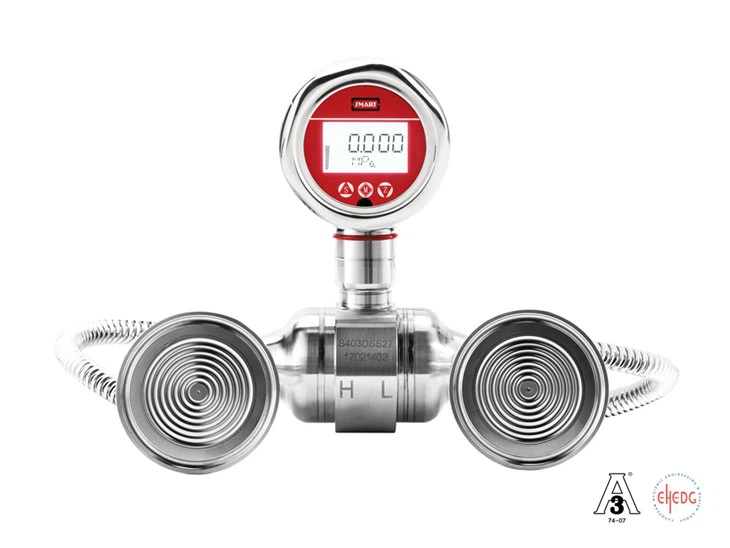
In the solution preparation system, the sterilizing filter is critical equipment for ensuring the sterility of the pharmaceutical solution. Hygienic pressure transmitters are used to monitor the differential pressure across the sterilizing filter in real-time, thereby ensuring the stability and effectiveness of the filtration process.

Core Advantages
- The only hygienic smart pressure transmitter in China to have obtained dual certification from the American 3-A hygienic Standard and the European Hygienic Engineering & Design Group (EHEDG).
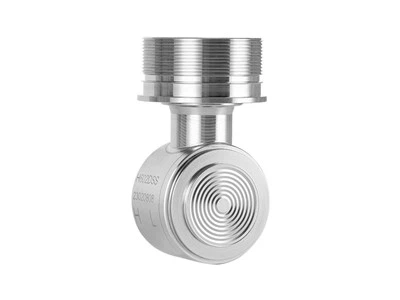
- Features a fully welded 316L stainless steel housing and a metallic diaphragm seal design, ensuring the wetted surface roughness is as low as Ra ≤ 0.4μm. It meets the requirements for a zero-dead-leg, fully flush diaphragm structure, effectively preventing microbial residue.
- Utilizes FDA-certified filling fluids and seal materials, guaranteeing product safety and reliability in the food and pharmaceutical industries.
- Offers an optional degreasing process, complying with the "Code for Construction and Acceptance of Clean Rooms GB 50591-2010."
- Provides hygienic quick-installation connections, ensuring an aseptic seal and facilitating easy cleaning and maintenance.
Application Cases

Cleanroom Equipment Integration for a Pharmaceutical Water

Pressure Measurement in a Solution Preparation System
Recommended Product

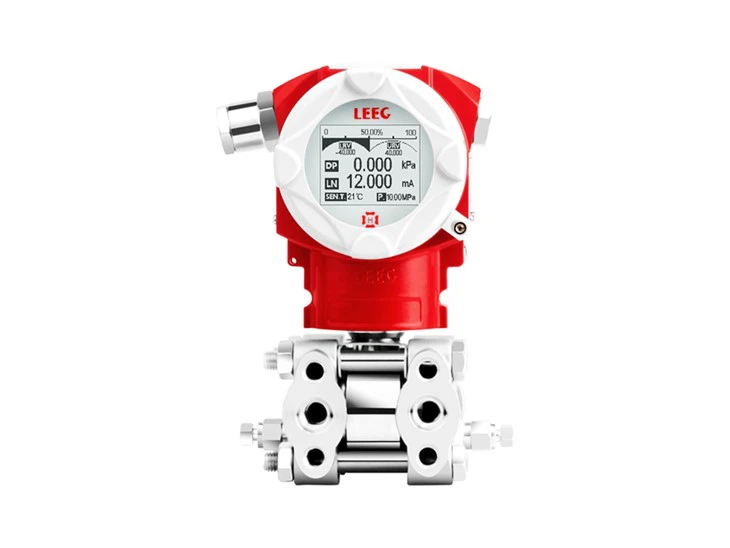
SMP858-TSF Hygienic Pressure Transmitter SMP858-NSF Differential Pressure Transmitter
The LEEG hygienic Smart Pressure Transmitter is specifically designed for aseptic environments. It is widely used in industries such as Life Sciences and Food & Beverage to ensure high levels of cleanliness and product quality during the production process, safeguarding the lifeline of safety in the hygienic industry.