Industry Background
Driven by the implementation of the dual-carbon strategy, China's green hydrogen industry is entering an accelerated phase of large-scale development. In 2025, the public bidding scale for domestic electrolytic water hydrogen production equipment reached 2,398.8 MW, a year-on-year increase of 69.4%, hitting a record high. The "15th Five-Year Plan" outline released in March 2026 explicitly calls for "vigorously developing green hydrogen energy" and positions hydrogen as a new growth point leading the future. Under policy guidance, the large-scale application of hydrogen energy in diverse fields such as transportation and industry continues to expand. Concurrently, driven by rapid advancements in electrolyzer technology and continuously decreasing renewable energy costs, the share of green hydrogen in total hydrogen production is expected to exceed 30% by 2030, with the market size surpassing 20 billion yuan. Propelled by both policy and market forces, the hydrogen energy industry is entering a new stage of leapfrog development.

During the electrolytic water hydrogen production process, precise pressure control is key to ensuring safe system operation. Hydrogen and oxygen are generated simultaneously within the electrolyzer. Maintaining a reasonable and stable pressure not only prevents the risk of explosion caused by backflow due to pressure differences between hydrogen and oxygen mixed gases but also ensures the efficient operation of gas separation equipment and reliable system sealing. Real-time pressure monitoring and dynamic regulation are at the core of ensuring safe hydrogen production operations.
Electrolytic Water Hydrogen Production Instrumentation Control

Schematic Diagram of Electrolytic Water Hydrogen Production System Process
The electrolyzer is the core equipment of the electrolytic water hydrogen production system. It uses KOH or NaOH solution as the electrolyte, and under the action of direct current, electrolyzes water to generate hydrogen and oxygen. The gases (H2, O2) produced from the electrolysis contain atomized alkali liquid. They first pass through a gas-liquid separator to remove the alkali liquid. The gases exiting the gas-liquid separator still contain a small amount of atomized alkali liquid and water vapor. A gas scrubber can wash away the residual liquid. The separated hydrogen and oxygen are cooled, have droplets removed, and are then sent out by the control system. The pressure within the separator affects electrolysis efficiency. Appropriate high pressure can reduce the gas content in the electrolyte, enhancing its electrical conductivity and improving electrolysis efficiency. However, excessive pressure increases the solubility of hydrogen and oxygen in the electrolyte, reducing production output.
The pressure sampling points of the hydrogen scrubber and oxygen scrubber are used to measure the differential pressure, reflecting the pressure difference between the hydrogen and oxygen sides of the electrolyzer. If the pressure difference between the hydrogen and oxygen sides of the electrolyzer is too large, it can cause hydrogen and oxygen to permeate each other, forming a mixed gas that presents a significant explosion hazard. The system controller controls the output regulating valve based on the differential pressure to keep it within a safe range.
For the liquid level measurement of the gas-liquid separator: When the gas-liquid separator is installed at a higher elevation than the electrolyzer, the separator's liquid level represents the electrolyzer's liquid level. The hydrogen and oxygen generated during electrolysis will cause the liquid level in the gas-liquid separator to gradually drop. If the liquid level is too low, gas may enter the downstream liquid outlet pipe. Maintaining the gas-liquid separator's liquid level within a safe range is very important.
In the electrolyte circulation loop, an electromagnetic flowmeter is typically used to measure the electrolyte flow. Since the electrolyte (e.g., KOH, NaOH solution) has good electrical conductivity, the electromagnetic flowmeter achieves stable and reliable measurement. The control system adjusts the circulation pump based on the flow signal, keeping the electrolyte flow within a reasonable range, thereby ensuring the electrolyzer's temperature control and reaction efficiency.
Application Solutions for Smart Pressure Transmitters


Separator and Scrubber Liquid Level Measurement
Separator Pressure Measurement
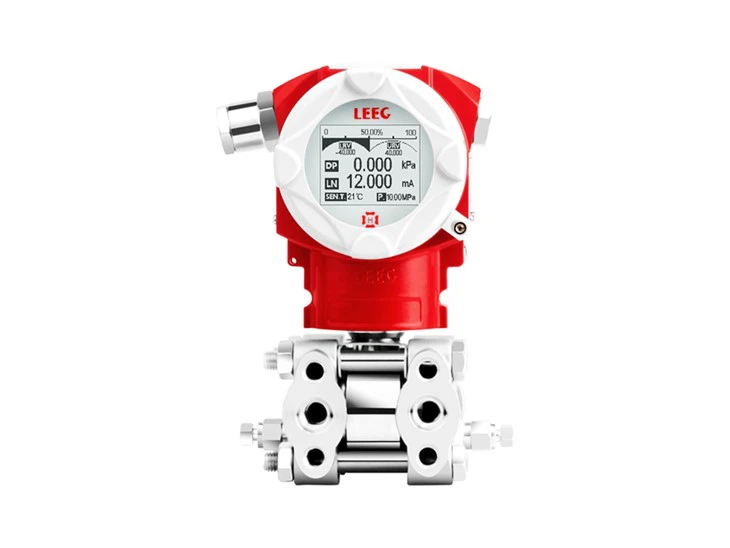
In hydrogen/oxygen separators, the measured medium is hydrogen or oxygen, accompanied by complex conditions such as water vapor, alkali mist, and condensate. To ensure long-term stable operation, it is recommended to use a Hastelloy C diaphragm for the wetted parts of the smart pressure transmitter to enhance corrosion resistance and anti-crystallization ability. The overall explosion-proof rating of the transmitter must meet the Ex d IIC T4 standard, and it should have SIL2 functional safety certification. Through redundant design and fail-safe mechanisms, safe and reliable operation under abnormal conditions is ensured.
Separator Liquid Level Measurement
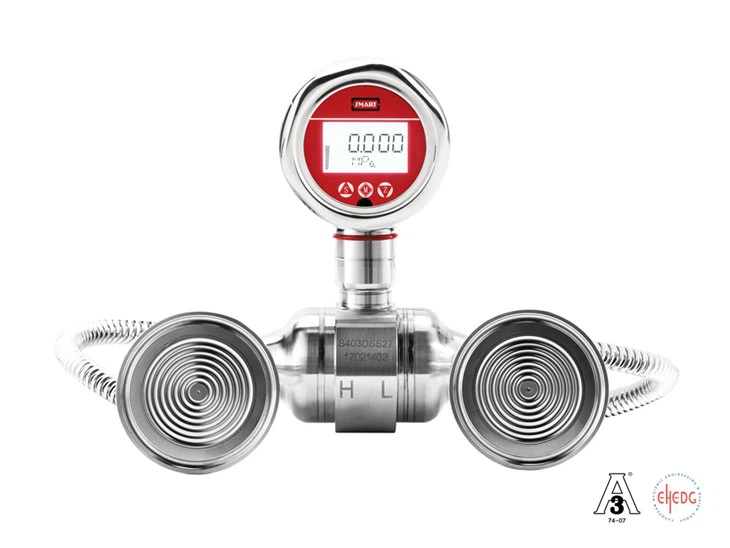
For liquid level measurement in hydrogen and oxygen separators, a remote capillary differential pressure transmitter is typically used. The measured medium is a mixture of alkali liquid and gas (hydrogen/oxygen), where the high-pressure side contacts the alkali liquid, and the low-pressure side contacts the gas phase (containing water vapor and alkali mist). To suit these highly corrosive and easy-to-crystallize conditions, it is recommended to use Hastelloy C diaphragms on both the high and low-pressure sides to ensure excellent alkali corrosion resistance and long-term measurement stability. The overall explosion-proof rating of the differential pressure level transmitter must also meet the Ex d IIC T4 standard to comply with safety regulations for explosive gas atmospheres. Additionally, it is recommended to install online hydrogen concentration monitoring points in the system to further enhance operational safety.
Scrubber Pressure and Liquid Level Measurement
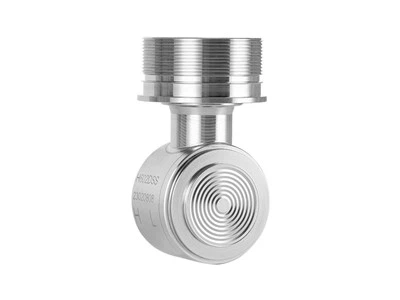
The pressure and liquid level measurement for scrubbers also uses a diaphragm flange-type structure. The internal medium is not simply water but a complex multi-phase system composed of water or dilute alkali liquid (possibly containing KOH), hydrogen/oxygen, alkali mist, and condensate. This condition is characterized by strong corrosiveness, high humidity, and a tendency to crystallize. Therefore, the diaphragm material is recommended to be Hastelloy C to improve corrosion resistance and anti-adhesion properties, ensuring the instrument's long-term stability and reliability.
Gas Output and Storage Pressure Measurement
During the control system output stage, hydrogen and oxygen enter storage or transmission pipelines. Pressure measurement at this stage is crucial for system safety and gas quality. The pressure transmitter on the hydrogen side uses a 316L stainless steel diaphragm and adopts an intrinsically safe design. Starting from circuit intrinsic safety, this effectively reduces the risk of ignition sources, controlling the explosion hazard at the design stage to ensure safe and reliable system operation.
The pressure transmitter on the oxygen side also uses a 316L stainless steel diaphragm. The filling fluid is an inert medium, and the diaphragm undergoes strict oil-free and degreasing treatment to avoid combustion or explosion risks in an oxygen-enriched environment, while also ensuring that the oxygen purity meets process requirements. Through targeted selection and safety design, stable and safe operation of the electrolytic water hydrogen production system during the gas output stage is achieved.
Recommended Products
MDM7000 Smart Pressure Transmitter
- High Accuracy: Technology empowers, measurement without boundaries. Features a second-generation monosilicon composite sensor, achieving basic accuracy of ±0.075% and ±0.05% for precise and reliable data.
- High Stability: Consistent performance, consistently excellent. Offers a turndown ratio of 100:1, long-term stability of ±0.1% SPAN per 10 years, high static pressure capability up to 42 MPa. Paired with an integrated diaphragm system, ensuring stable long-term operation and reducing maintenance costs.
- High Reliability: Ingenious design, safety assured. Utilizes a modular product architecture and dual-chamber design. For corrosion and crystallization processes, a Hastelloy C diaphragm is selected to completely eliminate corrosion and crystallization risks.
- High Protection Level: Multiple certifications, rock-solid security. Achieved TÜV SIL2 functional safety certification, complies with NEPSI, ATEX, IECEx, and other international explosion-proof standards. Laser welding sealing technology eliminates leakage paths, with an IP67 ingress protection rating, ensuring stable operation even in extreme environments.
MFE600-E Electromagnetic Flowmeter
- Stable and Reliable Data: Suitable for continuous batch measurement.
- Easy Installation and Maintenance: No fragile parts, low maintenance cost.
- Domestic Supply Assurance: Controllable delivery times, stable long-term supply.
- Mature Solution: Widely adapted for electrolytic water hydrogen production application scenarios.