Food safety is no longer just a regulatory requirement-it is a core competitiveness factor for modern food and beverage manufacturers. From raw material handling to final packaging, precise and hygienic pressure measurement plays a critical role in ensuring product quality, process stability, and compliance with international hygiene standards.
Ⅰ. The Challenge for Pressure Measurement in Hygienic Processes
In food processing applications such as dairy production, beverage filling, fermentation, and CIP/SIP cleaning systems, pressure transmitters must meet extremely high hygiene requirements:
1. Media often include viscous, sticky, or particulate-containing fluids
2. Equipment must withstand frequent CIP/SIP cleaning cycles
3. Any dead zones or crevices can lead to bacterial growth
4. Measurement errors may cause overpressure, contamination, or product inconsistency
Traditional industrial pressure sensors often fail in these environments due to exposed threads, poor surface finish, or incompatible filling fluids.

Ⅱ. Our Solution SMP858-TSF-S Hygienic Pressure Transmitter
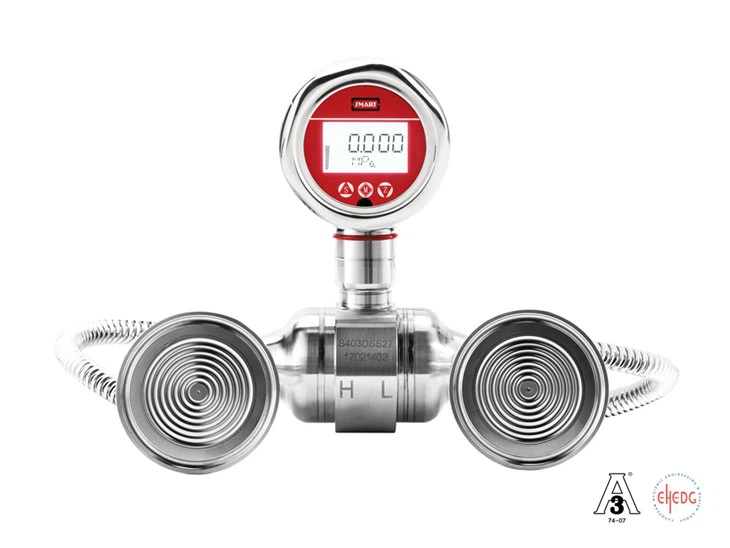
To address these challenges, the SMP858-TSF-S Monosilicon Gauge Pressure Transmitter is specifically designed for hygienic applications in the food and pharmaceutical industries.
1. Key design features include:
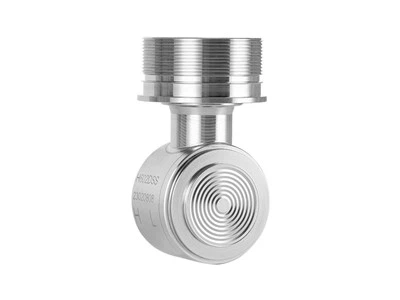
2. Flush-mounted welded diaphragm, eliminating dead zones
3. 316L stainless steel wetted parts with surface roughness ≤ 0.4 μm
4. FDA-compliant hygienic filling fluid
5. Tri-Clamp and other sanitary process connections compliant with 3-A standards
5. Full compatibility with CIP/SIP cleaning and sterilization processes
These features ensure that pressure measurement does not compromise hygiene or cleanability.
Ⅲ. Application Example of Dairy Processing Line
In a dairy processing plant, the SMP858-TSF-S was installed on a milk pasteurization line to monitor pressure before and after the heat exchanger.
Process requirements:
1. Accurate low-pressure measurement to protect pipelines
2. Resistance to frequent high-temperature CIP cycles
3. No risk of product contamination
Results achieved:
1. Stable and repeatable pressure signals even during temperature fluctuations
2. Zero product buildup thanks to the flush diaphragm design
3. Reduced downtime caused by sensor cleaning or replacement
4. Improved compliance with food safety audits and hygiene inspections
The transmitter's ±0.2% URL accuracy and long-term stability ensured reliable process control, while its compact design allowed easy integration into existing sanitary piping.
By using hygienic pressure transmitters like the SMP858-TSF-S, food manufacturers:
1. Minimize contamination risks
2. Improve process transparency and control
3. Extend equipment service life
4. Meet international standards such as FDA, 3-A, and EHEDG-related requirements
Pressure measurement becomes not just a control function, but an active safeguard for food safety.
Ⅳ. Conclusion
In hygienic food and beverage applications, pressure measurement must be as clean as the process itself. The SMP858-TSF-S Hygienic Pressure Transmitter combines precision, durability, and hygienic design to help manufacturers achieve safer, more reliable, and more efficient production.
Choosing the right sanitary pressure solution is a forward-looking investment-one that protects both product quality and brand reputation.