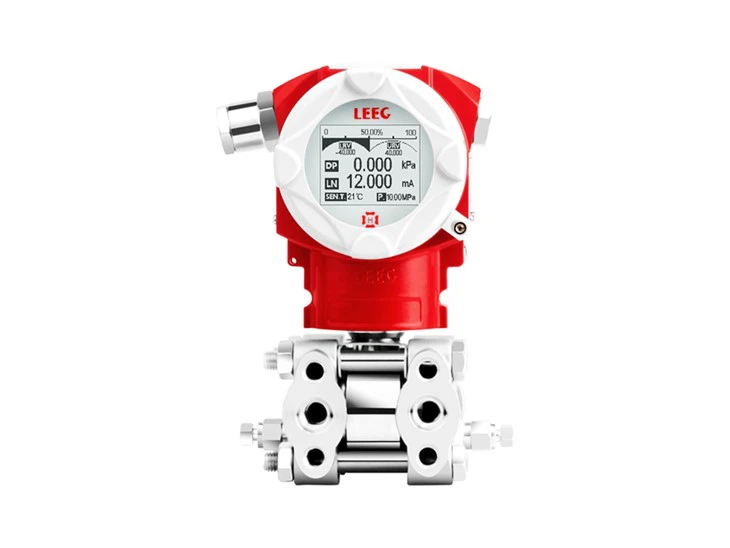
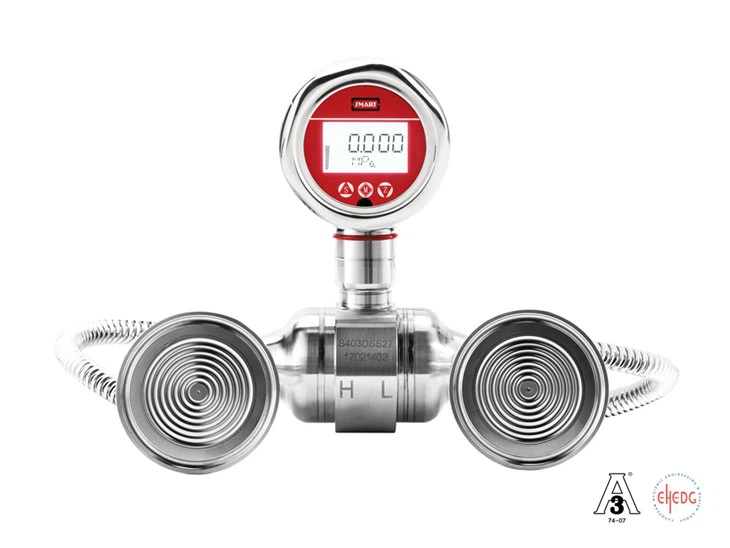
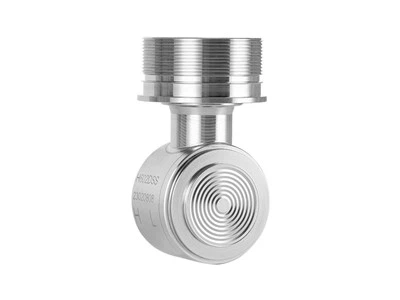
Hygienic pressure transmitter is widely used in food, beverage, dairy, pharmaceutical, and biotechnology industries to ensure accurate process monitoring while maintaining hygienic standards. Its design allows for easy cleaning, high precision, and compatibility with sanitary connections, making it suitable for both liquid and gas measurement in critical production environments.
Pipe pressure measurement
Mounted directly on the pipe fittings, a cooling element should be used with pressure transmitter for high temperature medium.

Container pressure measurement
Pressure transmitter mounted on top of the container, to avoid the errors caused by contacting with the medium static pressure.

Differential pressure measurement system
With two pressure transmitters to make up a DP measurement system, can measure the pressure value and calculate the differential pressure value.

Container level measurement
When using DP diaphragm system measurement, the static pressure is near to vacuum, differential pressure transmitters should be installed lower 1m than the high-pressure side pressure port.

Install pressure transmitter
1.Integrated pressure transmitter, installed directly with process connections.
2.DP diaphragm systems. Install membrane systems with process connections directly and install differential pressure transmitter with optional brackets.
1.The diaphragm seals system and pressure transmitter together form a closed calibrated system. Filling fluid through the diaphragm seals and the openings of pressure transmitters in the measuring system. The openings have been sealed. Please do not open..
2.Please do not remove the protection cap of the isolated diaphragm.
3.To prevent capillary from overbending (bending radius: ≥10mm), please make sure stress relieving completely of the capillary before the installation.
4.The static pressure of the liquid column in the capillary may result in zero shift. It can be corrected by the display at site.
In conclusion, hygienic pressure transmitter provides reliable measurement solutions for pipes, tanks, and differential systems under hygienic requirements. By following proper installation and maintenance guidelines, it ensures long-term accuracy, safety, and compliance in sanitary process industries.