LEEG Instruments Co., Ltd. is a high-tech enterprise specializing in the R&D, production, and sales of industrial automation instruments. Founded in 2005 and headquartered in Shanghai, China, the company boasts a complete production line and testing equipment. Its product portfolio includes pressure sensors, pressure transmitters, level transmitters, temperature transmitters, flow meters, and various other industrial measurement instruments. Committed to quality, LEEG Instruments has obtained ISO9001 Quality Management System certification, also the products are widely used in industries such as petroleum and chemical, power generation, metallurgy, and pharmaceuticals. LEEG emphasizes technological innovation, with an experienced R&D team dedicated to providing reliable measurement solutions for customers.
Diffused Silicon Sensors


Monosilicon Pressure Sensors
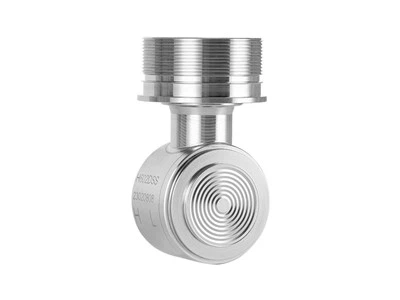
Monosilicon sensors use high-purity silicon crystals, leveraging their intrinsic piezoresistive effect without additional doping. Their perfect crystal structure ensures exceptional stability (0.1%FS/year) and a wide operating temperature range (-40°C to 125°C), with accuracy reaching 0.05%FS. These sensors are ideal for high-precision applications such as aerospace and petrochemical industries.


Differential Pressure Sensors
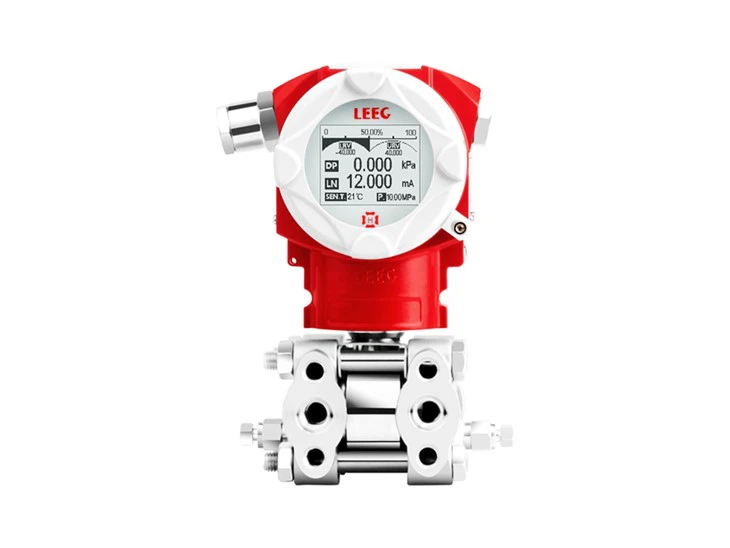
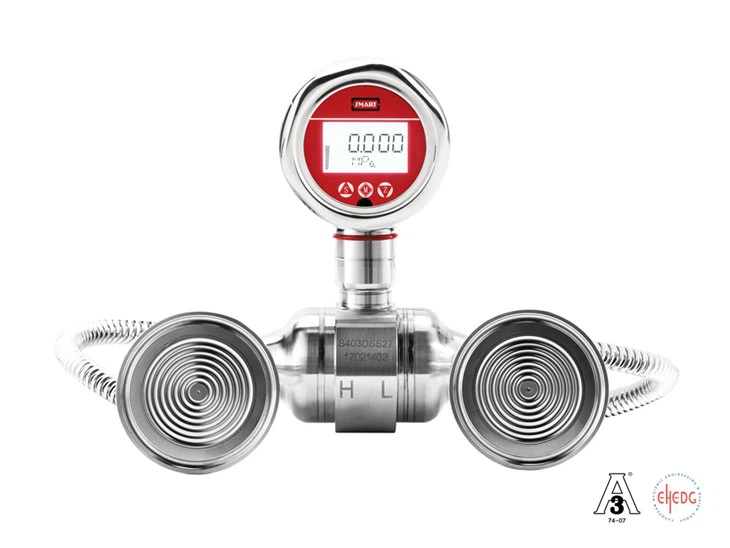
Monosilicon differential pressure sensors measure the difference between two pressure points, such as in flow and level monitoring. Their symmetrical structure and overpressure-resistant design ensure high accuracy, while some models utilize MEMS technology for miniaturization. They are widely used in petroleum, chemical, pharmaceutical, and environmental monitoring applications.


Multivariable Sensors
Multivariable sensors integrate pressure, temperature, and flow measurements into a single unit. Their modular design, combined with digital signal processing technology, enhances data accuracy. These sensors are extensively used in industries requiring comprehensive parameter monitoring, such as petroleum and environmental monitoring.

What Do Pressure Sensors Measure?
Pressure sensors are widely used across various fields to measure diverse parameters. In industrial process control, they monitor liquid or gas pressure in pipelines and containers to ensure safe and stable operations. In the automotive industry, they measure engine intake pressure, fuel pressure, and tire pressure to enhance vehicle performance and safety. In healthcare, blood pressure monitors, ventilators, and dialysis machines rely on pressure sensors for vital sign monitoring. The aerospace sector uses high-precision pressure sensors to measure altitude, airspeed, and engine conditions. Household appliances like washing machines and dishwashers use pressure sensors to control water levels. Additionally, weather stations use them to measure atmospheric pressure for weather forecasting, while deep-sea explorers employ specialized pressure sensors to withstand extreme underwater pressures. As technology advances, pressure sensors are finding new applications in smart homes and wearable devices, making pressure measurement an indispensable parameter in modern technology.
The Evolution of Pressure Sensors
The history of pressure sensors dates back to the 17th century with the invention of liquid-column-based manometers. By the late 19th century, Bourdon tube pressure gauges marked the maturity of mechanical pressure measurement. In the 1950s, advancements in semiconductor technology led to the first silicon piezoresistive pressure sensor, ushering in the era of electronic pressure measurement. The 1970s saw MEMS pressure sensors emerge from microfabrication progress, significantly reducing size and cost. During the 1980s-1990s, digital signal processing improved sensor accuracy and stability, giving rise to smart sensors. In the 21st century, wireless communication and IoT technologies spurred the development of wireless pressure sensors, while new materials and processes expanded their performance limits. Recent breakthroughs in monosilicon technology have elevated pressure measurement accuracy to new heights, while multifunctional integration and AI applications are redefining the future of pressure sensors. From simple mechanical devices to intelligent sensing nodes, pressure sensors have evolved from basic to complex, single-function to multi-parameter, and wired to wireless systems.
Working Principles of Various Pressure Sensors
Pressure sensors operate on diverse principles, each with unique characteristics. Piezoresistive sensors use the piezoresistive effect in semiconductors or metals, converting resistance changes into electrical signals via a Wheatstone bridge when pressure deforms a diaphragm. Capacitive sensors measure pressure-induced changes in the distance between capacitor plates, offering low power consumption and high sensitivity. Resonant sensors detect pressure by monitoring frequency shifts in vibrating elements (e.g., silicon beams or quartz crystals), achieving ultra-high precision at higher costs. Optical sensors rely on changes in fiber or grating properties, making them suitable for high electromagnetic interference environments. Piezoelectric sensors generate charges under pressure, ideal for dynamic pressure measurements. Other types include electromagnetic sensors based on LVDT (Linear Variable Differential Transformer) principles and SAW (Surface Acoustic Wave) sensors. Each principle determines differences in accuracy, stability, temperature performance, and cost, allowing users to select the best type for their needs. Modern sensors often combine multiple principles with advanced compensation algorithms for optimal performance.
Common Output Methods for Pressure Sensors
Pressure sensors offer various output signals, primarily categorized as analog or digital. Analog outputs include 4-20mA current signals and 0-5V/0-10V voltage signals, which are simple, reliable, and noise-resistant for long-distance transmission in industrial settings. For higher requirements, millivolt-level outputs may be processed by external amplifiers. Digital outputs include serial interfaces like I2C, SPI, and RS485, as well as industrial standards such as CAN bus and HART protocol, which offer better noise immunity and data capacity for computer integration. With IoT advancements, wireless outputs like LoRa, NB-IoT, and Bluetooth enable remote monitoring. Smart sensors may also integrate fieldbus protocols like Modbus and PROFIBUS for direct industrial control system connectivity. Some specialized sensors provide frequency or PWM (Pulse Width Modulation) outputs for specific applications. The choice depends on transmission distance, environmental interference, system compatibility, and power requirements, with modern sensors often offering multiple output options to meet diverse needs.
Advantages of Monosilicon Sensors
Monosilicon sensors represent the pinnacle of pressure measurement technology, offering several key advantages. First, their high-purity, defect-free crystal structure ensures exceptional long-term stability and repeatability, typically achieving 0.1%FS/year. Second, superior mechanical and elastic properties enable ultra-high precision, with some models reaching 0.01%FS. Third, minimal temperature coefficients allow stable performance across a wide range (-40°C to 125°C) without complex compensation. Additionally, outstanding fatigue resistance withstands over 10 million pressure cycles without degradation. From a manufacturing perspective, semiconductor processes ensure consistency, mass production capability, and compact sizes. In harsh environments, these sensors demonstrate superior shock and vibration resistance, along with better media compatibility. These advantages make monosilicon sensors ideal for demanding applications like aerospace, precision instruments, and oil exploration, where higher initial costs are offset by long-term reliability and performance.
Manufacturing Process of Monosilicon Sensors
The production of monosilicon sensors combines semiconductor and precision machining technologies, involving complex, stringent processes. It begins with high-purity silicon ingot preparation using Czochralski (CZ) or Float Zone (FZ) methods to grow defect-free monocrystalline rods, which are sliced into wafers. After precision grinding and polishing to sub-micron flatness, photolithography defines sensitive areas on the wafer surface. Anisotropic wet or dry etching then forms precise diaphragm structures, typically with thicknesses controlled to tens of microns (±1µm tolerance). Ion implantation or diffusion creates piezoresistors in critical regions, activated through high-temperature annealing. Passivation layers are deposited to protect sensitive elements, followed by anodic bonding to glass or another silicon wafer to form reference vacuum or pressure cavities. After chip-level packaging, laser trimming and temperature compensation ensure consistent output characteristics. Finally, the sensing chip is assembled into stainless steel or ceramic housings with signal conditioning circuits, undergoing rigorous aging tests and calibration before becoming finished products. The entire process requires a cleanroom environment, involves hundreds of steps, and demands strict quality control-key to the sensor's high performance.
Future Development of Monosilicon Sensors
Monosilicon sensor technology continues to advance rapidly, with future trends focusing on several areas. For performance enhancement, optimized crystal orientation and doping will increase sensitivity while reducing noise for higher resolution. New materials like silicon carbide may extend operating temperatures beyond 800°C for extreme environments. Integration is another key direction, with monosilicon sensors combining temperature, acceleration, and chemical sensing on a single chip for multifunctional systems. Wireless and smart trends will lead to self-powered sensors with energy harvesters and AI chips for edge computing. Manufacturing may adopt 3D printing and self-assembly to reduce costs for complex structures. Applications will expand from industrial control to biomedicine and consumer electronics, such as implantable blood pressure monitors and gesture recognition. Quantum effects in monosilicon could unlock new measurement principles beyond classical physics. With 5G and IoT proliferation, these sensors will become critical nodes in smart sensing networks, delivering precise pressure data for a digitalized society.