Overview of the Fluorochemical Industry
Hydrofluoric acid (HF) is a key raw material connecting fluorine resources with downstream fluorochemical products. Its production and application cover various sectors, including refrigerants, fluoropolymers, inorganic fluorides, and fluorine-based fine chemicals. In basic fluorochemical production facilities, process continuity, equipment sealing integrity, and media purity are closely interrelated, placing stringent demands on process measurement.
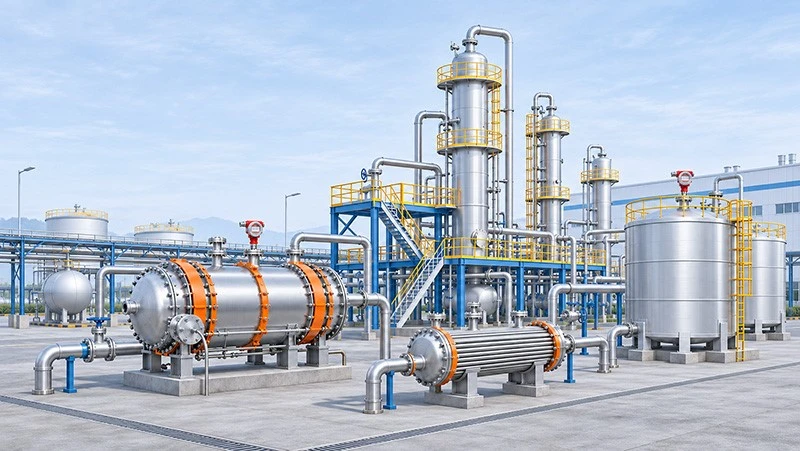
The reliability of pressure, level, flow, and temperature data over extended operating periods depends not only on the instrument itself but also on wetted materials, pressure tapping methods, installation configurations, and maintenance conditions. Particularly in applications involving hydrogen fluoride (HF), achieving long-term stable measurement requires careful engineering assessment beyond simply obtaining a pressure reading.
Key Challenges in Pressure Measurement
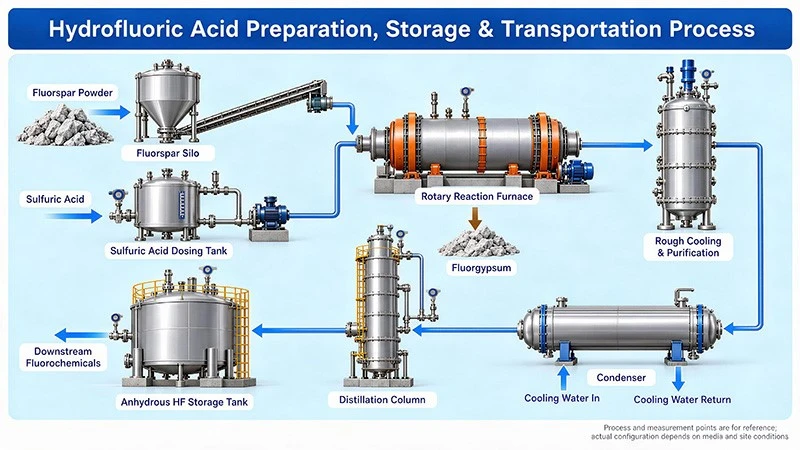
Taking the common fluorite-sulfuric acid process as an example, the process generates hydrogen fluoride-containing gas through a chemical reaction. The gas then undergoes dust removal, condensation, purification, and distillation to obtain the required products. Off-gases generated during the process are sent to an absorption treatment system.
Anhydrous hydrogen fluoride (AHF) and aqueous hydrofluoric acid solutions have different physical properties and application requirements. They should not be treated as identical measurement media.
Along the process flow, the process media and operating conditions encountered by instruments vary considerably. Reaction outlets may contain impurities and entrained particles, while phase changes between gas and liquid may occur during purification. Storage and transportation systems require consideration of corrosion, vapor pressure, and inventory measurement.
1. Different HF Conditions Require Different Material Selection
Material assessment should cover the complete wetted boundary, including diaphragms, flange sealing surfaces, gaskets, valve manifolds, flowmeter measuring tubes, electrodes, and temperature thermowells. Replacing only the diaphragm while retaining other incompatible wetted components may still leave potential weak points in the measurement system.
2. Slow Pressure Changes May Indicate Process Stability or Blocked Pressure Connections
In process sections containing impurities or substances prone to deposition, pressure tapping points or impulse lines may become blocked. The transmitter may continue producing an output signal, but its dynamic response may already have changed.
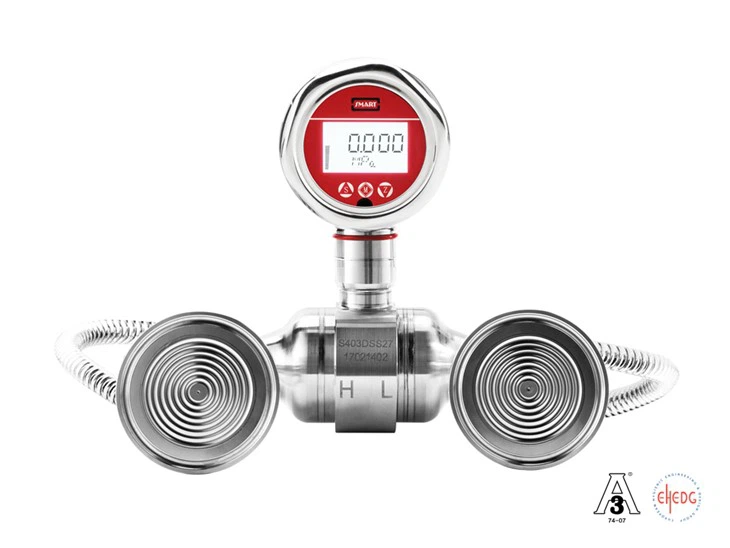
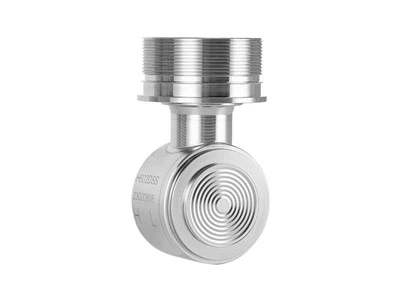
Simply selecting a higher-accuracy transmitter cannot resolve this issue. The measurement configuration itself needs to be considered. Depending on the operating conditions, diaphragm seals, flush-mounted connections, or remote seal configurations can be evaluated to reduce the possibility of process media entering and blocking narrow impulse passages.
At the same time, remote seal systems introduce additional factors, including fill fluid selection, capillary temperature effects, and response time. These factors should be evaluated together with the measurement requirements of the application.
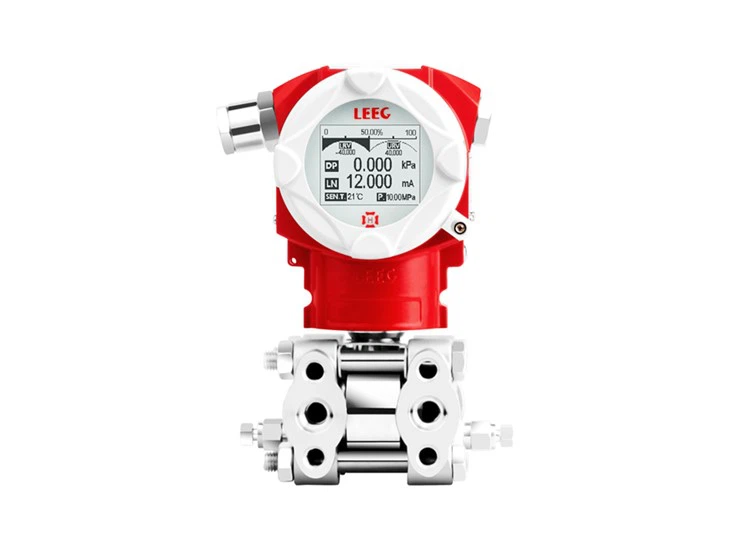
In basic fluorochemical applications, LEEG identifies corrosion, scaling, blocked pressure tapping points and impulse lines, and phase changes as key measurement challenges, and provides diaphragm seal and remote seal installation options to support instrument selection.
Measurement Requirements Across Main and Auxiliary Processes

The off-gas absorption system requires monitoring of circulating liquid flow, tank level, operating temperature, and the differential pressure across towers or mist eliminators. Correlating these measurements can help identify potential issues such as abnormalities in circulating pump operation and changes in flow resistance.
In fluorochemical wastewater treatment, precipitates may cause scaling, abrasion, and blockage of measurement passages. Therefore, sufficient consideration should be given to flowmeter installation, level measurement connections, and maintenance access.
Pressure, level, flow, and temperature measurements reflect equipment operating conditions, while treatment performance still needs to be evaluated using water quality parameters such as pH and fluoride ion concentration.
For basic fluorochemical production, LEEG provides measurement solutions tailored to the media and installation conditions of each process section, matching measurement principles, product configurations, and signal interfaces to support continuous process data acquisition across raw material transfer, purification and separation, product storage and transportation, and environmental protection systems.
Beyond basic fluorochemical production, LEEG also provides customized instrumentation solutions for other operating conditions in the fluorochemical industry.
Application Solutions
1. Low-Pressure Measurement in the Vapor Space of Hydrochloric Acid Storage Tanks Containing HF

For hydrochloric acid storage tanks containing hydrofluoric acid, low pressure in the tank's vapor space at the top of the tank needs to be monitored. Corrosion and permeation caused by the mixed acid increase the difficulty of low-range pressure measurement.
Measurement Challenges:
Corrosion and Permeation Caused by Mixed Acids: Mixed acid media may corrode wetted components and create a risk of media permeation.
Low-Pressure Measurement with a Diaphragm Seal: When using a diaphragm seal to measure vapor-space pressure, the instrument must accurately detect small pressure variations.
LEEG Solution:
Specialized Coating Formulation: The Halar coating is applied using a specially developed spraying formulation to form a protective layer on the media-contacting surfaces.
High Resistance to Permeation and Abrasion: The Halar coating offers enhanced resistance to media permeation and abrasion, helping prevent corrosive media from penetrating the coating and reducing coating wear during operation.
Vacuum Resistance Down to -70 kPa: The Halar-coated diaphragm is designed to withstand vacuum conditions down to -70 kPa, helping isolate corrosive media and reduce the risk of corrosion and permeation.
2. High-Vacuum Pressure Measurement in Strongly Reducing Acid Fluorination Systems

In strongly reducing acid fluorination systems, pressure instruments must continuously monitor system pressure under high-vacuum conditions while addressing the challenges of mixed acid corrosion and hydrogen permeation.
Measurement Challenges:
Corrosion from Strongly Reducing Acids: Strongly reducing acids in the system can cause corrosion of equipment and instrument components in contact with the process media.
Fluorine-Containing Mixed Acids: The process involves mixed acids composed of multiple acidic components, including fluorine-containing substances.
High-Vacuum Conditions: The system operates under high-vacuum conditions, requiring pressure measurement equipment capable of adapting to this environment.
LEEG Solution:
Resistance to Strongly Reducing Mixed Acid Corrosion: The diaphragm features a reinforced, corrosion-resistant design to withstand the corrosive effects of strongly reducing mixed acids on wetted surfaces.
Vacuum Resistance: The diaphragm seal configuration is designed to withstand vacuum conditions and meet the requirements of pressure measurement under vacuum.
Applicable Gauge Pressure Range: This diaphragm measurement solution is suitable for vacuum applications with gauge pressure of -70 kPa or lower.
3. High-Temperature Pressure Measurement in Fluorination Reactors

During high-temperature fluorination reactions, pressure measurement points must continuously monitor pressure changes inside the reactor under conditions where high temperatures and corrosive media, such as fluorine gas and hydrogen fluoride, coexist.
Measurement Challenges:
High-Temperature Corrosive Environment: The combination of high temperatures and corrosive media requires wetted instrument components to provide both high-temperature resistance and corrosion resistance.
Potential Fluctuations in Measurement Readings: Diaphragm seal systems must maintain stable performance under extreme temperature, pressure, and media conditions to ensure reliable pressure readings.
LEEG Solution:
Specially Designed Diaphragm: The diaphragm provides enhanced high-temperature oxidation resistance, helping maintain stable performance under elevated temperature conditions.
Ultra-High-Temperature Fill Fluid and Compensation Algorithm: Ultra-high-temperature fill fluid, combined with a temperature-stability compensation algorithm, helps reduce the influence of temperature variations on pressure readings.
Gold Plating to Mitigate Hydrogen Permeation: A gold-plated layer on the diaphragm surface acts as a barrier to hydrogen permeation, reducing the risk of hydrogen permeating through the diaphragm
Conclusion
Process measurement in the fluorochemical industry covers raw material transfer, reaction synthesis, separation and purification, product storage and transportation, and off-gas treatment. Operating media and conditions vary significantly across different processes.
Therefore, instrument selection must be based on specific measurement points, taking into account media composition, water content, operating temperature and pressure ranges, wetted configurations, and installation conditions.
LEEG provides support in measurement point assessment, instrument selection, and installation configuration optimization, helping fluorochemical manufacturers develop process measurement solutions covering key production sections. These solutions provide reliable process data for process regulation, abnormal condition analysis, and maintenance management.