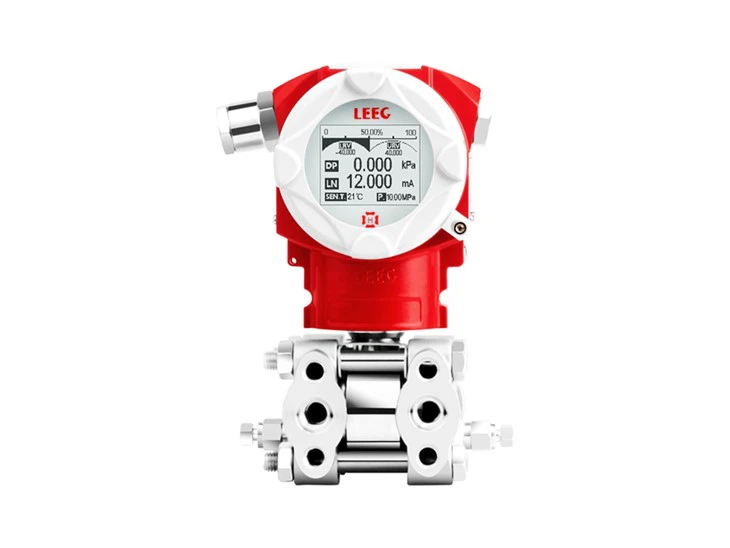
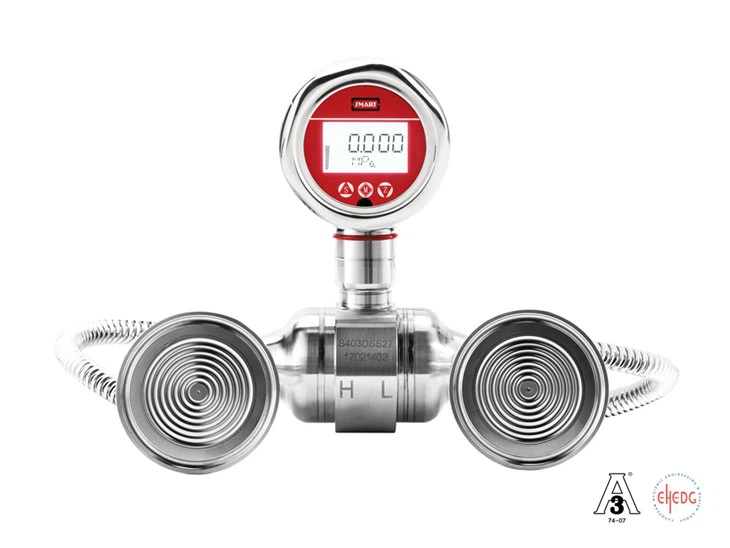
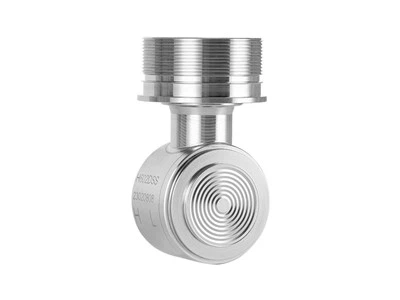
In industrial automation field sites, users often focus more on parameters like range, accuracy, and explosion-proof rating when selecting pressure transmitters, while overlooking the most critical issue-media compatibility. Especially in acidic media conditions, choosing the wrong diaphragm material can lead to measurement drift, shortened lifespan, or even severe outcomes such as diaphragm corrosion perforation, media leakage, and safety incidents.
In fact, many on-site problems like "pressure transmitters not lasting," "bulging diaphragms," or "frequent leaks" are not due to poor product quality, but rather a mismatch between materials and media. Therefore, selecting pressure transmitters for acidic conditions is essentially a matter of material science and chemical compatibility.
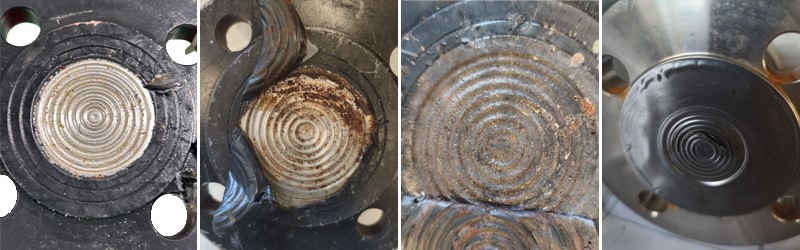
Incorrect selection can lead to diaphragm damage
I. How to Select for Inorganic Acid Media?
Inorganic acids are often highly corrosive, some with strong oxidizing properties, demanding extremely high-performance diaphragm materials.
- Hydrochloric Acid (HCl) – A typical strong corrosive non-oxidizing acid that severely attacks 316L stainless steel. Standard stainless steel diaphragms have short lifetimes in HCl environments. The industry generally recommends Tantalum or Hastelloy C276 (HC276) diaphragms. Tantalum offers exceptional corrosion resistance to HCl and is often the first choice for highly corrosive conditions.
- Sulfuric Acid (H₂SO₄) – Its corrosivity is more complex. While diluted sulfuric acid may seem less aggressive, both dilute and high-temperature concentrated sulfuric acid can severely corrode metals. For sulfuric acid, Tantalum diaphragms are a more reliable choice. If an anti-corrosion cover is needed, PTFE is generally more suitable than PFA in concentrated sulfuric acid.
- Nitric Acid (HNO₃) – A typical strong oxidizing acid. Many materials that resist common acids corrode rapidly in nitric acid. The industry typically recommends Titanium diaphragms, as titanium offers good stability against oxidizing media.
- Phosphoric Acid (H₃PO₄) – Relatively less corrosive, but selection depends on concentration and temperature. Below 10% concentration, 316L is generally adequate. For higher concentrations or high temperatures, Tantalum is recommended, as corrosion rates increase significantly with temperature.
- Hydrofluoric Acid (HF) – A recognized hazardous medium. It is highly toxic and corrodes most metals. Traditional solutions use Monel with gold plating. A more mainstream solution is 316L with Halar coating, which offers long-term temperature resistance of 150–170°C. If no negative pressure is present, Monel with PFA cover is also an option.
Other acids like hydrobromic acid, hydroiodic acid, perchloric acid – Highly corrosive, typically requiring Tantalum diaphragms. For hydroiodic acid, some users opt for 316L with PFA cover. If no negative pressure exists, adding a PFA anti-corrosion cover is possible (long-term temperature resistance 150–180°C).
II. How to Select for Organic Acid Media?
Compared to inorganic acids, organic acids are generally less corrosive, but high temperature and concentration can still cause significant corrosion.
- Acetic Acid – Dilute acetic acid has little effect on 316L, so 316L suffices for normal conditions. For high temperatures or glacial acetic acid, Titanium is recommended, as high-concentration acetic acid corrodes stainless steel significantly.
- Formic Acid – Relatively corrosive. At room temperature, 316L is generally usable. For high temperatures, HC276 or Tantalum is advised.
- Oxalic acid, Citric acid, Lactic acid – Generally mild. At room temperature, 316L is sufficient. For high temperatures, Hastelloy C (HC) is recommended for long-term stability.
- Super-strong organic acids like trifluoroacetic acid, trifluoromethanesulfonic acid – Standard metals cannot withstand them long-term, so Tantalum diaphragms are typically recommended.
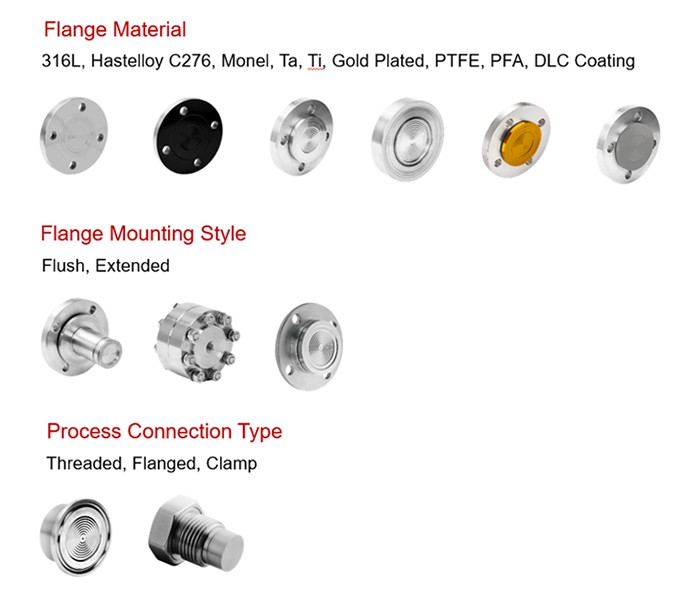
LEEG offers more optional process connections
The MDM7000 Series diaphragm seal pressure transmitters are specifically designed for the measurement of process parameters such as pressure, level, mass, density, interface, and flow under complex and demanding operating conditions. For challenging applications involving high-temperature media, high vacuum conditions, corrosive fluids, suspended particles, high-viscosity media, crystallizing or clogging processes, we provide a wide range of diaphragm seal systems with various structural designs, diaphragm materials, and fill fluid options. These flexible configurations enable reliable adaptation to different industries and process requirements, ensuring long-term stable and safe measurement performance.
At the same time, LEEG is supported by an experienced team of professional engineers who thoroughly evaluate the actual working conditions, media characteristics, installation environment, and process requirements at the early stage of each project. Our engineers assist customers with diaphragm seal selection and solution optimization to deliver more accurate, reliable, and application-oriented measurement solutions. From product configuration to field application, we help customers confidently overcome the challenges of complex industrial processes.